
PART 3
I did not sleep.
At two in the morning, I was still sitting at the dining-room table with Thomas’s old files spread around me.
At three, I made tea.
At four, I gave up pretending the tea was helping.
By five, I had found the original closing statement from the year Thomas and I bought the property.
Forty years earlier.
Purchase price: $86,000.
Down payment: $21,500.
Mortgage: $64,500.
Nothing strange.
Our names appeared exactly where they should.
Thomas Vance.
Eleanor Vance.
Joint tenants.
I found receipts from the contractor.
Invoices for lumber.
The kitchen cabinets.
The roof.
The septic system.
Ordinary documents.
The records of a young couple building a life.
What I did not find was any trace of my father’s name.
At seven, I called Priya.
She answered on the third ring.
“You are calling at seven.”
“Yes.”
“That usually means either revelation or disaster.”
“I have family documents in opposing counsel’s office that I did not know existed.”
She became fully awake.
“What documents?”
I explained.
There was silence.
Then:
“Do not call Hale.”
“I know.”
“Do not call Daniel.”
“I know.”
“Do not go to Hale’s office.”
“I know.”
“You sound offended.”
“I spent decades telling clients exactly this.”
“And clients are famously excellent at following advice when emotionally involved.”
I disliked how often she was correct.
By nine, Priya had contacted Hale and demanded preservation and copies of the folder.
To his credit, Hale complied immediately.
That mattered.
He was smug.
He was not foolish.
By noon, scanned copies arrived.
Priya came to my house.
Margaret came too.
We sat around the table where Daniel had admitted nothing and Vanessa had told me to be grateful.
The first document was an old partnership agreement.
Three names.
Thomas Vance.
My father, Samuel Greene.
And a third man I barely remembered.
Leonard Pike.
The date was forty-two years ago.
Two years before our house was built.
I stared at the page.
“What is this?”
Margaret leaned closer.
“Construction partnership.”
I read the title.
Green-Pike-Vance Development.
I had never heard of it.
Never.
Thomas had spent most of his career in insurance.
My father owned a hardware store.
Leonard Pike, as far as I remembered, had been a contractor.
Priya turned pages.
The partnership had purchased three parcels on the edge of town.
One became a small office building.
One was sold.
The third…
My house.
I stopped.
“No.”
Priya looked at me.
“The parcel was originally owned by the partnership.”
“But Thomas and I purchased it.”
“Yes.”
“When?”
“After dissolution.”
She found the deed.
The partnership transferred the land to Thomas for $14,000.
A year later, when we built the house, Thomas added me to title through the mortgage closing.
I stared at the numbers.
“Why would my father object?”
The answer sat in the next document.
A handwritten accounting.
The partnership had failed.
Not catastrophically.
But badly enough.
Leonard Pike had overrun construction costs.
The office building sat vacant for nearly a year.
The partnership dissolved.
My father contributed additional cash to satisfy creditors.
Thomas did not have enough to cover his full share.
Samuel paid it.
Amount: $18,750.
A fortune to us then.
Margaret whispered, “Oh.”
I kept reading.
Under the dissolution agreement, Thomas promised to repay Samuel over five years.
In exchange, Thomas received the house parcel.
There was no lien.
No recorded mortgage.
Only a private note.
I found the letters next.
The first was from my father to Thomas.
You can build there if you want. Eleanor loves that hill.
My throat tightened.
I could see the hill as it had been.
Nothing but grass and two maple trees.
Thomas and I had stood there when we were twenty-nine and thirty-one.
I had said, “Imagine a porch here.”
He had kissed my forehead.
“Then we’ll build one.”
The letter continued.
But do not tell her I paid your partnership share. She will think she owes me. She doesn’t.
I stopped reading.
Margaret covered her mouth.
My father had told Thomas not to tell me.
Another secret.
Another act of protection.
I was beginning to resent love expressed as withheld information.
Priya said quietly, “Keep going.”
The next letter was from Thomas.
I will repay you.
Samuel replied:
That is between you and me. Do not turn my daughter’s house into collateral for your pride.
I closed my eyes.
There was that word again.
Pride.
Generation after generation.
Men confusing silence with protection.
I continued.
Thomas repaid part of the debt.
Then Daniel was born.
Then I left my salaried accounting job to stay home for a year.
Money tightened.
Payments stopped.
My father never pursued them.
Years passed.
The balance remained.
Then, shortly before my father died, he wrote one last letter.
This one was addressed to me.
Unopened.
The envelope had my maiden name on it.
Eleanor Greene Vance.
My hands trembled.
“Why didn’t I get this?”
No one answered.
I opened it.
Ellie,
Nobody had called me Ellie since my father died.
If Thomas gives you this, it means he has finally stopped being stubborn or I have stopped being available to argue with him.
I laughed through tears.
That sounded exactly like my father.
The house is yours.
Not half yours. Not morally mine. Not tied to any old debt.
I helped Thomas because I could and because I trusted both of you to build something worth more than the money.
I read the next line twice.
If he is still carrying shame over it, tell him I forgave the debt years ago.
My chest hurt.
The old note had apparently never been formally canceled.
But my father had canceled it in everything that mattered to him.
You owe me nothing.
Then:
Make a life there.
Let children scratch the floors.
Let people eat in the good dining room.
Do not turn property into proof that you have succeeded.
It is a house.
People are the inheritance.
I put the letter down.
For a long time, the three of us sat in silence.
Finally Margaret said, “Thomas never gave it to you.”
“No.”
“Why?”
“I think I know.”
I looked at the old repayment ledger.
Thomas had continued making small payments even after my father died.
To an account in my father’s estate.
But my father’s estate had returned them.
Then Thomas had opened a separate savings account.
Balance at the time of his death: $67,412.
The memo line on transfers read:
Samuel.
He had spent decades repaying a forgiven debt to himself.
Not financially.
Morally.
Priya said, “That may be the account Daniel believed was available.”
I looked up.
“What?”
She pointed to the statement.
“Seventy-five thousand loaned to Daniel last March. This account had about seventy-eight thousand at the time.”
I stared.
Thomas had loaned Daniel the money from the fund he had created to repay my father.
The symmetry was almost unbearable.
One generation’s shame financing the next.
Margaret whispered, “He thought helping Daniel would balance something.”
I nodded slowly.
Maybe.
Or maybe Thomas had simply seen his son drowning and reached for the money he privately associated with second chances.
The final item in the folder was a note from Thomas to Daniel.
I recognized the shaky handwriting from his last month before diagnosis.
If your mother ever needs to know any of this, tell her everything.
Then:
Not the version that protects me.
My eyes filled.
He had known.
On some level, he had known he might run out of time before confession.
Underneath:
And Daniel—do not make my mistake. Do not turn shame into secrecy. It grows.
I closed the folder.
No one spoke.
The hearing was the next morning.
I arrived with Priya.
Not alone this time.
That felt important.
Daniel and Vanessa sat at the petitioners’ table.
Curtis Hale looked different.
Less smug.
More tired.
Before the judge entered, he approached Priya.
“Counsel.”
They spoke quietly.
Then Priya came to me.
“They’re offering to withdraw the guardianship petition.”
I looked toward Daniel.
He was staring at the table.
“Conditions?”
“Each side bears fees. They agree to the standing protective orders for thirty days while financial matters are addressed separately.”
“Separate civil action?”
“If necessary.”
I looked at Daniel.
“And the withdrawals?”
“Not resolved by withdrawal.”
“The loan application?”
“No.”
I thought for a moment.
“Will the court record reflect why the petition ended?”
“Only that it is voluntarily dismissed unless the judge asks more.”
That mattered.
Not because I wanted Daniel shamed.
Because I wanted the lie removed.
“I’ll agree if they stipulate there is no current evidence I lack capacity.”
Priya nodded.
“Reasonable.”
Hale returned to his table.
Whispers.
Vanessa shook her head.
Daniel said something.
She looked at him sharply.
Then, after a minute, Hale nodded.
When Judge Mercer entered, the matter took less than fifteen minutes.
The petitioners moved to dismiss.
They stipulated that no medical evidence established incapacity.
The court evaluator’s report, submitted under seal, concluded I remained fully capable of managing personal and financial affairs.
Judge Mercer accepted the dismissal.
Then he looked at Daniel and Vanessa.
“I am not making findings today regarding disputed financial conduct.”
Both nodded.
“But I will say this. Guardianship is an extraordinary intervention. It is not a tool for resolving family disagreements, accessing assets, or bypassing consent.”
Daniel lowered his eyes.
Judge Mercer continued.
“Concern for an older relative may be sincere. Sincerity does not excuse failure to distinguish vulnerability from incapacity.”
Then he looked at me.
“Mrs. Vance, I trust your counsel will help resolve remaining issues through appropriate channels.”
“She will.”
“Good.”
His expression softened slightly.
“And for what it is worth, Bellweather remains one of the better examples of forensic testimony I encountered early in practice.”
I smiled.
“Thank you, Your Honor.”
That was all.
No applause.
No destroyed enemies.
Just a case dismissed and a door opening.
Outside, Daniel waited.
Vanessa stood beside him.
Priya remained a few steps away.
My son looked older than forty-three.
“Can we talk?”
“Yes.”
Vanessa started to follow.
Daniel looked at her.
“Please.”
Her face tightened.
Then she nodded and walked toward the benches.
Daniel and I stood beneath a courthouse tree losing its last leaves.
“I read Dad’s folder again,” he said.
“So did I.”
“He told me not to make his mistake.”
“Yes.”
“I did anyway.”
“Yes.”
He flinched.
I did not soften the word.
Not cruelty.
Clarity.
“I’m withdrawing from the Riverside project.”
“That sounds wise.”
“I’m probably going to lose the company.”
I waited.
“I thought you’d say something.”
“What do you want me to say?”
“That it’ll be okay.”
I looked at him.
“I don’t know if the company will be okay.”
His eyes filled.
“But you will survive losing a company.”
He looked down.
“Dad did.”
“Twice.”
“You said that.”
“He hated it.”
Daniel looked up.
“He did?”
“Of course.”
“You always made it sound like you two were careful.”
“We became careful.”
That landed.
He breathed slowly.
“So all those stories about building everything from nothing—”
“Were true.”
“But incomplete.”
“Yes.”
“Why didn’t you tell me?”
I thought about my father’s letter.
Thomas’s secrets.
My own edited history.
“Because parents are often foolish enough to think children need examples more than truth.”
Daniel gave a broken laugh.
“That sounds like something Grandpa would say.”
“He might add a swear word.”
That made him smile.
For a moment, I saw the boy again.
Then I remembered the man.
Both were real.
“I need to tell you exactly what I did,” he said.
I waited.
“I took the forty-eight thousand.”
“I know.”
“I told myself it was temporary.”
“I know.”
“I gave Kevin the scanned signature.”
“Yes.”
“I did not tell him to sign your name.”
“Did you know he might?”
Daniel closed his eyes.
“I knew he was talking about getting the loan done without you.”
“That is closer.”
“I didn’t ask what he meant.”
“Because you didn’t want to know.”
“Yes.”
He swallowed.
“And the guardianship was my idea.”
“Not Curtis’s?”
“He told us it was possible. I pushed for emergency filing.”
“Why?”
“Because when the bank froze the loan and you changed your account access, I panicked.”
“That is an explanation.”
“Not an excuse.”
“No.”
He looked toward Vanessa.
“She believed you really were declining.”
I followed his gaze.
“Did you tell her otherwise?”
“I told her about you forgetting things.”
“I misplaced my glasses twice.”
“I know.”
“You told her I wandered outside at night.”
He looked ashamed.
“You went onto the porch at two in the morning.”
“Because I could not sleep after your father died.”
“I made it sound worse.”
“Yes.”
“She believed me.”
“That is partly on her.”
“Yes.”
He took a breath.
“I’m going to repay you.”
“How?”
“Sell my share in the remaining project. Liquidate investments. Payment plan.”
“We’ll document it.”
He nodded.
“Of course.”
“And the seventy-five thousand from your father?”
“I’ll repay that to the trust.”
I thought about Samuel’s account.
“No.”
Daniel looked confused.
“No?”
“That loan was from Thomas’s separate account. We will handle it according to the note and the estate.”
“But—”
“No improvising.”
For the first time, he almost smiled.
“There she is.”
I raised an eyebrow.
He stopped.
“Sorry.”
“No. You’re right.”
I was still me.
That mattered.
“I don’t know if I can forgive you yet,” I said.
Daniel’s face changed.
“I know.”
“I love you.”
His eyes filled.
“I love you too.”
“That is not forgiveness either.”
“I know.”
“I need time.”
He nodded.
“For what?”
“To see what you do after being sorry.”
That sentence stayed between us.
Because apologies are words.
Trust is pattern.
Vanessa asked to speak with me next.
I almost said no.
Then I thought of Dr. Cho.
Knowledge and intimacy use different evidence.
I sat with Vanessa in the courthouse cafeteria.
A bad place for important conversations.
Maybe that helped.
Nobody looks grand beside a vending machine.
She held a paper cup with both hands.
“I owe you an apology.”
“Yes.”
She looked startled.
“You’re not going to make this easy.”
“I don’t know what easy would accomplish.”
She nodded slowly.
“I believed Daniel.”
“About my mental condition?”
“Yes.”
“All of it?”
“Not at first.”
That interested me.
“When did you start believing him?”
“After you refused to sell the house.”
I frowned.
“What does that have to do with cognition?”
“Nothing.”
She looked ashamed.
“But to me it did.”
“Explain.”
“My mother lost her house.”
I knew that.
Vaguely.
Years before Vanessa married Daniel.
“She held onto it after my father died,” Vanessa continued. “She couldn’t afford repairs. Taxes piled up. She refused help because the house represented him.”
I listened.
“By the time we convinced her to sell, she had lost most of the equity to debt.”
Vanessa looked at me.
“When you kept saying you would never sell, I saw her.”
“I never said never.”
“Daniel told me you had.”
There it was.
Again.
“He said the house was becoming too much for you.”
“It isn’t.”
“I know that now.”
She rubbed her thumb along the cup lid.
“I thought you were making an emotional decision because of grief.”
“I was making an emotional decision.”
She looked up.
“So?”
“Emotional does not mean incompetent.”
Vanessa nodded.
“I know.”
I continued.
“And even if I were making a bad financial decision, competent adults are allowed to make bad financial decisions.”
She laughed softly.
“That is a very forensic-accountant thing to say.”
“It is also a very important guardianship principle.”
Her smile disappeared.
“I should never have supported the petition the way I did.”
“No.”
“I should have spoken to you directly.”
“Yes.”
“I should not have given Kevin your property records.”
“No.”
Her eyes filled.
“I thought I was helping Daniel save what he built.”
“And what did you think I was?”
She closed her eyes.
“An obstacle.”
The honesty hurt.
I preferred it anyway.
“What about the locks?”
“Daniel told me Curtis had advised securing the house until court.”
“That is not what Curtis says.”
Her face changed.
“What?”
“Hale says he never advised changing my locks.”
Vanessa stared at me.
“Daniel said—”
She stopped.
Understanding moved across her face.
Not everything Daniel had done had been shared with her.
That did not absolve her.
It complicated the ledger.
“I’m sorry,” she whispered.
I believed her.
Again, belief was not restoration.
“Thank you.”
“Will you ever let us come back to the house?”
I looked at her.
“I don’t know.”
She nodded.
Fair.
Kevin left the guesthouse.
He sent me an apology through counsel and later admitted preparing the loan application using information provided by Daniel and Vanessa.
The lender pursued its own fraud review.
My attorney handled the civil side.
I did not demand ruin.
I demanded records, repayment, and clear responsibility.
Those were things I understood.
Daniel sold his interest in one development.
He paid back twelve thousand dollars within the first month.
Then another nine.
Then five.
Not because I needed the money immediately.
Because he needed to learn that repair could be boring.
No dramatic check.
No single act that erased everything.
Monthly transfers.
Statements.
Interest.
Consistency.
He began meeting with a financial restructuring adviser.
Not me.
That was important.
I was his mother.
For once, we kept the roles separate.
Three months after the hearing, he called.
“Can I come by?”
I almost said yes automatically.
Then I stopped.
“Why?”
“To talk.”
“About money?”
“No.”
“About the house?”
“No.”
“Then yes.”
He arrived carrying a cardboard box.
Inside were photographs.
Thomas’s.
We spent two hours at the dining-room table.
Dad holding baby Daniel.
Thomas in our first apartment.
Me wearing a haircut I had apparently believed was fashionable in 1987.
Daniel laughed.
“You look like a mushroom.”
“I could still disinherit you.”
“That feels legally questionable.”
“Emotionally satisfying.”
It was the first easy conversation we had shared in months.
Then he found a photograph of Thomas standing beside an empty construction site.
The house hill.
My father stood beside him.
Both men were muddy.
Both smiling.
On the back, Samuel had written:
Two stubborn men pretending this is not going to cost twice what they think.
I laughed until I cried.
Daniel looked at me.
“You okay?”
“Yes.”
For once, the answer was simple.
He turned the photograph over again.
“Do you wish Dad had told you?”
“About the debt?”
“Yes.”
“Yes.”
“Even though Grandpa forgave it?”
“Yes.”
“Why?”
“Because truth belongs in a marriage even when the outcome would not change.”
Daniel nodded.
“You’re angry with him.”
“I am.”
“Can you be angry with someone who’s dead?”
“Very efficiently.”
He smiled.
Then I added, “I forgive him too.”
Daniel looked surprised.
“Already?”
“No.”
I thought about it.
“Maybe forgiveness with your father started before I knew I needed it.”
“What does that mean?”
“Forty-seven years gives context.”
I touched the photograph.
“He withheld something because he was ashamed and because he thought he was protecting me. I dislike both reasons. But they exist inside decades of honesty, partnership, sacrifice, and repair.”
Daniel looked down.
“And I don’t have that context.”
“Not yet.”
The words came out before I planned them.
Daniel looked at me.
“Not yet?”
I sighed.
“Do not make too much of two words.”
He smiled faintly.
But we both knew they mattered.
Spring came.
The maple trees filled.
I repainted the guesthouse.
Not because Kevin had lived there.
Because the walls needed paint.
That distinction mattered.
Margaret accused me of symbolically reclaiming space.
I told her to stop reading magazines.
She brought curtains anyway.
Dr. Cho’s report remained sealed.
I never asked to see the score.
That was growth too.
One afternoon, Priya brought final settlement papers.
Daniel would repay the remaining withdrawn funds over thirty months, secured by his investment account.
He formally waived any claim to management of my assets during my lifetime unless I appointed him in writing.
He also agreed to pay part of my legal fees.
Vanessa contributed from her separate savings toward the losses associated with the unauthorized loan application.
Kevin reached a separate settlement with the lender and me.
No one went to prison.
No one was destroyed.
People paid.
Admitted.
Adjusted.
That felt more useful.
Priya watched me sign.
“Regrets?”
“Many.”
“About settlement?”
“No.”
“Good.”
She packed her papers.
“Will Daniel eventually inherit?”
I looked at her.
“Trying to become my estate planner?”
“I’m nosy.”
“He is still my son.”
“That was not the question.”
I smiled.
“My trust changed.”
Her eyebrows lifted.
“How?”
“I added an independent co-trustee for any inheritance distributed to beneficiaries with substantial creditor exposure.”
“Daniel?”
“Any beneficiary.”
She smiled.
“Forensic accountant to the end.”
“Apparently.”
I did not disinherit him.
That surprised Margaret.
“Why not?”
We were in my kitchen baking something neither of us understood.
“Because inheritance is not a reward for moral performance.”
“Interesting.”
“It is a choice about stewardship.”
“And you trust him with stewardship?”
“Not alone.”
Margaret laughed.
“There she is.”
Six months after the courtroom hearing, Daniel asked to visit Thomas’s grave with me.
We drove separately.
Boundaries.
At the cemetery, he carried his father’s old note.
Do not make my mistake. Do not turn shame into secrecy. It grows.
He placed a copy beneath a stone at the base of the marker.
I looked at him.
“What are you doing?”
“Dad loved paper.”
“He also loved litter-free grounds.”
“I’ll take it back.”
I laughed.
We stood in silence.
Then Daniel said, “I hated him for dying.”
My chest tightened.
“So did I.”
He looked at me.
“You did?”
“Of course.”
“You never said.”
“I was busy being sensible.”
“That sounds exhausting.”
“It was.”
He sat on the bench beside the grave.
“I think after he died, everything felt like it was falling apart. Business was already bad. Then he was gone. You were grieving. Vanessa was scared.”
He swallowed.
“I needed one thing to stop changing.”
“The Riverside project.”
“Yes.”
“And you tried to save it with everything around you.”
“Yes.”
“My money.”
“Yes.”
“My house.”
“Yes.”
“My capacity.”
He closed his eyes.
“Yes.”
I sat beside him.
“That is what you need to remember.”
He nodded.
“Not that I was desperate.”
“Both.”
He looked at me.
“Both?”
“Your desperation explains the path.”
“And the choices?”
“Belong to you.”
He nodded.
That was the balance I had spent months learning.
Context without excuse.
Accountability without cruelty.
Love without surrender.
A year after the hearing, Daniel completed repayment of the forty-eight thousand early.
He sold his luxury car.
Downsized his office.
Closed one failing partnership.
Took a salaried job with a development firm.
At first, he was embarrassed.
Then, slowly, relieved.
“You know what is strange?” he asked one Sunday.
“What?”
“I sleep.”
“That is usually encouraged.”
“No. I mean I actually sleep.”
He leaned back in my kitchen chair.
“I spent three years waking up at three in the morning calculating interest.”
“Your father did the same thing during our second business failure.”
Daniel smiled.
“You keep producing these inconvenient stories about him.”
“I have decades available.”
Vanessa came with him that day.
It was her first time inside my house since the court order.
She stood in the foyer as if unsure whether to remove her shoes.
“Come in,” I said.
She looked at me.
“You’re sure?”
“No.”
She almost smiled.
“Fair.”
I gestured toward the kitchen.
“Coffee.”
That was how we began.
Not with hugs.
Coffee.
She and I never became close.
Not in the way some stories would demand.
But we became honest.
That was better.
She apologized once more for supporting the guardianship petition.
I told her she did not need to keep apologizing forever.
“What should I do instead?”
“Notice me.”
She frowned.
“As what?”
“A person older than you who is still capable of surprising you.”
Vanessa smiled.
“I can do that.”
She did.
When I turned seventy-three, she gave me skydiving lessons.
I stared at the certificate.
“Absolutely not.”
She laughed.
“You said capable of surprising.”
“Not suicidal.”
Daniel said, “I told her.”
For twenty minutes, we argued.
It was wonderful.
The house changed too.
Not structurally.
Emotionally.
For decades, I had treated it as proof.
Proof that Thomas and I had succeeded.
Proof that my father’s faith in us had been justified.
Proof that we had built something lasting.
Then my father’s letter taught me what I should have known.
It is a house.
People are the inheritance.
So I used it differently.
I held neighborhood dinners.
Let Margaret’s grandchildren play in the living room.
Stopped caring about water rings on the dining table.
I even opened Thomas’s good bourbon.
Daniel looked horrified.
“Dad was saving that.”
“For what?”
He hesitated.
“Something.”
“Excellent. Tonight is something.”
We drank one small glass each.
It tasted terrible.
We both laughed.
“I think Dad was lying about this being good,” Daniel said.
“He had many flaws.”
“Apparently.”
Two years after the petition, Judge Mercer invited me to speak at a continuing legal education program about financial exploitation and guardianship.
I almost declined.
Then I agreed.
Not to tell my family story.
To tell the professional one.
I stood before a room of lawyers and judges and said:
“Capacity is not obedience.”
Pens moved.
“An older adult may reject advice, keep an expensive house, give money foolishly, change beneficiaries, remarry, invest badly, or refuse help.”
More pens.
“None of those choices, standing alone, establish incapacity.”
Then I added:
“And families can exploit vulnerability while sincerely believing they are helping.”
That quieted the room.
Because that was the harder truth.
Daniel had stolen money.
He had also been frightened.
Vanessa had supported a harmful petition.
She had also believed grief had changed me.
Kevin had prepared a forged application.
He had also rationalized it as saving a family business.
Explanations were not defenses.
But if we only studied villains, we would miss how ordinary people crossed lines.
After the lecture, Judge Mercer approached.
“You stayed in the house?”
“I did.”
“Good.”
“Would it have been bad if I sold?”
He smiled.
“Point taken.”
I liked him for that.
Then he said, “Your son?”
“Better.”
“You?”
I thought.
“Also better.”
That answer surprised me.
Because I had spent the first months thinking only Daniel needed repair.
I had needed some too.
Not from incapacity.
From grief.
From pride.
From believing expertise should have protected me from being hurt.
It cannot.
Knowledge does not make love risk-free.
Nothing does.
Three years after the hearing, Daniel came to my house carrying a folder.
I froze.
He noticed.
“Bad association?”
“Very.”
He put it on the table.
“This one is different.”
Inside was a business plan.
I stared at him.
“No.”
“You haven’t read it.”
“I am not investing.”
“I’m not asking.”
I looked up.
He smiled.
“I got offered a partnership.”
“Then why show me?”
“Because I want your opinion.”
“As a forensic accountant?”
“As my mother who happens to know numbers.”
I studied him.
“Those roles are dangerous together.”
“I know.”
“Are you sure?”
“Yes.”
“Then coffee first.”
We spent three hours on it.
I found six problems.
He disagreed with four.
Good.
At the end, I said, “What will you do?”
“Probably accept.”
“Even with the risks?”
“Yes.”
I nodded.
“Then accept.”
He smiled.
“You’re not going to tell me what to do?”
“No.”
“Why?”
“Competent adults are allowed to make bad financial decisions.”
He laughed so hard he nearly spilled his coffee.
That became one of my favorite memories.
Not because the partnership later succeeded.
It did, modestly.
But because the decision was his.
And this time, so was the truth.
When I turned seventy-five, I finally made a decision about the house.
I sold it.
Daniel stared at me when I told him.
“You’re kidding.”
“No.”
“You fought us for years over that house.”
“I fought you for my right to decide.”
“That is infuriatingly different.”
“It is.”
“Why sell now?”
I looked toward the porch.
The hill.
The maple trees.
Thomas’s study.
The guesthouse.
Forty-two years of life.
“Because I’m ready.”
He nodded slowly.
“Where will you go?”
“A condominium near Margaret.”
“You hate condominiums.”
“I hate stairs more.”
He smiled.
“Can I help?”
“Yes.”
That answer meant more than either of us said.
We packed together.
Vanessa labeled boxes.
Margaret criticized everyone.
Daniel found the height marks we had penciled inside the pantry door when he was a child.
Age five.
Age eight.
Age eleven.
Then one ridiculous mark Thomas had added at age fifty-nine.
Daniel touched it.
“Can we cut this out?”
“No.”
His face fell.
“The new owners get walls too.”
He nodded.
Then took a photograph.
Good enough.
On moving day, I stood alone in the empty living room.
Sunlight crossed the floor.
For decades, I had believed keeping the house honored my father and Thomas.
Selling it taught me something better.
Love does not require preserving every container it once occupied.
I carried my father’s letter in my coat pocket.
It is a house.
People are the inheritance.
Outside, Daniel waited beside the car.
Not directing movers.
Not checking my documents.
Waiting.
“Ready?” he asked.
I looked back once.
“Yes.”
He opened the passenger door.
I raised an eyebrow.
“I can open doors.”
“I know.”
“Then why?”
He smiled.
“Because I’m trying to be nice.”
“That will take practice.”
“Margaret says the same thing.”
We drove away laughing.
Years earlier, Daniel had believed control would save him from failure.
I had believed preparation would save me from betrayal.
Thomas believed silence could protect the people he loved from worry.
My father believed forgiveness could erase a debt without a conversation.
We were all wrong in different ways.
What saved us was less elegant.
Documents.
Consequences.
Apologies.
Repayment.
Boundaries.
Time.
Conversations that arrived embarrassingly late.
The willingness to hear an explanation without mistaking it for an excuse.
And the decision to let people become more than the worst thing they had done without pretending the worst thing had never happened.
I never gave Daniel power of attorney.
People found that surprising.
“Don’t you trust him now?” Margaret once asked.
“More than before.”
“Then why not?”
“Because trust does not require recreating old risk.”
She smiled.
“You really are impossible to retire.”
My successor agent remained Margaret until she became too old to enjoy the responsibility, at which point I appointed an independent fiduciary and gave Daniel medical decision authority jointly with a professional advocate.
He understood.
That was how I knew he had changed.
Not because he demanded proof of forgiveness.
Because he accepted a boundary without calling it rejection.
On the fifth anniversary of Thomas’s death, Daniel and I visited his grave.
Vanessa came too.
We brought no dramatic speeches.
Just coffee.
Daniel stood over the marker.
“You caused a lot of paperwork, Dad.”
I laughed.
Vanessa looked scandalized.
“I don’t think you’re supposed to criticize people at cemeteries.”
“Why not?” I asked. “They’re difficult to offend.”
Daniel smiled.
Then he became quiet.
“I wish he’d told us.”
“So do I.”
“Do you forgive him?”
“Yes.”
“Completely?”
I thought about it.
“No.”
Daniel looked surprised.
“Can those both be true?”
“Apparently.”
He nodded.
“I think I finally understand that.”
I looked at my son.
Forty-eight years old now.
Lines beginning around his eyes.
His father’s hands.
My stubbornness.
A man who had once tried to take control of my life because his own had frightened him.
A man I loved.
A man I did not excuse.
A man I trusted differently.
That was enough.
When we left the cemetery, Daniel held the gate open.
This time, I let him.
Not because I needed help.
Because sometimes accepting a kindness is not surrender either.I did not sleep.
At two in the morning, I was still sitting at the dining-room table with Thomas’s old files spread around me.
At three, I made tea.
At four, I gave up pretending the tea was helping.
By five, I had found the original closing statement from the year Thomas and I bought the property.
Forty years earlier.
Purchase price: $86,000.
Down payment: $21,500.
Mortgage: $64,500.
Nothing strange.
Our names appeared exactly where they should.
Thomas Vance.
Eleanor Vance.
Joint tenants.
I found receipts from the contractor.
Invoices for lumber.
The kitchen cabinets.
The roof.
The septic system.
Ordinary documents.
The records of a young couple building a life.
What I did not find was any trace of my father’s name.
At seven, I called Priya.
She answered on the third ring.
“You are calling at seven.”
“Yes.”
“That usually means either revelation or disaster.”
“I have family documents in opposing counsel’s office that I did not know existed.”
She became fully awake.
“What documents?”
I explained.
There was silence.
Then:
“Do not call Hale.”
“I know.”
“Do not call Daniel.”
“I know.”
“Do not go to Hale’s office.”
“I know.”
“You sound offended.”
“I spent decades telling clients exactly this.”
“And clients are famously excellent at following advice when emotionally involved.”
I disliked how often she was correct.
By nine, Priya had contacted Hale and demanded preservation and copies of the folder.
To his credit, Hale complied immediately.
That mattered.
He was smug.
He was not foolish.
By noon, scanned copies arrived.
Priya came to my house.
Margaret came too.
We sat around the table where Daniel had admitted nothing and Vanessa had told me to be grateful.
The first document was an old partnership agreement.
Three names.
Thomas Vance.
My father, Samuel Greene.
And a third man I barely remembered.
Leonard Pike.
The date was forty-two years ago.
Two years before our house was built.
I stared at the page.
“What is this?”
Margaret leaned closer.
“Construction partnership.”
I read the title.
Green-Pike-Vance Development.
I had never heard of it.
Never.
Thomas had spent most of his career in insurance.
My father owned a hardware store.
Leonard Pike, as far as I remembered, had been a contractor.
Priya turned pages.
The partnership had purchased three parcels on the edge of town.
One became a small office building.
One was sold.
The third…
My house.
I stopped.
“No.”
Priya looked at me.
“The parcel was originally owned by the partnership.”
“But Thomas and I purchased it.”
“Yes.”
“When?”
“After dissolution.”
She found the deed.
The partnership transferred the land to Thomas for $14,000.
A year later, when we built the house, Thomas added me to title through the mortgage closing.
I stared at the numbers.
“Why would my father object?”
The answer sat in the next document.
A handwritten accounting.
The partnership had failed.
Not catastrophically.
But badly enough.
Leonard Pike had overrun construction costs.
The office building sat vacant for nearly a year.
The partnership dissolved.
My father contributed additional cash to satisfy creditors.
Thomas did not have enough to cover his full share.
Samuel paid it.
Amount: $18,750.
A fortune to us then.
Margaret whispered, “Oh.”
I kept reading.
Under the dissolution agreement, Thomas promised to repay Samuel over five years.
In exchange, Thomas received the house parcel.
There was no lien.
No recorded mortgage.
Only a private note.
I found the letters next.
The first was from my father to Thomas.
You can build there if you want. Eleanor loves that hill.
My throat tightened.
I could see the hill as it had been.
Nothing but grass and two maple trees.
Thomas and I had stood there when we were twenty-nine and thirty-one.
I had said, “Imagine a porch here.”
He had kissed my forehead.
“Then we’ll build one.”
The letter continued.
But do not tell her I paid your partnership share. She will think she owes me. She doesn’t.
I stopped reading.
Margaret covered her mouth.
My father had told Thomas not to tell me.
Another secret.
Another act of protection.
I was beginning to resent love expressed as withheld information.
Priya said quietly, “Keep going.”
The next letter was from Thomas.
I will repay you.
Samuel replied:
That is between you and me. Do not turn my daughter’s house into collateral for your pride.
I closed my eyes.
There was that word again.
Pride.
Generation after generation.
Men confusing silence with protection.
I continued.
Thomas repaid part of the debt.
Then Daniel was born.
Then I left my salaried accounting job to stay home for a year.
Money tightened.
Payments stopped.
My father never pursued them.
Years passed.
The balance remained.
Then, shortly before my father died, he wrote one last letter.
This one was addressed to me.
Unopened.
The envelope had my maiden name on it.
Eleanor Greene Vance.
My hands trembled.
“Why didn’t I get this?”
No one answered.
I opened it.
Ellie,
Nobody had called me Ellie since my father died.
If Thomas gives you this, it means he has finally stopped being stubborn or I have stopped being available to argue with him.
I laughed through tears.
That sounded exactly like my father.
The house is yours.
Not half yours. Not morally mine. Not tied to any old debt.
I helped Thomas because I could and because I trusted both of you to build something worth more than the money.
I read the next line twice.
If he is still carrying shame over it, tell him I forgave the debt years ago.
My chest hurt.
The old note had apparently never been formally canceled.
But my father had canceled it in everything that mattered to him.
You owe me nothing.
Then:
Make a life there.
Let children scratch the floors.
Let people eat in the good dining room.
Do not turn property into proof that you have succeeded.
It is a house.
People are the inheritance.
I put the letter down.
For a long time, the three of us sat in silence.
Finally Margaret said, “Thomas never gave it to you.”
“No.”
“Why?”
“I think I know.”
I looked at the old repayment ledger.
Thomas had continued making small payments even after my father died.
To an account in my father’s estate.
But my father’s estate had returned them.
Then Thomas had opened a separate savings account.
Balance at the time of his death: $67,412.
The memo line on transfers read:
Samuel.
He had spent decades repaying a forgiven debt to himself.
Not financially.
Morally.
Priya said, “That may be the account Daniel believed was available.”
I looked up.
“What?”
She pointed to the statement.
“Seventy-five thousand loaned to Daniel last March. This account had about seventy-eight thousand at the time.”
I stared.
Thomas had loaned Daniel the money from the fund he had created to repay my father.
The symmetry was almost unbearable.
One generation’s shame financing the next.
Margaret whispered, “He thought helping Daniel would balance something.”
I nodded slowly.
Maybe.
Or maybe Thomas had simply seen his son drowning and reached for the money he privately associated with second chances.
The final item in the folder was a note from Thomas to Daniel.
I recognized the shaky handwriting from his last month before diagnosis.
If your mother ever needs to know any of this, tell her everything.
Then:
Not the version that protects me.
My eyes filled.
He had known.
On some level, he had known he might run out of time before confession.
Underneath:
And Daniel—do not make my mistake. Do not turn shame into secrecy. It grows.
I closed the folder.
No one spoke.
The hearing was the next morning.
I arrived with Priya.
Not alone this time.
That felt important.
Daniel and Vanessa sat at the petitioners’ table.
Curtis Hale looked different.
Less smug.
More tired.
Before the judge entered, he approached Priya.
“Counsel.”
They spoke quietly.
Then Priya came to me.
“They’re offering to withdraw the guardianship petition.”
I looked toward Daniel.
He was staring at the table.
“Conditions?”
“Each side bears fees. They agree to the standing protective orders for thirty days while financial matters are addressed separately.”
“Separate civil action?”
“If necessary.”
I looked at Daniel.
“And the withdrawals?”
“Not resolved by withdrawal.”
“The loan application?”
“No.”
I thought for a moment.
“Will the court record reflect why the petition ended?”
“Only that it is voluntarily dismissed unless the judge asks more.”
That mattered.
Not because I wanted Daniel shamed.
Because I wanted the lie removed.
“I’ll agree if they stipulate there is no current evidence I lack capacity.”
Priya nodded.
“Reasonable.”
Hale returned to his table.
Whispers.
Vanessa shook her head.
Daniel said something.
She looked at him sharply.
Then, after a minute, Hale nodded.
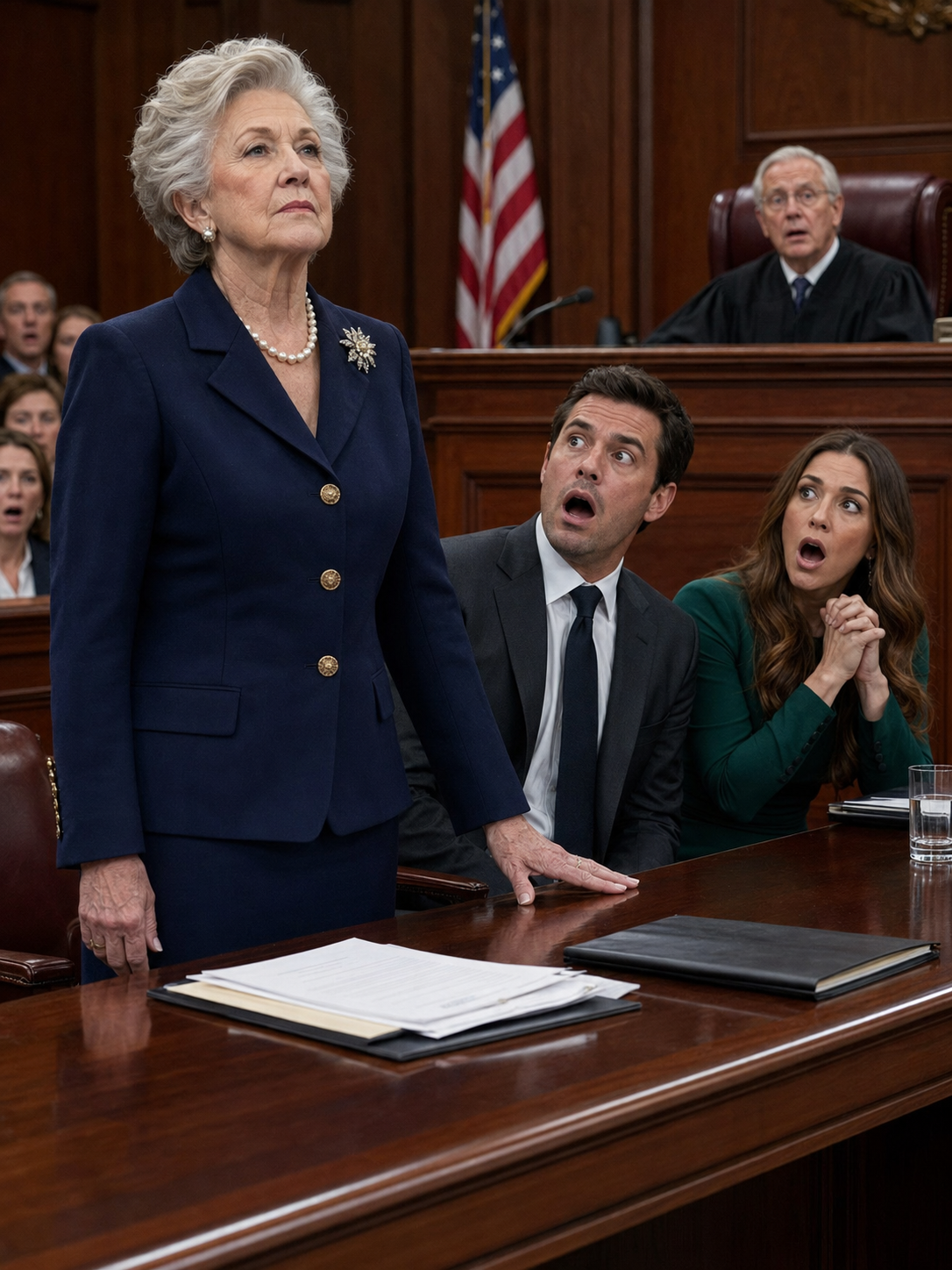
When Judge Mercer entered, the matter took less than fifteen minutes.
The petitioners moved to dismiss.
They stipulated that no medical evidence established incapacity.
The court evaluator’s report, submitted under seal, concluded I remained fully capable of managing personal and financial affairs.
Judge Mercer accepted the dismissal.
Then he looked at Daniel and Vanessa.
“I am not making findings today regarding disputed financial conduct.”
Both nodded.
“But I will say this. Guardianship is an extraordinary intervention. It is not a tool for resolving family disagreements, accessing assets, or bypassing consent.”
Daniel lowered his eyes.
Judge Mercer continued.
“Concern for an older relative may be sincere. Sincerity does not excuse failure to distinguish vulnerability from incapacity.”
Then he looked at me.
“Mrs. Vance, I trust your counsel will help resolve remaining issues through appropriate channels.”
“She will.”
“Good.”
His expression softened slightly.
“And for what it is worth, Bellweather remains one of the better examples of forensic testimony I encountered early in practice.”
I smiled.
“Thank you, Your Honor.”
That was all.
No applause.
No destroyed enemies.
Just a case dismissed and a door opening.
Outside, Daniel waited.
Vanessa stood beside him.
Priya remained a few steps away.
My son looked older than forty-three.
“Can we talk?”
“Yes.”
Vanessa started to follow.
Daniel looked at her.
“Please.”
Her face tightened.
Then she nodded and walked toward the benches.
Daniel and I stood beneath a courthouse tree losing its last leaves.
“I read Dad’s folder again,” he said.
“So did I.”
“He told me not to make his mistake.”
“Yes.”
“I did anyway.”
“Yes.”
He flinched.
I did not soften the word.
Not cruelty.
Clarity.
“I’m withdrawing from the Riverside project.”
“That sounds wise.”
“I’m probably going to lose the company.”
I waited.
“I thought you’d say something.”
“What do you want me to say?”
“That it’ll be okay.”
I looked at him.
“I don’t know if the company will be okay.”
His eyes filled.
“But you will survive losing a company.”
He looked down.
“Dad did.”
“Twice.”
“You said that.”
“He hated it.”
Daniel looked up.
“He did?”
“Of course.”
“You always made it sound like you two were careful.”
“We became careful.”
That landed.
He breathed slowly.
“So all those stories about building everything from nothing—”
“Were true.”
“But incomplete.”
“Yes.”
“Why didn’t you tell me?”
I thought about my father’s letter.
Thomas’s secrets.
My own edited history.
“Because parents are often foolish enough to think children need examples more than truth.”
Daniel gave a broken laugh.
“That sounds like something Grandpa would say.”
“He might add a swear word.”
That made him smile.
For a moment, I saw the boy again.
Then I remembered the man.
Both were real.
“I need to tell you exactly what I did,” he said.
I waited.
“I took the forty-eight thousand.”
“I know.”
“I told myself it was temporary.”
“I know.”
“I gave Kevin the scanned signature.”
“Yes.”
“I did not tell him to sign your name.”
“Did you know he might?”
Daniel closed his eyes.
“I knew he was talking about getting the loan done without you.”
“That is closer.”
“I didn’t ask what he meant.”
“Because you didn’t want to know.”
“Yes.”
He swallowed.
“And the guardianship was my idea.”
“Not Curtis’s?”
“He told us it was possible. I pushed for emergency filing.”
“Why?”
“Because when the bank froze the loan and you changed your account access, I panicked.”
“That is an explanation.”
“Not an excuse.”
“No.”
He looked toward Vanessa.
“She believed you really were declining.”
I followed his gaze.
“Did you tell her otherwise?”
“I told her about you forgetting things.”
“I misplaced my glasses twice.”
“I know.”
“You told her I wandered outside at night.”
He looked ashamed.
“You went onto the porch at two in the morning.”
“Because I could not sleep after your father died.”
“I made it sound worse.”
“Yes.”
“She believed me.”
“That is partly on her.”
“Yes.”
He took a breath.
“I’m going to repay you.”
“How?”
“Sell my share in the remaining project. Liquidate investments. Payment plan.”
“We’ll document it.”
He nodded.
“Of course.”
“And the seventy-five thousand from your father?”
“I’ll repay that to the trust.”
I thought about Samuel’s account.
“No.”
Daniel looked confused.
“No?”
“That loan was from Thomas’s separate account. We will handle it according to the note and the estate.”
“But—”
“No improvising.”
For the first time, he almost smiled.
“There she is.”
I raised an eyebrow.
He stopped.
“Sorry.”
“No. You’re right.”
I was still me.
That mattered.
“I don’t know if I can forgive you yet,” I said.
Daniel’s face changed.
“I know.”
“I love you.”
His eyes filled.
“I love you too.”
“That is not forgiveness either.”
“I know.”
“I need time.”
He nodded.
“For what?”
“To see what you do after being sorry.”
That sentence stayed between us.
Because apologies are words.
Trust is pattern.
Vanessa asked to speak with me next.
I almost said no.
Then I thought of Dr. Cho.
Knowledge and intimacy use different evidence.
I sat with Vanessa in the courthouse cafeteria.
A bad place for important conversations.
Maybe that helped.
Nobody looks grand beside a vending machine.
She held a paper cup with both hands.
“I owe you an apology.”
“Yes.”
She looked startled.
“You’re not going to make this easy.”
“I don’t know what easy would accomplish.”
She nodded slowly.
“I believed Daniel.”
“About my mental condition?”
“Yes.”
“All of it?”
“Not at first.”
That interested me.
“When did you start believing him?”
“After you refused to sell the house.”
I frowned.
“What does that have to do with cognition?”
“Nothing.”
She looked ashamed.
“But to me it did.”
“Explain.”
“My mother lost her house.”
I knew that.
Vaguely.
Years before Vanessa married Daniel.
“She held onto it after my father died,” Vanessa continued. “She couldn’t afford repairs. Taxes piled up. She refused help because the house represented him.”
I listened.
“By the time we convinced her to sell, she had lost most of the equity to debt.”
Vanessa looked at me.
“When you kept saying you would never sell, I saw her.”
“I never said never.”
“Daniel told me you had.”
There it was.
Again.
“He said the house was becoming too much for you.”
“It isn’t.”
“I know that now.”
She rubbed her thumb along the cup lid.
“I thought you were making an emotional decision because of grief.”
“I was making an emotional decision.”
She looked up.
“So?”
“Emotional does not mean incompetent.”
Vanessa nodded.
“I know.”
I continued.
“And even if I were making a bad financial decision, competent adults are allowed to make bad financial decisions.”
She laughed softly.
“That is a very forensic-accountant thing to say.”
“It is also a very important guardianship principle.”
Her smile disappeared.
“I should never have supported the petition the way I did.”
“No.”
“I should have spoken to you directly.”
“Yes.”
“I should not have given Kevin your property records.”
“No.”
Her eyes filled.
“I thought I was helping Daniel save what he built.”
“And what did you think I was?”
She closed her eyes.
“An obstacle.”
The honesty hurt.
I preferred it anyway.
“What about the locks?”
“Daniel told me Curtis had advised securing the house until court.”
“That is not what Curtis says.”
Her face changed.
“What?”
“Hale says he never advised changing my locks.”
Vanessa stared at me.
“Daniel said—”
She stopped.
Understanding moved across her face.
Not everything Daniel had done had been shared with her.
That did not absolve her.
It complicated the ledger.
“I’m sorry,” she whispered.
I believed her.
Again, belief was not restoration.
“Thank you.”
“Will you ever let us come back to the house?”
I looked at her.
“I don’t know.”
She nodded.
Fair.
Kevin left the guesthouse.
He sent me an apology through counsel and later admitted preparing the loan application using information provided by Daniel and Vanessa.
The lender pursued its own fraud review.
My attorney handled the civil side.
I did not demand ruin.
I demanded records, repayment, and clear responsibility.
Those were things I understood.
Daniel sold his interest in one development.
He paid back twelve thousand dollars within the first month.
Then another nine.
Then five.
Not because I needed the money immediately.
Because he needed to learn that repair could be boring.
No dramatic check.
No single act that erased everything.
Monthly transfers.
Statements.
Interest.
Consistency.
He began meeting with a financial restructuring adviser.
Not me.
That was important.
I was his mother.
For once, we kept the roles separate.
Three months after the hearing, he called.
“Can I come by?”
I almost said yes automatically.
Then I stopped.
“Why?”
“To talk.”
“About money?”
“No.”
“About the house?”
“No.”
“Then yes.”
He arrived carrying a cardboard box.
Inside were photographs.
Thomas’s.
We spent two hours at the dining-room table.
Dad holding baby Daniel.
Thomas in our first apartment.
Me wearing a haircut I had apparently believed was fashionable in 1987.
Daniel laughed.
“You look like a mushroom.”
“I could still disinherit you.”
“That feels legally questionable.”
“Emotionally satisfying.”
It was the first easy conversation we had shared in months.
Then he found a photograph of Thomas standing beside an empty construction site.
The house hill.
My father stood beside him.
Both men were muddy.
Both smiling.
On the back, Samuel had written:
Two stubborn men pretending this is not going to cost twice what they think.
I laughed until I cried.
Daniel looked at me.
“You okay?”
“Yes.”
For once, the answer was simple.
He turned the photograph over again.
“Do you wish Dad had told you?”
“About the debt?”
“Yes.”
“Yes.”
“Even though Grandpa forgave it?”
“Yes.”
“Why?”
“Because truth belongs in a marriage even when the outcome would not change.”
Daniel nodded.
“You’re angry with him.”
“I am.”
“Can you be angry with someone who’s dead?”
“Very efficiently.”
He smiled.
Then I added, “I forgive him too.”
Daniel looked surprised.
“Already?”
“No.”
I thought about it.
“Maybe forgiveness with your father started before I knew I needed it.”
“What does that mean?”
“Forty-seven years gives context.”
I touched the photograph.
“He withheld something because he was ashamed and because he thought he was protecting me. I dislike both reasons. But they exist inside decades of honesty, partnership, sacrifice, and repair.”
Daniel looked down.
“And I don’t have that context.”
“Not yet.”
The words came out before I planned them.
Daniel looked at me.
“Not yet?”
I sighed.
“Do not make too much of two words.”
He smiled faintly.
But we both knew they mattered.
Spring came.
The maple trees filled.
I repainted the guesthouse.
Not because Kevin had lived there.
Because the walls needed paint.
That distinction mattered.
Margaret accused me of symbolically reclaiming space.
I told her to stop reading magazines.
She brought curtains anyway.
Dr. Cho’s report remained sealed.
I never asked to see the score.
That was growth too.
One afternoon, Priya brought final settlement papers.
Daniel would repay the remaining withdrawn funds over thirty months, secured by his investment account.
He formally waived any claim to management of my assets during my lifetime unless I appointed him in writing.
He also agreed to pay part of my legal fees.
Vanessa contributed from her separate savings toward the losses associated with the unauthorized loan application.
Kevin reached a separate settlement with the lender and me.
No one went to prison.
No one was destroyed.
People paid.
Admitted.
Adjusted.
That felt more useful.
Priya watched me sign.
“Regrets?”
“Many.”
“About settlement?”
“No.”
“Good.”
She packed her papers.
“Will Daniel eventually inherit?”
I looked at her.
“Trying to become my estate planner?”
“I’m nosy.”
“He is still my son.”
“That was not the question.”
I smiled.
“My trust changed.”
Her eyebrows lifted.
“How?”
“I added an independent co-trustee for any inheritance distributed to beneficiaries with substantial creditor exposure.”
“Daniel?”
“Any beneficiary.”
She smiled.
“Forensic accountant to the end.”
“Apparently.”
I did not disinherit him.
That surprised Margaret.
“Why not?”
We were in my kitchen baking something neither of us understood.
“Because inheritance is not a reward for moral performance.”
“Interesting.”
“It is a choice about stewardship.”
“And you trust him with stewardship?”
“Not alone.”
Margaret laughed.
“There she is.”
Six months after the courtroom hearing, Daniel asked to visit Thomas’s grave with me.
We drove separately.
Boundaries.
At the cemetery, he carried his father’s old note.
Do not make my mistake. Do not turn shame into secrecy. It grows.
He placed a copy beneath a stone at the base of the marker.
I looked at him.
“What are you doing?”
“Dad loved paper.”
“He also loved litter-free grounds.”
“I’ll take it back.”
I laughed.
We stood in silence.
Then Daniel said, “I hated him for dying.”
My chest tightened.
“So did I.”
He looked at me.
“You did?”
“Of course.”
“You never said.”
“I was busy being sensible.”
“That sounds exhausting.”
“It was.”
He sat on the bench beside the grave.
“I think after he died, everything felt like it was falling apart. Business was already bad. Then he was gone. You were grieving. Vanessa was scared.”
He swallowed.
“I needed one thing to stop changing.”
“The Riverside project.”
“Yes.”
“And you tried to save it with everything around you.”
“Yes.”
“My money.”
“Yes.”
“My house.”
“Yes.”
“My capacity.”
He closed his eyes.
“Yes.”
I sat beside him.
“That is what you need to remember.”
He nodded.
“Not that I was desperate.”
“Both.”
He looked at me.
“Both?”
“Your desperation explains the path.”
“And the choices?”
“Belong to you.”
He nodded.
That was the balance I had spent months learning.
Context without excuse.
Accountability without cruelty.
Love without surrender.
A year after the hearing, Daniel completed repayment of the forty-eight thousand early.
He sold his luxury car.
Downsized his office.
Closed one failing partnership.
Took a salaried job with a development firm.
At first, he was embarrassed.
Then, slowly, relieved.
“You know what is strange?” he asked one Sunday.
“What?”
“I sleep.”
“That is usually encouraged.”
“No. I mean I actually sleep.”
He leaned back in my kitchen chair.
“I spent three years waking up at three in the morning calculating interest.”
“Your father did the same thing during our second business failure.”
Daniel smiled.
“You keep producing these inconvenient stories about him.”
“I have decades available.”
Vanessa came with him that day.
It was her first time inside my house since the court order.
She stood in the foyer as if unsure whether to remove her shoes.
“Come in,” I said.
She looked at me.
“You’re sure?”
“No.”
She almost smiled.
“Fair.”
I gestured toward the kitchen.
“Coffee.”
That was how we began.
Not with hugs.
Coffee.
She and I never became close.
Not in the way some stories would demand.
But we became honest.
That was better.
She apologized once more for supporting the guardianship petition.
I told her she did not need to keep apologizing forever.
“What should I do instead?”
“Notice me.”
She frowned.
“As what?”
“A person older than you who is still capable of surprising you.”
Vanessa smiled.
“I can do that.”
She did.
When I turned seventy-three, she gave me skydiving lessons.
I stared at the certificate.
“Absolutely not.”
She laughed.
“You said capable of surprising.”
“Not suicidal.”
Daniel said, “I told her.”
For twenty minutes, we argued.
It was wonderful.
The house changed too.
Not structurally.
Emotionally.
For decades, I had treated it as proof.
Proof that Thomas and I had succeeded.
Proof that my father’s faith in us had been justified.
Proof that we had built something lasting.
Then my father’s letter taught me what I should have known.
It is a house.
People are the inheritance.
So I used it differently.
I held neighborhood dinners.
Let Margaret’s grandchildren play in the living room.
Stopped caring about water rings on the dining table.
I even opened Thomas’s good bourbon.
Daniel looked horrified.
“Dad was saving that.”
“For what?”
He hesitated.
“Something.”
“Excellent. Tonight is something.”
We drank one small glass each.
It tasted terrible.
We both laughed.
“I think Dad was lying about this being good,” Daniel said.
“He had many flaws.”
“Apparently.”
Two years after the petition, Judge Mercer invited me to speak at a continuing legal education program about financial exploitation and guardianship.
I almost declined.
Then I agreed.
Not to tell my family story.
To tell the professional one.
I stood before a room of lawyers and judges and said:
“Capacity is not obedience.”
Pens moved.
“An older adult may reject advice, keep an expensive house, give money foolishly, change beneficiaries, remarry, invest badly, or refuse help.”
More pens.
“None of those choices, standing alone, establish incapacity.”
Then I added:
“And families can exploit vulnerability while sincerely believing they are helping.”
That quieted the room.
Because that was the harder truth.
Daniel had stolen money.
He had also been frightened.
Vanessa had supported a harmful petition.
She had also believed grief had changed me.
Kevin had prepared a forged application.
He had also rationalized it as saving a family business.
Explanations were not defenses.
But if we only studied villains, we would miss how ordinary people crossed lines.
After the lecture, Judge Mercer approached.
“You stayed in the house?”
“I did.”
“Good.”
“Would it have been bad if I sold?”
He smiled.
“Point taken.”
I liked him for that.
Then he said, “Your son?”
“Better.”
“You?”
I thought.
“Also better.”
That answer surprised me.
Because I had spent the first months thinking only Daniel needed repair.
I had needed some too.
Not from incapacity.
From grief.
From pride.
From believing expertise should have protected me from being hurt.
It cannot.
Knowledge does not make love risk-free.
Nothing does.
Three years after the hearing, Daniel came to my house carrying a folder.
I froze.
He noticed.
“Bad association?”
“Very.”
He put it on the table.
“This one is different.”
Inside was a business plan.
I stared at him.
“No.”
“You haven’t read it.”
“I am not investing.”
“I’m not asking.”
I looked up.
He smiled.
“I got offered a partnership.”
“Then why show me?”
“Because I want your opinion.”
“As a forensic accountant?”
“As my mother who happens to know numbers.”
I studied him.
“Those roles are dangerous together.”
“I know.”
“Are you sure?”
“Yes.”
“Then coffee first.”
We spent three hours on it.
I found six problems.
He disagreed with four.
Good.
At the end, I said, “What will you do?”
“Probably accept.”
“Even with the risks?”
“Yes.”
I nodded.
“Then accept.”
He smiled.
“You’re not going to tell me what to do?”
“No.”
“Why?”
“Competent adults are allowed to make bad financial decisions.”
He laughed so hard he nearly spilled his coffee.
That became one of my favorite memories.
Not because the partnership later succeeded.
It did, modestly.
But because the decision was his.
And this time, so was the truth.
When I turned seventy-five, I finally made a decision about the house.
I sold it.
Daniel stared at me when I told him.
“You’re kidding.”
“No.”
“You fought us for years over that house.”
“I fought you for my right to decide.”
“That is infuriatingly different.”
“It is.”
“Why sell now?”
I looked toward the porch.
The hill.
The maple trees.
Thomas’s study.
The guesthouse.
Forty-two years of life.
“Because I’m ready.”
He nodded slowly.
“Where will you go?”
“A condominium near Margaret.”
“You hate condominiums.”
“I hate stairs more.”
He smiled.
“Can I help?”
“Yes.”
That answer meant more than either of us said.
We packed together.
Vanessa labeled boxes.
Margaret criticized everyone.
Daniel found the height marks we had penciled inside the pantry door when he was a child.
Age five.
Age eight.
Age eleven.
Then one ridiculous mark Thomas had added at age fifty-nine.
Daniel touched it.
“Can we cut this out?”
“No.”
His face fell.
“The new owners get walls too.”
He nodded.
Then took a photograph.
Good enough.
On moving day, I stood alone in the empty living room.
Sunlight crossed the floor.
For decades, I had believed keeping the house honored my father and Thomas.
Selling it taught me something better.
Love does not require preserving every container it once occupied.
I carried my father’s letter in my coat pocket.
It is a house.
People are the inheritance.
Outside, Daniel waited beside the car.
Not directing movers.
Not checking my documents.
Waiting.
“Ready?” he asked.
I looked back once.
“Yes.”
He opened the passenger door.
I raised an eyebrow.
“I can open doors.”
“I know.”
“Then why?”
He smiled.
“Because I’m trying to be nice.”
“That will take practice.”
“Margaret says the same thing.”
We drove away laughing.
Years earlier, Daniel had believed control would save him from failure.
I had believed preparation would save me from betrayal.
Thomas believed silence could protect the people he loved from worry.
My father believed forgiveness could erase a debt without a conversation.
We were all wrong in different ways.
What saved us was less elegant.
Documents.
Consequences.
Apologies.
Repayment.
Boundaries.
Time.
Conversations that arrived embarrassingly late.
The willingness to hear an explanation without mistaking it for an excuse.
And the decision to let people become more than the worst thing they had done without pretending the worst thing had never happened.
I never gave Daniel power of attorney.
People found that surprising.
“Don’t you trust him now?” Margaret once asked.
“More than before.”
“Then why not?”
“Because trust does not require recreating old risk.”
She smiled.
“You really are impossible to retire.”
My successor agent remained Margaret until she became too old to enjoy the responsibility, at which point I appointed an independent fiduciary and gave Daniel medical decision authority jointly with a professional advocate.
He understood.
That was how I knew he had changed.
Not because he demanded proof of forgiveness.
Because he accepted a boundary without calling it rejection.
On the fifth anniversary of Thomas’s death, Daniel and I visited his grave.
Vanessa came too.
We brought no dramatic speeches.
Just coffee.
Daniel stood over the marker.
“You caused a lot of paperwork, Dad.”
I laughed.
Vanessa looked scandalized.
“I don’t think you’re supposed to criticize people at cemeteries.”
“Why not?” I asked. “They’re difficult to offend.”
Daniel smiled.
Then he became quiet.
“I wish he’d told us.”
“So do I.”
“Do you forgive him?”
“Yes.”
“Completely?”
I thought about it.
“No.”
Daniel looked surprised.
“Can those both be true?”
“Apparently.”
He nodded.
“I think I finally understand that.”
I looked at my son.
Forty-eight years old now.
Lines beginning around his eyes.
His father’s hands.
My stubbornness.
A man who had once tried to take control of my life because his own had frightened him.
A man I loved.
A man I did not excuse.
A man I trusted differently.
That was enough.
When we left the cemetery, Daniel held the gate open.
This time, I let him.
Not because I needed help.
Because sometimes accepting a kindness is not surrender either.