
PART 3
She was silent for several seconds.
Then she asked, “Claire, are you safe right now?”
“Yes. Patricia is watching television.”
“That’s not what I asked. Do you feel safe staying there tonight?”
I looked toward the living room.
Patricia had turned the television volume up so loudly that I could hear every word from the hallway.
“I don’t know,” I admitted.
“Then don’t force yourself to stay just because it’s your apartment. Go somewhere you feel safe. You can deal with the rest when you’re not alone with them.”
Her words settled something inside me.
I’d spent the entire day thinking about documents, bank statements, legal letters, and what I would say when Daniel came home.
I hadn’t thought about what I needed.
“I might come to your place for the night,” I said.
“Bring whatever you need. And Claire?”
“Yes?”
“You don’t have to convince your husband that being hit is wrong. He should already know that.”
After we hung up, I packed a small suitcase.
I took my laptop, work clothes, medication, and the folder containing my personal financial records. I photographed the condition of the apartment and saved copies of the relevant messages and account statements.
Then I went to the living room.
Patricia was reclining on the sofa, one hand resting on a bowl of grapes.
“Where are you going?” she asked.
“Out.”
“At this hour?”
“It’s six-thirty.”
She frowned.
“Daniel will be home soon. You should prepare dinner.”
I picked up my handbag.
“There’s food in the refrigerator. You’re welcome to make something.”
Her face tightened.
“You’re leaving me here alone?”
“I won’t be here tonight.”
She sat upright.
“After everything I’ve done for you?”
I almost laughed.
What exactly had she done for me?
She had criticized my work, invaded my privacy, rearranged my belongings, and struck me across the face. And now she was presenting herself as the injured party because I wouldn’t prepare her dinner.
“Patricia, I want you to understand something,” I said. “You are not entitled to my labor, and you are not entitled to touch me.”
She stared at me.
Then her expression shifted into the familiar look of wounded innocence.
“I knew you would turn out to be selfish eventually.”
I opened the front door.
“Good night, Patricia.”
“You’ll regret treating me this way!”
I didn’t answer.
As the elevator descended, I felt the first real breath of relief I’d taken since waking that morning.
It wasn’t happiness.
It was the feeling of no longer having to defend my existence to someone who had already decided I was wrong.
And when I reached Emily’s apartment, I discovered that leaving the room had been easier than leaving the marriage I’d imagined I had.
Because I still loved Daniel.
I just didn’t know whether I could love the man he had become.
Daniel arrived home at 9:18 p.m.
I know the exact time because he called me three times in twelve minutes, and I watched each call appear on my screen.
The first message said, Where are you?
The second said, Mom tells me you left her alone.
The third was different.
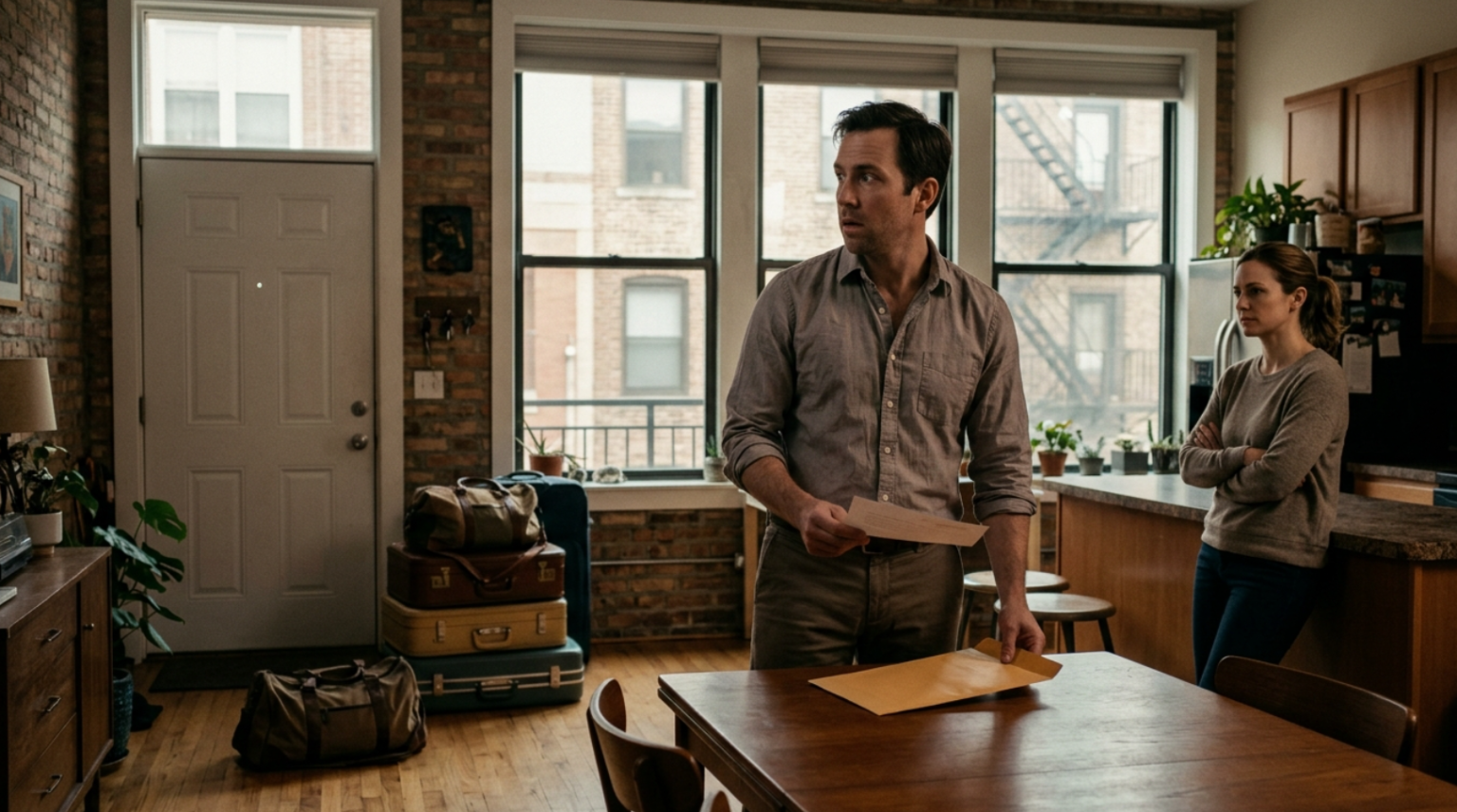
Claire, why is there an envelope on the table?
I stared at that final message for a long time.
Then I answered.
Read it carefully. We can talk tomorrow.
He called immediately.
I let it ring.
A few seconds later, my phone began vibrating again.
I finally answered.
“What is this?” Daniel demanded.
“Which part?”
“The letter. The bank statements. The hotel reservation. What are you trying to do?”
“I’m setting boundaries.”
“Boundaries?” He gave a short, disbelieving laugh. “You’ve hired an attorney, booked Mom a hotel, and left our home without telling me. That’s not setting boundaries, Claire. That’s declaring war.”
I sat on Emily’s guest bed, looking at the overnight bag beside me.
“Your mother slapped me.”
“We’ve already discussed that.”
“No, Daniel. You discussed how inconvenient it was for you.”
He fell silent.
I continued.
“You asked me to apologize to the person who hit me. You told me to keep her comfortable. You refused to explain why she’d been receiving money from our joint account for seven months. And when I tried to understand what was happening, I found her looking through my property documents.”
“She wasn’t snooping. She was curious.”
“Why was she asking about my equity?”
“I don’t know!”
“Then perhaps you should ask her.”
I heard him move away from the phone.
When he spoke again, his voice was quieter.
“Mom is upset. She’s been through a lot.”
“And so have I.”
“Claire, she’s my mother.”
“And I’m your wife.”
“I know that!”
“Do you?”
The question hung between us.
For a moment, neither of us spoke.
Then Daniel said, “Come home tomorrow. We’ll sit down and work this out like adults.”
“I’ll meet you at home tomorrow afternoon, provided Patricia isn’t there. I want to discuss the money, the assault, and what happens next.”
“You can’t just tell my mother to leave.”
“She’s my guest. I have already spoken with an attorney about the appropriate process. If she refuses to leave, I’ll follow the law.”
He exhaled sharply.
“You’re making me choose.”
I closed my eyes.
“No, Daniel. Your mother made a choice when she hit me. You made a choice when you asked me to accept it. I’m making mine now.”
I ended the call.
For several minutes, I sat perfectly still.
Emily knocked gently on the bedroom door.
“Everything okay?”
I nodded, although my eyes were burning.
“He’s angry.”
“Of course he is. Things are no longer happening the way he expected.”
I wiped my face.
“What if I’ve destroyed my marriage?”
Emily came over and sat beside me.
“Then the question isn’t whether you destroyed it by refusing to be mistreated. The question is why it required your silence to keep it standing.”
I looked down at my hands.
I didn’t have an answer.
But for the first time, I was beginning to ask the right questions.
The following morning, Daniel sent me a photograph.
It showed the first page of the envelope, the attorney’s letter resting beside our wedding photograph.
Underneath it, he’d written:
You really want to do this?
I replied:
Yes. We need to talk.
At two o’clock, I returned to the condo.
Patricia was gone.
Her suitcases had been moved from the guest room to the hallway, and a half-finished cup of coffee sat on the kitchen counter.
Daniel stood near the window wearing the gray sweater I’d bought him for Christmas.
He looked exhausted.
For a second, I wanted to cross the room, wrap my arms around him, and ask him to tell me that everything would be okay.
That instinct frightened me more than his anger.
Because it was the same instinct that had kept me quiet for three years.
He turned when he heard the door close.
“Where were you last night?”
“With Emily.”
“You could have told me.”
“I did tell you I wasn’t staying here.”
“You didn’t say you were leaving the apartment.”
“Daniel, I don’t need permission to spend a night somewhere else.”
He rubbed his forehead.
“Fine. Can we please sit down?”
We sat across from each other at the dining table.
The manila envelope was still between us.
Daniel tapped it with one finger.
“I don’t understand how we got here.”
I looked at him.
“Neither do I.”
He opened the envelope and removed the documents.
The first was the attorney’s letter concerning Patricia’s stay.
The second summarized the financial transfers I’d found.
The third outlined the questions I wanted answered before deciding whether our marriage could continue.
He read them slowly.
When he reached the bank statements, his expression changed.
“Where did you get these?”
“Our joint account.”
“Why were you going through our finances?”
“Because I found seven monthly transfers of eight hundred and fifty dollars to your mother.”
He stared at the page.
“That’s what this is about?”
“It’s part of it.”
“She’s been struggling with rent.”
“Then why didn’t you tell me?”
He put the papers down.
“Because I knew you’d react like this.”
I felt a cold stillness settle over me.
“Like what?”
“Like I’m doing something wrong by helping my mother.”
“Helping her isn’t wrong. Hiding recurring payments from your wife is a problem, especially when we agreed to discuss substantial expenses.”
He shook his head.
“You’re making this sound criminal.”
“I’m asking why you concealed it.”
“I didn’t conceal anything. I just didn’t think it needed to become a big discussion.”
“Seven months, Daniel. Seven payments.”
He leaned back in his chair.
“She needed help. I had the money available, and I helped her.”
“From our joint account.”
“Yes.”
“Without telling me.”
He looked away.
I waited.
Finally, he said, “I should have told you.”
It was the first honest sentence he’d spoken since returning.
But it wasn’t enough.
“Why did you tell me she had nowhere to go?”
“Because her landlord is selling the building. She has to move when her lease ends.”
“When?”
He hesitated.
“Next month.”
I frowned.
“Then why is she staying here now?”
“She said she needed time to figure things out.”
“Daniel, you told me she was staying for a few nights while you were traveling.”
“That was the original plan.”
“And when did it change?”
He didn’t answer.
I looked at him carefully.
“Did you invite her to live here permanently?”
His silence was so complete that I heard the refrigerator switch on.
Then he said, “We were discussing it.”
“We?”
“Mom and I.”
“Without me?”
“I hadn’t made a final decision.”
I looked toward the hallway where Patricia’s suitcases had stood.
For the first time, I understood why she had been inspecting my cabinets, asking about my work schedule, and examining my property documents.
She hadn’t simply been visiting.
She had been preparing.
And Daniel had allowed her to believe that our home could become hers without asking the person who owned it.
“How long?” I asked.
“What?”
“How long have you been discussing her moving in?”
He looked down.
“About three weeks.”
Three weeks.
Three weeks of conversations behind my back.
Three weeks of Patricia testing how much control she could exert over me.
Three weeks of Daniel knowing there was a possibility his mother would move into our home while assuring me her visit would last only a few days.
I felt the last fragile piece of my trust begin to break.
“Did you tell her she could have the guest room?”
“Claire—”
“Did you tell her she could live here?”
He swallowed.
“I said we could make it work.”
I stared at him.
“How?”
He rubbed his hands together.
“We could move your office into the bedroom. Mom could use the second room. We’d work out the details.”
I almost couldn’t speak.
“My office is where I work when I’m home. You know that.”
“We’d figure something out.”
“And what would I have to give up next?”
He stood abruptly.
“Why are you acting as if I planned to ruin your life? She’s my mother. She’s getting older. She needs support.”
“I never said you couldn’t support her.”
“Then what do you want from me?”
I stood, too.
“I want you to stop making decisions about my home as if my opinion is optional. I want you to stop expecting me to absorb every insult because confronting your mother makes you uncomfortable. And I want a husband who understands that his wife should not have to negotiate for basic safety.”
His face reddened.
“I never told her to hit you!”
“No. You just told me to apologize afterward.”
He opened his mouth, then closed it.
I picked up the bank statements and placed them back inside the envelope.
“There’s something else you need to know. I contacted an attorney about my options. I haven’t decided whether I want a separation or a divorce. But I’m not going to continue this marriage under the same conditions.”
Daniel looked at me as if I’d spoken in a foreign language.
“You’d throw away three years over one incident?”
I stared at him.
“One incident?”
He looked uncomfortable.
“That’s not what I meant.”
“Then what did you mean?”
“I mean we’ve had a good marriage.”
“We did have good moments. I’m not denying that. But the good moments don’t erase what happens when things become difficult.”
He sat down again.
For a moment, he looked less like the confident regional sales manager who could persuade clients to sign expensive contracts and more like the boy who had spent his childhood trying to keep his mother happy.
I knew that boy existed.
I’d heard the stories about his father’s departure, the years Patricia worked overtime, and the holidays she spent worrying about bills.
I’d always felt compassion for him.
But compassion couldn’t mean allowing the same patterns to continue indefinitely.
“Daniel,” I said softly, “I understand why you feel responsible for your mother. I really do. But responsibility doesn’t mean giving her control over our marriage.”
He looked at the papers.
“What do you want me to do?”
I took a breath.
“First, I want you to acknowledge that she assaulted me. Not that we had an argument. Not that she got upset. She hit me.”
He nodded reluctantly.
“Second, I want you to stop discussing my property and our living arrangements with her without my consent.”
He nodded again.
“Third, I want complete transparency about the transfers and any other financial commitments you’ve made. We’ll review the records with professional advice if necessary.”
He looked up.
“And the marriage?”
I felt tears gathering behind my eyes, but I kept my voice steady.
“The marriage depends on what happens next. Not on what you promise today.”
He looked at the wedding photograph on the sideboard.
Then he asked, almost in a whisper, “Do you still love me?”
The question hurt more than I expected.
“Yes,” I said. “But love isn’t the only thing a marriage needs.”
For a long time, he said nothing.
Then he picked up the envelope.
“I need to talk to Mom.”
“That’s your choice.”
“And you’re not going to stop me?”
“No. But if that conversation becomes another attempt to pressure me into accepting her behavior, I won’t participate.”
He walked toward the front door.
Before leaving, he turned.
“I didn’t think you’d actually go through with this.”
I looked at him.
“That was the problem, Daniel. You thought I’d keep accepting it.”
He left without answering.
And I stood alone in the apartment I’d worked six years to own, wondering whether the man I’d married would ever understand the difference between loving his family and surrendering his judgment to them.
I didn’t know what he would choose.
But I knew what I would no longer accept.
Part 4: The Truth Patricia Didn’t Want Him to Hear
Daniel didn’t return that evening.
He sent a message at 8:14 p.m.
Mom says you humiliated her. She says you took pictures of her and involved the police to frighten her.
I read the message twice.
Then I called him.
He answered on the fourth ring.
“Did you actually listen to what she told you?” I asked.
“She says you made her feel like a criminal.”
“Did you ask her why I contacted the police?”
“She said you exaggerated what happened.”
I closed my eyes.
“Daniel, I have photographs of my cheek taken minutes after she hit me. I wrote down what happened. I spoke with an officer and documented my account. I haven’t invented anything.”
He sighed.
“She says she barely touched you.”
“Then ask her why she came into my bedroom demanding breakfast and why she called you before I did.”
Silence.
I continued.
“Ask her why she told you we had an argument when I was asleep until she entered the room.”
He didn’t answer.
“Daniel, you were there when I told you what happened. You heard me say she’d slapped me. You don’t need your mother to confirm what you already know.”
His voice grew defensive.
“You’re making it impossible for me to help either of you.”
I felt exhausted.
“You don’t have to choose which person deserves basic respect. You can help your mother find housing without asking me to live with someone who assaulted me.”
“She says she has nowhere to go.”
“Then help her find somewhere to live.”
“That’s easier said than done.”
“I know. But difficulty doesn’t make my home the automatic solution.”
He was quiet for a moment.
Then he said, “She told me something else.”
“What?”
“She says you’ve always hated her.”
I almost laughed.
Not because it was funny, but because it was so familiar.
Every time I objected to something Patricia did, the discussion somehow became a referendum on whether I loved her enough.
“Ask her whether I drove her to her cataract appointments,” I said. “Ask her whether I invited her to holidays, bought her things she liked, and tried to make her comfortable when she visited.”
“I know you did those things.”
“Then why are we discussing whether I hate her?”
He didn’t respond.
I took a breath.
“Daniel, I am not asking you to hate your mother. I am asking you to stop allowing her to hurt me.”
He said he needed time to think.
For once, I let him have it.
The following two days were quiet.
I went to work, met with my attorney, and arranged for the guest room to be cleaned and prepared for a future tenant or family visitor, depending on what happened next.
I didn’t make any dramatic decisions.
I didn’t throw away our wedding photographs.
I didn’t change the locks without legal advice.
I didn’t send angry messages to Patricia or post about our situation online.
I simply continued with my life.
On Friday afternoon, Daniel called and asked whether we could meet at a café near my office.
I agreed.
When I arrived, he was sitting at a table beside the window, holding two cups of coffee.
He looked as though he hadn’t slept properly.
“I’ve been thinking,” he said.
I sat down.
“About what?”
“Everything.”
He pushed one cup toward me.
“I spoke to Mom yesterday. Really spoke to her.”
I waited.
“I asked her why she thought she could hit you.”
“What did she say?”
“She said she was angry because you’d embarrassed her by refusing to make breakfast.”
I felt my jaw tighten.
“That doesn’t explain anything.”
“I know.”
He looked down at his coffee.
“Then she said she’d been under a lot of pressure because she thought she was going to lose her apartment. She said she’d been afraid of becoming a burden.”
I nodded slowly.
“That’s understandable. But it doesn’t excuse what she did.”
“I know that now.”
I watched his face.
He seemed sincere, but I’d learned that sincerity in a difficult conversation wasn’t the same as lasting change.
“What else did she say?”
He took a deep breath.
“She admitted she knew about the $850 transfers. Obviously, she knew. But she said she thought I was using my own money.”
“Were you?”
He hesitated.
“Some of it came from my salary. Some came from the joint account.”
“Why didn’t you tell me?”
He looked ashamed.
“Because I knew you’d ask questions.”
“Questions about what?”
He rubbed his forehead.
“About how long I’d been helping her. About whether she could afford her apartment. About what would happen when her lease ended.”
“And you didn’t want to answer those questions.”
“No.”
The honesty surprised me.
He continued.
“Mom told me she’d been struggling to pay rent for a while. I started helping her because I didn’t want her to lose her apartment. Then the landlord announced the building was being sold, and she panicked. She started talking about moving in with us.”
“Three weeks ago.”
He nodded.
“I told her we could probably make it work. I didn’t think through what that would mean for you.”
I looked at him steadily.
“You didn’t think through what it would mean because you assumed I would adjust.”
He swallowed.
“Yes.”
It was the first time he’d admitted the truth without trying to defend himself.
I wanted to feel relieved.
Instead, I felt sad.
Because it meant he had understood enough to know what he was doing, even if he hadn’t wanted to acknowledge it.
“What happens now?” I asked.
He looked directly at me.
“I told Mom she can’t move in.”
I didn’t speak.
“I told her that even if we were willing to help her financially, she couldn’t live here unless we both agreed. And after what happened, she needs to stay somewhere else while we figure things out.”
“How did she react?”
“She called me ungrateful.”
I almost smiled, but stopped myself.
“What did you say?”
“I told her I loved her, but that didn’t mean I could let her treat you that way.”
I looked at him for a long time.
“And the money?”
“I’ve made a list of every transfer. I also found a few payments I hadn’t told you about. Nothing huge, but I should have been honest.”
My stomach tightened.
“What payments?”
He pulled a folded sheet of paper from his jacket.
There were four additional transfers over the previous year, ranging from $200 to $600.
Together, they amounted to $1,700.
“I should have told you,” he said. “I’m sorry.”
I studied the page.
The money itself wasn’t what hurt most.
It was the secrecy.
Every time Daniel had decided I couldn’t be trusted with information about our shared finances, he had made a decision about the kind of marriage we were having.
“I appreciate you showing me this,” I said. “But we need to review everything properly. I don’t want another promise that this won’t happen again. I want a system that prevents it from happening again.”
He nodded.
“That’s fair.”
“And Patricia?”
He hesitated.
“She’s staying with a friend for now. I’ve booked her a consultation with a housing adviser, and I’ll help her look at affordable apartments. I’m also willing to contribute an agreed amount from my own income, provided we set a budget and I’m transparent about it.”
I felt something loosen in my chest.
Not forgiveness.
Not yet.
But perhaps the first small sign that Daniel was beginning to understand.
“That’s a reasonable plan,” I said.
He looked at me.
“Does that mean you’ll come home?”
I glanced out the window.
People were walking past with shopping bags and briefcases. A cyclist waited at the traffic light. Someone at the next table was laughing at a message on her phone.
Ordinary life continued, even when a marriage was standing at a crossroads.
“I’ll come home when I’m ready,” I said. “But I need you to understand something. Patricia’s housing situation isn’t the only issue between us.”
He nodded.
“I know.”
“Do you? Because if your first instinct is still to protect your mother from the consequences of her actions, we’ll end up right back here.”
He looked at his hands.
“I understand.”
I hoped he meant it.
But I wasn’t going to rebuild my life on hope alone.
Two days later, Patricia called me.
I almost didn’t answer.
Then I decided that hearing what she had to say might help me understand whether anything had truly changed.
“Claire,” she said, her voice unusually restrained. “Daniel tells me you’re very upset.”
I leaned against the kitchen counter.
“Yes, Patricia. I am.”
“I think there’s been a misunderstanding.”
“No. You slapped me.”
A pause followed.
Then she said, “I was angry.”
“I understand that you were angry. But you chose to hit me.”
“I’ve already apologized to Daniel.”
I felt my stomach tighten.
“Did you apologize to me?”
She was silent.
“I didn’t think so,” I said.
“You know, I spent thirty years raising that boy alone. I sacrificed everything for him.”
“I know you’ve worked hard for Daniel. I’ve never denied that.”
“Then you should understand why I need his help.”
“I do understand why he wants to help you. What I don’t understand is why you believe that gives you the right to hit me or move into my home without my agreement.”
Her breathing grew louder.
“I never said I was moving in permanently.”
“Daniel told me you had discussed it for three weeks.”
“Well, he offered!”
“And I never agreed.”
“You’re making me sound like some kind of intruder.”
I looked around my kitchen.
The cabinets she’d rearranged were still slightly out of order. A small scratch remained on the dining table where she’d dragged a ceramic bowl across the wood.
I remembered the morning she’d slapped me.
The shock.
The humiliation.
The phone call to Daniel.
His request that I apologize.
“No,” I said quietly. “I’m asking you to respect that this is my home, too.”
She gave a bitter laugh.
“Your home. You always make sure everyone knows that.”
I closed my eyes.
There it was.
The real grievance.
Not the breakfast.
Not the coffee.
Not even the money.
Patricia resented that I had something she couldn’t control.
She resented that I’d built a life before Daniel, a life with a home, a career, and financial security that didn’t depend on her approval.
And perhaps, somewhere beneath all that resentment, she was frightened.
Frightened of losing her son.
Frightened of losing her independence.
Frightened of becoming someone other people could dismiss.
I could feel compassion for that fear.
But I couldn’t let it become an excuse.
“Patricia,” I said, “I hope you find a safe, comfortable place to live. I hope Daniel helps you in a way that’s fair to everyone. But I will not discuss the assault as though it were a misunderstanding.”
She started to interrupt.
I continued.
“And I won’t discuss moving you into the condo. That decision has been made.”
“You can’t keep me away from my own son!”
“I’m not trying to keep you away from Daniel. You can call him, visit him, and spend time with him. But you cannot use my home as a way to control our marriage.”
For several seconds, she said nothing.
Then, very quietly, she asked, “Does he really think I was wrong?”
I hesitated.
“Daniel is responsible for his own decisions. You should ask him.”
She hung up.
I stood in the kitchen with the phone in my hand.
Part of me felt guilty.
I’d been raised to believe that family disagreements should be settled privately, that older relatives deserved special patience, and that keeping peace was often more important than winning an argument.
But I was beginning to understand something my younger self had never fully grasped.
Respect for someone else’s struggles did not require disrespecting myself.
And setting a boundary wasn’t the same as punishing someone.
It was simply deciding what I would no longer allow.
Three weeks passed before Daniel and I made any major decisions about our marriage.
We began counseling.
At our first appointment, the therapist asked Daniel what he thought had gone wrong.
He talked about his mother’s difficult circumstances, the pressure of his job, and the way our disagreements had escalated.
Then the therapist asked me.
I told her about the years of small compromises, the comments at family dinners, the rearranged cabinets, and the mornings I’d spent preparing meals for Patricia because I thought being helpful might finally earn her approval.
I told her about the slap.
And I told her about Daniel’s response.
When I finished, the therapist turned to him.
“What do you think Claire needed from you that morning?”
Daniel looked uncomfortable.
“Support.”
“What kind of support?”
He stared at the floor.
“She needed me to believe her. To tell my mother what she did was wrong.”
“Did you do that?”
“No.”
“Why not?”
His answer came slowly.
“Because I was afraid of upsetting my mother.”
The therapist nodded.
“And what did you ask Claire to do instead?”
He swallowed.
“Accept it.”
The room fell silent.
For the first time, Daniel heard his own actions described without the protective language he’d used to justify them.
He hadn’t intended to hurt me.
But he’d asked me to carry the cost of his fear.
That evening, when we left the appointment, he walked beside me to the parking garage.
“I’m sorry,” he said.
I stopped.
“I need you to understand that I’m not asking for an apology just so we can move on.”
“I know.”
“I’m asking for a different marriage. One where I don’t have to fight for my place in my own home.”
He nodded.
“I want that, too.”
“Then we need to keep doing the work, even when it’s uncomfortable.”
“I will.”
I looked at him.
“Daniel, I love you. But I’m not going back to the way things were.”
He took my hand.
“I don’t want you to.”
For the first time in weeks, I allowed myself to hold his hand without wondering whether I was betraying myself.
It wasn’t a guarantee that we’d stay married.
It was simply a beginning.
And sometimes, a beginning is all a person can honestly offer.
Part 5: The Day Patricia Came Back
Patricia returned to the condo on a Saturday morning, carrying a small gift bag.
Daniel had arranged to meet her downstairs so she wouldn’t arrive unexpectedly. I’d agreed to a brief conversation in the building’s common room, with the understanding that she would not enter the apartment.
When I walked in, she was sitting beside the window.
She looked different.
Her hair was pulled back carelessly, and there were dark circles beneath her eyes. The confidence she’d displayed during her visit had been replaced by something quieter.
Daniel stood when he saw me.
“Thank you for coming,” he said.
I sat across from Patricia.
She placed the gift bag on the table.
“I brought you something.”
I didn’t reach for it.
“What is it?”
“A scarf.”
I looked at the bag, then at her.
“Thank you. You didn’t need to bring me anything.”
She nodded, appearing uncertain about what to say next.
Daniel sat beside me.
“Mom wanted to talk.”
Patricia clasped her hands.
“I’ve been thinking about what happened.”
I waited.
She took a breath.
“I shouldn’t have hit you.”
The words were simple.
But I felt them land in the room with more weight than any of the explanations she’d offered before.
“No,” I said. “You shouldn’t have.”
She looked down.
“I was angry. I felt unwanted, and I thought you were deliberately making things difficult for me.”
“I didn’t want you to feel unwanted. But I didn’t agree to have you move in, and I wasn’t going to pretend that I had.”
“I know.”
She rubbed her thumb against her wedding ring.
“My own mother used to say that a wife should keep her husband’s family happy. I suppose I believed that if I was the mother, I could decide how things should be.”
I listened without interrupting.
“I thought Daniel would always take my side,” she continued. “I never considered that he might be hurting you by doing that.”
Daniel’s face tightened.
“Mom, I hurt Claire, too. I asked her to apologize after you hit her.”
Patricia looked at him.
For a moment, I thought she might argue.
Instead, she lowered her eyes.
“Yes,” she said. “You did.”
It was the first time I’d heard her acknowledge Daniel’s part in the situation without immediately turning the conversation toward herself.
She looked at me again.
“I am sorry, Claire. Not because Daniel told me to say it. I am sorry because I hurt you.”
I believed she felt regret.
Whether that regret would lead to lasting change was another question.
“I appreciate the apology,” I said. “But trust takes time. I need you to understand that things won’t return to how they were before.”
She nodded.
“I understand.”
“And I don’t want any more discussions about moving into the condo. Daniel can help you find a place, but living arrangements involving me have to be discussed with me.”
“All right.”
“No looking through my documents. No rearranging my belongings. And no insults disguised as jokes.”
Her lips pressed together.
Then she said, “All right.”
Daniel looked between us.
“Thank you.”
I turned toward him.
“Don’t thank us for having a conversation. The important thing is what happens afterward.”
He nodded.
Patricia pushed the gift bag toward me.
“I hope you’ll accept it.”
I picked it up.
“Thank you.”
We spoke for another fifteen minutes about practical arrangements.
Daniel explained that Patricia had found a small apartment in a nearby neighborhood. It wasn’t as spacious as her previous home, but the rent was manageable with a contribution from Daniel and her own retirement income.
She would move in at the end of the month.
Daniel had agreed to help with the deposit and moving costs, provided we documented the arrangement and kept our household finances transparent.
There were no dramatic declarations.
No sudden embrace.
No promise that we’d become a perfect family.
When the conversation ended, Patricia stood and adjusted her coat.
“I hope things can get better,” she said.
“So do I,” I answered.
She looked at Daniel.
“Call me tomorrow.”
“I will, Mom.”
Then she left.
I watched her walk toward the elevator.
I didn’t feel triumphant.
I felt tired, relieved, and cautious.
But I also felt something I’d been missing for a long time.
The ability to be kind without surrendering my boundaries.
Over the next two months, Daniel and I continued counseling.
Some sessions were difficult.
There were times he slipped into old habits, defending his mother before fully listening to me. There were evenings when I became so frustrated that I wondered whether we were trying to repair something that had already broken beyond repair.
But there were also changes.
Daniel began asking before making financial commitments that affected our shared plans.
He stopped assuming that I would automatically organize family gatherings.
When Patricia complained that I hadn’t called her, he no longer forwarded the complaint to me as though it were an assignment.
Instead, he told her he was happy to speak with her, but our relationship was something she and I would have to build ourselves.
Most importantly, he stopped asking me to apologize simply because someone else was upset.
I noticed the difference in small moments.
One Sunday, Patricia invited us to lunch at her new apartment.
I agreed to go, but I made it clear that I would leave if anyone raised their voice or made personal attacks.
The lunch was awkward at first.
Patricia served roasted chicken, potatoes, and green beans. She asked about my work, and I answered politely.
Halfway through the meal, she remarked that Daniel looked tired and needed someone to take better care of him.
The old version of Daniel might have laughed.
The old version of me might have smiled and changed the subject.
Instead, Daniel put down his fork.
“Mom, Claire takes good care of herself and contributes a lot to our marriage. I’m responsible for taking care of myself, too.”
Patricia blinked.
“I was only making a comment.”
“I understand. But I don’t want us making comments that turn Claire into someone responsible for managing every part of my life.”
She looked at him, surprised.
Then she nodded.
“All right.”
The conversation moved on.
It was a small moment.
But as I watched Daniel return to his meal, I realized something important.
He wasn’t asking me to fight his mother for him anymore.
He was finally learning to speak for himself.
And that meant I no longer had to be the person standing between them.
The Ending: The Home I Refused to Lose
Six months after the morning Patricia slapped me awake, Daniel and I sat at our dining table reviewing our finances.
The same oak table.
The same apartment.
The same two people who had once sat across from each other believing love would automatically teach them how to build a life together.
We had changed our financial arrangements with professional guidance. We established clear boundaries around shared expenses and personal savings, and we agreed that any substantial support for relatives would be discussed openly before money was committed.
Patricia was settled in her apartment.
She and Daniel spoke several times a week. She occasionally invited us over for dinner, and I accepted when I felt comfortable.
Our relationship wasn’t suddenly warm or effortless.
There were still moments when she seemed tempted to return to old habits. But when that happened, Daniel addressed it rather than expecting me to absorb the discomfort.
And when he failed, we discussed it in counseling instead of pretending it hadn’t happened.
One evening, while we were putting away the dishes, Daniel turned toward me.
“Can I ask you something?”
“Of course.”
“That day you left for Emily’s house, did you think our marriage was over?”
I dried my hands on a towel.
“Yes.”
He looked down.
“I thought so.”
“I loved you. But I couldn’t keep living as though loving you meant abandoning myself.”
He leaned against the counter.
“I understand that now.”
I studied his face.
“Do you regret helping your mother?”
“No. I regret hiding it from you. I regret letting her believe she could move into our home without your agreement. And I regret what I said after she hit you.”
He paused.
“I think I spent my whole life believing that if Mom was upset, it was my job to fix it. I never realized how often I made you pay for that.”
I put the towel down.
“What matters is what you do with that understanding.”
“I know.”
He reached for my hand.
“I can’t promise I’ll never make a mistake. But I can promise I won’t ask you to pretend you’re not hurt just to make my life easier.”
I squeezed his hand.
That was the promise I had needed from him months earlier.
Not that he would always agree with me.
Not that he would abandon his mother.
Not that our marriage would never face another difficult moment.
Only that he would stop treating my dignity as the price of keeping everyone else happy.
A year later, Patricia invited us to celebrate her sixty-eighth birthday.
I brought a small bouquet of flowers and a lemon cake from her favorite bakery.
When she opened the door, she looked at the cake and smiled.
“You remembered.”
“Of course.”
She stepped aside to let us in.
The apartment was bright, with sunlight spilling across the living room. A small vase of fresh flowers sat on the table, and photographs of Daniel covered one wall.
She had made a life for herself there.
Not the life she had originally imagined, perhaps, but one that belonged to her.
During dinner, she thanked Daniel for helping her settle in.
Then she turned to me.
“And thank you, Claire, for helping me understand something I should have understood a long time ago.”
I waited.
“That being family doesn’t mean I can make decisions for everyone else.”
I nodded.
“That’s important.”
She looked down at her plate.
“I know I can’t change what happened. I wish I could.”
I believed her.
But forgiveness wasn’t a switch I could turn on because someone had finally found the right words.
It was something I could offer gradually, without forgetting what I’d learned.
After dinner, Patricia asked me to help her carry the dishes into the kitchen.
For a moment, I hesitated.
Then I followed her.
She rinsed a plate while I dried it.
“I used to think you were trying to take Daniel away from me,” she said quietly.
I folded the dish towel over my hand.
“I never wanted to take him away from you.”
“I know that now.”
She placed the plate on the counter.
“I think I was frightened that my life was changing, and I didn’t know what to do with that fear.”
I looked at her.
“Being frightened is understandable. Hurting someone because you’re frightened isn’t.”
She nodded.
“You’re right.”
We finished the dishes without another word.
And for once, the silence wasn’t uncomfortable.
It was simply silence.
On the drive home, Daniel reached across the center console and took my hand.
“Thank you for giving us a chance,” he said.
I watched the streetlights pass through the windshield.
“I gave us a chance because I wanted to see whether we could build something healthier. Not because I was willing to go back to the way things were.”
“I know.”
He squeezed my hand.
“I’ll keep showing you.”
When we reached the condo, I unlocked the door and stepped inside.
The apartment was quiet.
My books were on their shelves. My documents were safely stored in my office. The guest room was once again a space I could use for work, visitors, or simply closing the door when I needed time alone.
Nothing about the apartment had changed dramatically.
But everything about how I felt inside it had changed.
I no longer looked at my home as something I had to defend through endless explanations.
I looked at it as the life I’d worked hard to build.
A life I could share with someone I loved, provided that love was accompanied by respect.
I took the little ceramic dish from my nightstand and placed my wedding ring inside it before bed.
Not because I wanted to take it off.
Because I wanted to remember that marriage was a choice we had to keep making, even when the choices were difficult.
Daniel came into the bedroom a few minutes later.
“Claire?”
“Yes?”
“Coffee tomorrow morning?”
I smiled faintly.
“Make your own.”
He laughed.
“I deserved that.”
Then his expression softened.
“Thank you for not giving up on yourself.”
I looked at him, and for the first time in a long while, I felt peaceful.
“I almost did,” I admitted. “That’s why I had to stop.”
He sat beside me and took my hand.
We didn’t need another speech.
We didn’t need to pretend the past hadn’t happened.
We simply needed to keep choosing honesty, accountability, and respect.
And if we couldn’t do that, I finally understood that I would still be all right.
Because the greatest lesson that morning hadn’t been about Patricia, or Daniel, or even marriage.
It had been about the difference between keeping a home and keeping the peace.
For years, I’d believed that being a good wife meant making everyone comfortable, even when their comfort came at my expense.
Now I knew better.
A home should be a place where you can sleep without fear of being struck awake.
A marriage should be a place where your voice matters even when someone disagrees with you.
And love should never require you to become smaller so another person can feel bigger.
That morning, Patricia had slapped me because breakfast wasn’t ready.
My husband had asked me to apologize because he didn’t want a fight.
But I had chosen something neither of them expected.
I chose myself.
And in doing so, I gave my marriage one final chance to become what it should have been all along.
Not perfect.
Not free from conflict.
But honest, respectful, and safe.
Because sometimes, the most important moment in a person’s life isn’t when they finally get someone else to understand their worth.
It’s when they stop waiting for permission to believe in it themselves.
A Final Lesson in Love and Respect
A year later, Daniel and I were sitting on our balcony, watching the Chicago sunset, when he reached for my hand.
“Claire,” he said quietly, “I wish I had stood up for you that morning.”
I looked at him and smiled gently.
“I wish you had, too. But what matters is that you finally learned why you should have.”
Our marriage wasn’t perfect, but we had learned that love without respect could never make a home feel safe.
Patricia slowly began treating me differently. We weren’t suddenly best friends, but she learned that kindness was something to offer, not something she could demand.
And I learned that setting boundaries didn’t make me a bad wife or daughter-in-law. It made me someone who finally understood her own worth.
One Sunday morning, Daniel walked into the kitchen and found me drinking coffee beside the window.
“Breakfast?” he asked with a playful smile.
I handed him a carton of eggs.
“Your turn, husband.”
He laughed and began preparing breakfast for both of us.
As I watched him cook, I realized that the greatest victory hadn’t been the envelope on the dining table or the money I’d discovered in our bank statements.
It was the moment I stopped believing that keeping everyone happy was more important than keeping myself safe.
I hadn’t destroyed my marriage by refusing to tolerate disrespect. I’d given it a chance to change—and given myself permission to walk away if it didn’t.
And whatever the future held, I knew one thing for certain.
My home would always be a place where respect was expected, kindness was appreciated, and no one would ever have to earn the right to be treated with dignity.