
PART 3
I had simply helped because I loved them.
And somehow, that love had become an obligation that nobody was allowed to question.
“I’m not asking you to thank me,” I said. “I’m asking you to stop treating my money like it belongs to everyone except me.”
Nolan pushed his chair back.
“You’ve changed.”
“No. I think I’ve finally stopped pretending.”
He stood and buttoned his jacket.
“Mom is devastated. She thinks you hate her.”
“She told me she wished I had never been born.”
“She was angry!”
“So was I when I canceled the payments. The difference is that I didn’t tell her she should never have had a son.”
He opened his mouth, but nothing came out.
For the first time since I had known him, my brother seemed unable to find a sentence that would make me feel guilty.
Finally, he shook his head.
“You’ll regret this.”
Then he walked out.
I remained in the conference room for several minutes after he left. Through the glass wall, I could see my colleagues returning from lunch, carrying coffee and discussing weekend plans.
Ordinary life continued.
And I realized something that hurt more than I expected.
I had spent so much time worrying about what would happen to my mother if I stopped supporting her that I had never seriously considered what would happen to me if I continued.
That evening, Adrian and I sat at our kitchen island with the spreadsheet open on my laptop.
The total was worse than I had first realized.
Between the mortgage contributions, insurance, repairs, medical bills, and transfers to Mom’s household account, I had given her more than $96,000 over four years.
That did not include gifts, birthdays, holidays, or the money I had occasionally given Nolan.
Adrian leaned back in his chair.
“That’s a down payment on another house.”
“I know.”
“Or most of the emergency fund we’ve been trying to build.”
“I know, Adrian.”
My voice broke on the second answer.
He closed the laptop gently.
“I’m not saying you shouldn’t have helped her. I would never say that. She was your mother, and you wanted her to be safe.”
I wiped my eyes.
“But I thought she appreciated it.”
“Maybe she did. Maybe she got so used to receiving it that she stopped seeing what it cost you.”
I stared at the dark screen.
“Do you think I’m a terrible daughter?”
Adrian moved his chair beside mine.
“No. I think you’re a daughter who was taught that being loved meant being useful.”
That sentence stayed with me long after we went to bed.
Because somewhere along the way, I had learned to measure my place in my family by how much inconvenience I could absorb without complaining.
If Mom needed money, I found it.
If Nolan had a problem, I helped solve it.
If someone was upset, I apologized.
If I was upset, I was told not to make things worse.
And whenever I tried to draw a boundary, someone reminded me that family was supposed to come first.
Nobody ever asked what happened when putting family first meant putting yourself last.
Three days later, my mother called.
I nearly let it go to voicemail.
Then I remembered the little girl I had been when Dad was alive, the one who used to run down the hallway whenever she heard his car pull into the driveway.
I remembered Mom brushing my hair before school and sitting beside my bed when I had a fever.
Those memories were real, too.
I didn’t want to erase them just because the present hurt.
So I answered.
“Tamsin.”
Her voice sounded unusually small.
“Hi, Mom.”
There was a long silence.
“I need to talk to you.”
“Okay.”
“Your brother says you won’t help me anymore.”
“I told you in my email that I wouldn’t continue paying your recurring expenses.”
“You know what I mean.”
“Yes. I do.”
She sighed dramatically.
“I don’t understand how you can do this to your own mother.”
I closed my eyes.
“Mom, I don’t want to argue. If you want to talk about the house, we can talk about the house. If you want to discuss a budget, I can help you organize one. But I’m not going back to paying everything.”
“So you’re willing to watch me lose my home?”
“No.”
“Then what exactly are you offering?”
“To help you understand your finances and make a plan you can afford.”
Her silence was so sharp that I could almost hear her disappointment through the phone.
“I never thought my own daughter would treat me like a stranger.”
I looked toward the living room, where Adrian was folding laundry.
“Neither did I, Mom. I never thought my own mother would tell me she wished she had never had me.”
She inhaled sharply.
“Oh, for heaven’s sake. Are we going to keep bringing that up forever?”
“I don’t know how long it will hurt.”
“You know I didn’t mean it.”
“Then why did you say it?”
“Because you were being selfish!”
The answer came so quickly that I felt something inside me go quiet.
Not angry.
Not shocked.
Just quiet.
She hadn’t called to apologize. She had called because the payments had stopped.
“I have to go,” I said.
“Tamsin, don’t you dare hang up on me.”
“Goodbye, Mom.”
I ended the call.
My hands were shaking, but for once I didn’t call her back to make sure she wasn’t upset.
I let the silence remain.
The following Saturday, my aunt Cecily invited Adrian and me to lunch.
She had been one of the relatives who criticized my decision, so I almost declined. But her message had been different this time.
Please come. I think there is something you need to know.
We met her at a quiet café near her apartment.
Cecily was already seated when we arrived. She looked tired, and she kept twisting a paper napkin between her fingers.
“I owe you an apology,” she said before we had even ordered.
I blinked.
“For what?”
“For calling you selfish without knowing the whole story. Your mother told me you had suddenly cut her off, and I believed her.”
Adrian pulled out my chair.
“What changed?” I asked.
Cecily glanced toward the window.
“I visited Lorraine yesterday. I asked her to show me her monthly budget so we could figure out what she could afford.”
I waited.
“She refused at first. Then she showed me some of her bank statements.”
My stomach tightened.
“Was something wrong?”
“Maybe. I can’t say for certain. But I noticed several transfers leaving her account every month. Some were going to Nolan.”
I stared at her.
“How much?”
“I’m not sure of the exact total. But there were several transfers of a few hundred dollars each, and some larger ones.”
I felt a strange chill move through me.
“Mom gives Nolan money?”
Cecily nodded slowly.
“She said he had been having trouble with his business expenses. She told me he was paying her back whenever he could.”
For a moment, I couldn’t speak.
Nolan had stood in my office and told me that his children’s expenses made it impossible for him to contribute to Mom’s bills.
He had listed his truck payment, school expenses, and summer activities as though they were unavoidable obstacles.
Meanwhile, our mother, who supposedly couldn’t manage her mortgage, had been sending him money.
“How long has this been happening?” I finally asked.
“I don’t know. I only saw the statements she showed me.”
“Did you ask her about it?”
“Yes. She became defensive. She said it was none of my business.”
Cecily reached across the table and touched my hand.
“I don’t want you to jump to conclusions, Tamsin. There may be an explanation. But I thought you deserved to know.”
I thanked her, though my voice sounded distant even to me.
On the drive home, Adrian kept glancing at me.
“You okay?”
“No.”
He didn’t tell me to calm down. He didn’t tell me to forgive Nolan. He simply reached over and held my hand.
That night, I opened the spreadsheet again.
For the first time, I added a new column.
Money paid to Mom.
Then another.
Money Mom said she needed.
I began reviewing old messages, bank transfers, and emails.
In one message from the previous winter, Mom had written:
The insurance payment is higher than I expected. Can you send $850 today? I’ll be short otherwise.
I had sent the money within ten minutes.
Two weeks later, Nolan had texted me asking if I could lend him $400 until payday.
I had sent that, too.
I found a message from the previous summer in which Mom said her savings had nearly disappeared after the water heater failed.
I remembered transferring $2,300.
Then I found a photograph Nolan had sent me three days later. He was standing beside a new boat at a lake, grinning beneath a bright blue sky.
His caption read:
Finally treating myself after a brutal year!
I stared at the picture.
Maybe the boat had been borrowed. Maybe it had belonged to a friend. Maybe the timing meant nothing.
But for the first time, I stopped automatically searching for explanations that would protect him.
I began searching for the truth instead.
On Monday morning, I called my mother again.
She answered on the fourth ring.
“What now?”
The irritation in her voice nearly made me change my mind.
Instead, I took a breath.
“Aunt Cecily told me she saw transfers from your account to Nolan.”
There was silence.
Then Mom said, “That is none of your business.”
“If you can afford to give him money, I need to understand why you told me you couldn’t cover your mortgage without my help.”
“I did not say I could afford anything. Nolan has problems.”
“So do you.”
“He has children!”
“And I have a life, Mom. I have a husband. I have responsibilities. We have plans we put aside because we thought you needed us.”
“You don’t have children, Tamsin. You have no idea what it costs to raise a family.”
I looked at Adrian, who had stopped reading the newspaper.
“Then explain something to me. When I paid your mortgage last month, did you use that money for the mortgage?”
“Of course I did!”
“Then why were you sending money to Nolan?”
“Because he needed help!”
“And I didn’t?”
She went quiet.
I waited for her to answer.
Finally, she said, “You’re doing very well for yourself. Nolan is struggling.”
“Who told you I was doing so well?”
“You have a good job. You have that beautiful house. You and Adrian travel. You don’t have to worry about school fees or children’s clothes.”
I felt tears sting my eyes, but I kept my voice steady.
“You saw us travel twice in four years. Both trips were paid for before we knew about your latest expenses. And the house you keep talking about is one we bought with our own money.”
“Why are you making this into a competition?”
“I’m not. I’m asking why my sacrifices were treated as an endless resource while Nolan’s problems were treated as emergencies.”
“Because he’s your brother!”
The words landed between us like a door slamming shut.
I finally understood that she wasn’t going to offer a reason I could accept.
In her mind, Nolan’s needs were important because they were Nolan’s needs.
Mine were optional because I had always found a way to manage them myself.
“Mom,” I said quietly, “I’m not asking you to love us equally in every moment. I’m asking you to stop punishing me for being capable.”
“I have never punished you.”
“You told me you wished I had never been born.”
She exhaled in frustration.
“You are determined to make me the villain.”
“No. I’m determined to stop being the person who pays for everything while pretending it doesn’t hurt.”
I ended the call.
Then I cried.
Not because I regretted stopping the payments, but because I was finally allowing myself to grieve the mother I kept hoping she would become.
The truth about the money came out two weeks later, and it happened in the most ordinary way imaginable.
A letter arrived at our house.
It was addressed to me, but the return address belonged to a bank.
At first, I assumed it was a mistake. Then I opened it and saw a notice concerning a loan application I had apparently been associated with as a family reference.
The letter did not say I owed the money, but it advised me to contact the bank if I believed the information had been provided without my consent.
I read it twice.
I had never applied for a loan with Nolan.
I had never agreed to guarantee one.
And I certainly hadn’t authorized him to use my information for anything financial.
I called the bank using the official number printed on its website. After verifying my identity, the representative explained that my name had appeared on documents connected to Nolan’s application.
She couldn’t discuss the entire application with me, but she advised me to submit a formal dispute and request a copy of any documents bearing my signature.
I did exactly that.
Then I called Nolan.
He answered cheerfully.
“Hey, what’s up?”
“Why is my name on paperwork connected to your loan application?”
The cheerfulness disappeared.
“What paperwork?”
“The bank sent me a letter. It says my information was associated with your application.”
He paused.
“Oh. That.”
I gripped the phone.
“What does ‘that’ mean?”
“It was just a reference. I needed to list someone who knew me.”
“Did you ask my permission?”
“I was going to.”
“When?”
He sighed.
“Don’t make this into something bigger than it is.”
“Did you use my signature?”
Silence.
My heart began pounding.
“Nolan?”
“I didn’t forge anything.”
“Then explain what happened.”
“I used an old document to fill in some information. It was easier than bothering you while you were working.”
“What old document?”
“Something you sent me a long time ago. I don’t remember.”
I felt sick.
“Did you submit a document with my signature on it?”
“I said I didn’t forge anything!”
“That wasn’t my question.”
He began speaking faster.
“It wasn’t like I was trying to steal your money. I just needed the bank to see that I had family support. Mom said you’d help if something went wrong.”
For several seconds, I couldn’t find my voice.
My mother had told him I would help.
Not that I might help.
Not that he should ask me.
She had apparently told him that my support was something he could count on without my permission.
“Nolan, I never agreed to support your loan.”
“Because you never give me a chance!”
“You have my number.”
“You always make me feel like I’m asking for too much.”
“You asked me for money. I gave it to you. You asked me to help Mom. I did. But you cannot use my name without permission.”
He muttered something I couldn’t hear.
“I’m not discussing this until I have the documents,” I said. “Do not use my information again. I’ll deal directly with the bank.”
“You’re really going to do this to your own brother?”
I closed my eyes.
There it was again.
The familiar attempt to turn his choices into my responsibility.
“No, Nolan. I’m dealing with what you did.”
I hung up.
Adrian found me sitting at the kitchen table with the letter in front of me.
He read it, then pulled out the chair beside mine.
“We need to protect ourselves,” he said. “Not assume the worst, but not ignore this either.”
I nodded.
We submitted the dispute, reviewed our credit reports, and documented every conversation.
For the first time, I stopped thinking of my brother as someone who simply needed a little help.
I began to wonder whether he had learned that if he pushed hard enough, someone else would always absorb the consequences.
And I wondered how much of that lesson had come from our mother.
The bank’s response arrived several weeks later.
It confirmed that Nolan had listed me as a family reference and that certain information associated with me had been included in his application. The bank had not approved me as a guarantor, and I was not responsible for his debt.
However, the bank could not resolve every question about how the information had been obtained. It advised me to preserve the correspondence and contact the appropriate authorities if I suspected unauthorized use.
I followed the advice.
I didn’t threaten Nolan. I didn’t post about him online. I didn’t call every relative and tell them what I had discovered.
I simply made sure my name was protected.
Then I sent him one message.
Do not use my name, signature, personal information, or financial records for any application or transaction without my explicit permission. I have disputed the documents with the bank. Any further concerns will be handled through the appropriate channels.
He didn’t reply.
Mom did.
She called that evening, furious.
“How could you do that to your brother?”
I was standing in the laundry room, folding towels.
“Do what?”
“Report him to the bank! He’s terrified!”
“I disputed documents associated with my name. I didn’t create the situation.”
“You know he would never intentionally hurt you.”
“Then he should have asked me before using my information.”
“He was desperate.”
“Mom, stop.”
My voice came out stronger than I expected.
She fell silent.
“You cannot keep asking me to protect Nolan from the consequences of his decisions while expecting me to accept every consequence myself.”
“He’s your brother.”
“And I’m your daughter.”
For once, she had no immediate response.
I continued.
“You keep using that word when you want something from me. Daughter. Sister. Family. But those words don’t mean I have to give up my financial security, accept cruel treatment, or allow someone to use my information without permission.”
“I’m your mother!”
“I know. That’s why this hurts so much.”
My voice cracked.
“I wanted you to be proud of me, Mom. I wanted you to see that I was trying to help you. But every time I did something, it became the minimum you expected. And every time Nolan needed something, you treated it like an emergency.”
She began to cry.
For one brief moment, I wanted to take everything back.
I wanted to tell her that it was fine, that I would help her again, that I would forget about the money and the brunch and the bank letter.
That old instinct rose so quickly that it frightened me.
Then I remembered her face across the table.
I wish you’d never been my daughter.
I took a slow breath.
“I love you, Mom. But love cannot mean that I have no boundaries.”
She hung up.
I stood alone in the laundry room, holding a folded towel against my chest.
And for the first time, I understood that setting a boundary did not always feel powerful.
Sometimes it felt like losing the person you had spent your whole life trying to please.
Three months passed.
During those months, my mother did not call to ask how I was doing.
She called twice about the house.
The first time, she wanted to know whether I would pay for a plumbing repair.
The second time, she asked if I could cover a property tax installment while she sorted out her budget.
Both times, I offered to help her review her finances and find a qualified adviser.
Both times, she said she didn’t need a lecture.
So I stopped offering solutions she had already decided to reject.
Meanwhile, Adrian and I began rebuilding the parts of our lives we had repeatedly postponed.
We replaced his aging car.
We increased our emergency savings.
We booked a small trip to the coast, something we had discussed for years but always postponed whenever another family expense appeared.
For the first time in a long while, I could make plans without calculating how much money I needed to keep available for someone else’s next emergency.
I still worried about Mom.
I still wondered whether she was eating properly and whether the house was becoming too much for her.
But I was learning that worrying about someone and financing their life were not the same thing.
Then, one rainy Thursday evening, my aunt Cecily called.
“Tamsin, I think your mother is finally considering selling the house.”
I sat down on the sofa.
“What happened?”
“She went through her budget with a financial counselor. Once she saw the actual numbers, she realized she couldn’t afford the mortgage, insurance, repairs, and everything else on her income.”
I closed my eyes.
“Is she okay?”
“She is upset. But she is safe. She has enough income to live somewhere smaller if she sells at the right price.”
“Did she ask me to help?”
“No. She asked me to call you.”
My chest tightened.
“What did she want?”
Cecily hesitated.
“She wants to know whether you’ll come over on Sunday. She says she has something to tell you.”
I spent the rest of the evening thinking about that request.
Part of me hoped she was ready to apologize.
Another part warned me not to confuse a difficult situation with genuine change.
Adrian listened as I explained the call.
“You can go,” he said. “You can hear her out without agreeing to anything.”
“What if she asks me to start paying again?”
“Then you can say no.”
“What if she apologizes?”
He took my hand.
“Then you can decide what that apology means to you.”
On Sunday, I drove to my childhood home alone.
The maple tree Dad had planted was taller than I remembered. Its branches stretched over the driveway, and the porch railing he had chosen was still there, weathered but sturdy.
For a moment, I sat in the car and watched rainwater slide down the windshield.
I remembered riding my bicycle in circles on that driveway.
I remembered Dad teaching Nolan and me how to hold a hammer.
I remembered Mom calling us inside for dinner.
The house held beautiful memories.
But it also held years of resentment, unspoken expectations, and the belief that my life belonged partly to everyone else.
I stepped out of the car and walked to the front door.
Mom opened it before I could knock.
She looked older.
Not dramatically older, but tired in a way I hadn’t noticed during our last argument. Her hair was loosely tied back, and she wore a cardigan I had given her years ago.
For a moment, neither of us spoke.
Then she stepped aside.
“Come in.”
I followed her to the kitchen.
There were two cups of tea on the table and a folder beside them.
I sat down.
Mom remained standing for several seconds before finally taking the chair opposite mine.
“I’ve been thinking about what happened,” she said.
I waited.
She touched the edge of the folder.
“I spoke to a counselor. Your aunt insisted I do it, but I’m glad I went.”
“That sounds helpful.”
“It was uncomfortable.”
I nodded.
She looked at me.
“I didn’t realize how much I’d come to depend on you.”
I felt my throat tighten, but I said nothing.
“I told myself that you were doing well and that helping me wasn’t difficult for you. And because you never complained, I assumed you were happy to do it.”
“I wasn’t always unhappy to help you, Mom.”
“I know.”
She looked down at her hands.
“But I stopped asking myself whether you could afford it. I stopped asking whether you wanted to do it. I just assumed you would.”
It was the first time I had heard her describe the problem without blaming me for it.
I waited for the familiar excuse.
She didn’t offer one.
Instead, she opened the folder.
Inside were printed bank statements, a monthly budget, and several property estimates.
“I’ve decided to sell the house,” she said. “The counselor helped me work through the numbers. If I sell it, pay off the mortgage, and buy something smaller, I should have enough left to live comfortably.”
I looked at the papers.
“You don’t have to sell it just because of me.”
“I’m not selling it because of you.”
She paused.
“I’m selling it because I cannot afford it anymore. I should have faced that years ago.”
I swallowed.
“Where will you live?”
“There’s a small condominium near the park. One bedroom, a balcony, an elevator. It isn’t this house, but I can manage the costs myself.”
For the first time, I felt relief that didn’t come with guilt.
“That sounds reasonable.”
She nodded, then looked toward the window.
“Nolan isn’t happy about it.”
“Why?”
“He says the house should stay in the family.”
I stared at her.
“Is he offering to take over the mortgage?”
“No.”
“Is he offering to pay the insurance and repairs?”
She shook her head.
“He says he can’t afford it.”
I let out a quiet breath.
“Then he doesn’t get to decide whether you keep it.”
Mom looked at me for a long time.
“You sound like your father.”
The words surprised me.
“What do you mean?”
“He used to tell me that a person who wants to make a decision for someone else should first be willing to carry the responsibility that comes with it.”
A sad smile crossed her face.
“I used to think he was too strict.”
“Maybe he was right about some things.”
“Yes,” she whispered. “Maybe he was.”
Then she looked at me, and her eyes filled with tears.
“Tamsin, there’s something else I need to tell you.”
My stomach tightened.
“What is it?”
She folded her hands together.
“I owe you an apology.”
I didn’t move.
She continued, her voice trembling.
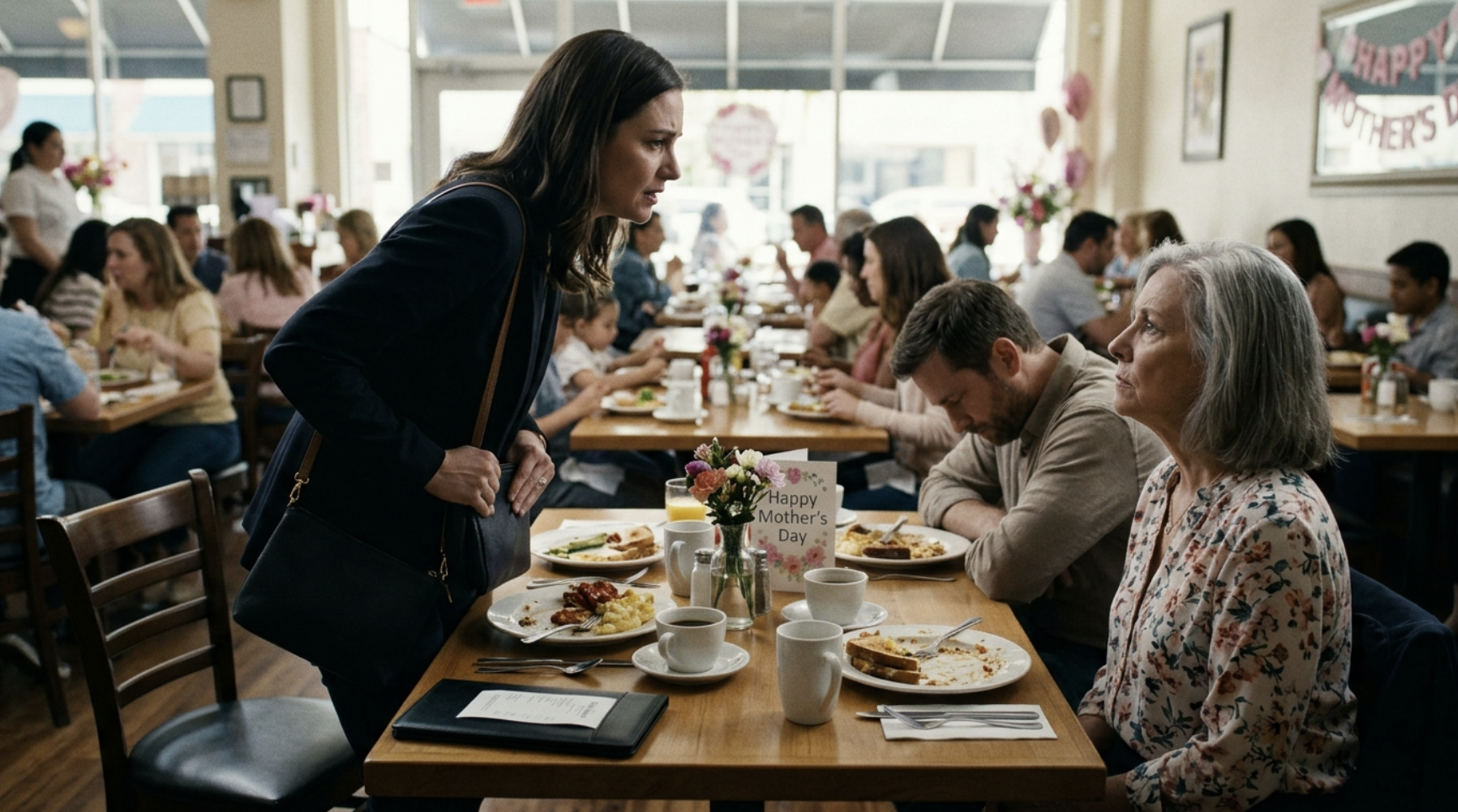
“What I said on Mother’s Day was cruel. I wanted to hurt you because you were refusing to do what I wanted. I knew exactly which words would hurt the most, and I used them.”
Tears rolled down her cheeks.
“I told myself I was angry. I told myself you would get over it. But I knew I had crossed a line.”
For a long moment, I couldn’t speak.
I had imagined this apology so many times that I had stopped believing it would ever happen.
And now that it was finally here, I didn’t know what to do with it.
“I am sorry,” she whispered. “Not because you stopped paying my bills. Not because I might have to sell the house. I’m sorry because I treated your love like something I was entitled to, and I treated your independence like a betrayal.”
I looked at the woman sitting across from me.
She was still my mother.
She was also the person who had wounded me more deeply than almost anyone else.
Both things were true.
“I don’t know how to go back to how we were,” I said.
She nodded through her tears.
“I don’t expect you to.”
“And I can’t promise I’ll start helping with your expenses again.”
“I understand.”
I studied her face, searching for the hidden demand, the guilt, the familiar sentence about family.
It didn’t come.
Instead, she reached across the table.
“I don’t want you to pay for my life anymore, Tamsin. I want you to have your own.”
I stared at her hand.
Then, slowly, I placed mine over it.
I didn’t forgive everything in that moment.
But I allowed myself to believe that something might finally change.
And sometimes, that is where healing begins.
PART 4
I thought the hardest part of my relationship with my mother was behind us.
I was wrong.
Because sometimes, the moment someone finally apologizes is not the end of the story. It is the beginning of finding out whether their words will survive the first real test.
For the next few weeks, Mom and I spoke carefully.
She called once to tell me that the real estate agent had found a buyer for the house. Another time, she asked me how to change her insurance payments to her own bank account. I helped her understand the paperwork, but I didn’t take over the process.
She didn’t ask me for money.
I didn’t offer any.
It was a strange new arrangement, like learning to walk through a room where all the furniture had been moved. We were both trying not to stumble.
Then Nolan found out that the house was being sold.
He called me on a Tuesday evening.
“What did you say to Mom?”
I was preparing dinner with Adrian when my phone lit up.
“Hello to you, too.”
“Don’t be sarcastic. Mom says she’s selling Dad’s house.”
“She told me she’s making a decision based on what she can afford.”
“And you think that’s a good idea?”
“I think it’s her decision.”
He laughed bitterly.
“She wouldn’t be doing this if you hadn’t abandoned her.”
I put the knife down on the cutting board.
“Nolan, Mom has been working with a financial counselor. She has her own income, and she has found a smaller place she can afford. She isn’t being abandoned.”
“You don’t understand. That house is our inheritance.”
The words stopped me.
“Our inheritance?”
“Yes. Dad worked his entire life for that house. It should stay in the family.”
“Then why don’t you buy it?”
He went quiet.
“I have responsibilities.”
“So does Mom.”
“She shouldn’t have to sell it.”
“Then help her keep it.”
“I can’t afford to take on a mortgage!”
I looked at Adrian. He had stopped chopping vegetables and was watching me.
I lowered my voice.
“Then you need to accept that she has to make a decision based on her circumstances, not your expectations.”
“You’re enjoying this, aren’t you?”
I was stunned.
“Enjoying what?”
“Watching everything fall apart. You finally have an excuse to punish us.”
For a moment, I wanted to shout.
I wanted to list every bill I had paid, every vacation we had canceled, every time I had answered Mom’s calls while sitting in a meeting or standing in a grocery store.
Instead, I took a breath.
“I don’t want anything to fall apart. I want Mom to be financially secure. I want her to be able to live without depending on either of us. And I want you to stop treating my boundaries as an attack.”
He scoffed.
“You’ve changed, Tamsin.”
“I hope so.”
I ended the call.
Adrian came over and wrapped his arms around me.
“You handled that well.”
“I don’t feel like I handled anything well.”
“That’s because you’re still hoping he’ll understand.”
I leaned against him.
“Is that wrong?”
“No. But you can stop waiting for his understanding before you allow yourself to move forward.”
That night, I thought about what Adrian had said.
For years, I had treated my brother’s approval as something I needed to earn. If he was upset, I felt guilty. If Mom was disappointed, I tried harder. If someone accused me of being selfish, I immediately searched my own behavior for evidence that they might be right.
I was exhausted from standing trial in a family where the rules kept changing.
Perhaps it was time to stop defending myself against accusations that had never been fair.
A week later, Mom called with news.
“The house is under contract,” she said.
I sat down on the edge of our bed.
“Are you feeling okay about it?”
“I have good days and bad days.”
“That makes sense.”
“I went through your father’s things yesterday. I found his old toolbox in the garage.”
I smiled sadly.
“Do you remember how he used to let us hold the flashlight while he fixed things?”
“I remember. You were terrible at keeping it still.”
“So were you.”
For the first time in months, we laughed together.
Then Mom grew quiet.
“I found something else, too.”
“What?”
“A box of photographs. There was one of you and Nolan when you were little. You were sitting on his shoulders at the county fair.”
I remembered that day. Nolan had begged Dad to let him carry me, even though he was only twelve. He had strutted around the fairground like he was the strongest boy in the world.
“He was so proud of you,” Mom said softly. “He kept telling everyone he was going to protect his little sister.”
My eyes filled with tears.
“I remember.”
“I don’t know when things changed between you.”
I swallowed.
“I don’t think it happened all at once.”
“No,” she whispered. “I suppose it didn’t.”
There was a long silence.
Then Mom said something I had never expected to hear.
“I think I made it too easy for Nolan to avoid responsibility because I wanted to protect him from feeling like a failure. And I made it too easy for myself to rely on you because you always seemed strong enough to handle everything.”
I closed my eyes.
“I was never as strong as you thought.”
“I know that now.”
Her voice cracked.
“I should have asked how you were doing. I should have asked whether you could afford to help me. I should have thanked you without making you feel that you owed me more.”
I wiped my cheek.
“Thank you for saying that.”
“I can’t change the past, Tamsin.”
“No.”
“But I can try to do better.”
For the first time, I believed that she wanted to.
Not because she needed something.
Not because she was afraid of losing the house.
But because she had finally begun to understand what her behavior had cost us.
The house sold six weeks later.
Mom moved into a comfortable condominium on the third floor of a quiet building near a park. It had a small balcony, a bright kitchen, and a bedroom that received the morning sunlight.
She called me on moving day.
“I think your father would have liked this place,” she said.
“Why?”
“He always said I needed somewhere with less work and more time to enjoy myself.”
I laughed.
“He was right.”
“I wish I’d listened sooner.”
I visited the following weekend, bringing a small plant for her balcony.
The condominium was still full of boxes. Mom had arranged her photographs on the living room floor, trying to decide which ones deserved a place on the walls.
She had kept the picture of Nolan and me at the fair.
She had also kept one of the three of us standing beside Dad in front of the old maple tree.
“Where do you want this one?” I asked.
“Above the sofa, I think.”
I helped her hang it.
When we stepped back, we stood side by side, looking at the photograph.
For a moment, I felt as if Dad were there with us.
Not because I believed he could fix everything, but because I remembered the kind of man he had been. He had loved us without asking us to prove our worth through money or sacrifice.
I hoped I could learn to love my family that way, too.
Without abandoning myself.
Nolan did not attend Mom’s housewarming dinner.
He said he had work to do, although Paige later told me that he was furious about the sale.
Apparently, he had told her that Mom had thrown away the family’s future.
Paige didn’t agree.
She called me a few days later.
“I owe you an apology,” she said.
I leaned back in my office chair.
“For what?”
“For the way I acted at brunch. I sat there while your mother insulted you, and I didn’t say anything.”
“You were trying to keep the peace.”
“Maybe. But I knew how much you had done for Lorraine. I knew you had helped Nolan, too. And I let everyone treat you like you were the problem.”
I appreciated her honesty.
“Thank you for telling me.”
She hesitated.
“I also think you should know something. Nolan has been telling people that you promised to pay Mom’s expenses indefinitely.”
I closed my eyes.
“I never promised that.”
“I know. I asked him when you made that promise, and he couldn’t give me an answer.”
I said nothing.
Paige continued.
“He has a habit of treating things people do for him as if they are permanent arrangements. I didn’t fully understand it until recently.”
“I’m sorry you’ve had to deal with that.”
“So am I.”
She took a breath.
“I’m not calling to ask you to forgive him. I just wanted you to know that I don’t blame you anymore.”
For the first time, I felt that someone in my family understood what had happened without needing to be persuaded.
We talked for nearly half an hour.
Before we hung up, Paige invited Adrian and me to dinner with her and the children.
I accepted.
Not because everything was suddenly repaired, but because I didn’t want my relationship with my niece and nephew to become another casualty of the adults’ mistakes.
A month later, Nolan finally called.
His voice sounded tired.
“Mom says she’s doing well in the condominium.”
“I’m glad.”
“She seems happier than I expected.”
“I think she likes not worrying about the house.”
He sighed.
“I suppose I should be happy for her.”
I waited.
Then he said, “I want to talk about what happened.”
“Okay.”
“I shouldn’t have used your information for the bank application.”
“No, you shouldn’t have.”
“I thought you would help if I needed you.”
“That was the problem, Nolan. You thought you could decide what I would do without asking me.”
He was silent.
“I was under pressure,” he said eventually.
“I understand that. But pressure doesn’t give you permission to use someone else’s name.”
“I know.”
It was the first time he had said those words without adding an excuse.
Then he surprised me.
“I also owe you money.”
I sat down.
“How much?”
“I went through my records. I know about the money you lent me for the attorney, and I found the transfers from when I was having trouble with the business.”
I waited for him to continue.
“I can’t repay everything immediately. But I want to make a plan.”
I felt a complicated mixture of relief and sadness.
“I appreciate that.”
“I should have helped with Mom’s bills, too.”
“Yes, you should have.”
He gave a short, uncomfortable laugh.
“You’re not going to make this easy for me, are you?”
“No. But I’m not going to make it impossible either.”
I explained that I was willing to review a repayment proposal, but I would not lend him more money or guarantee future debts.
He agreed.
A few days later, he sent me a written repayment plan with monthly installments he said he could realistically afford.
I reviewed it, made sure the terms were clear, and accepted.
The amount was not the point.
For the first time, Nolan was acknowledging that help was something he had received, not something he had been entitled to take.
He still had a long way to go.
So did I.
But we had finally stopped pretending that nothing had happened.
Mother’s Day came around again the following year.
I woke early and made coffee while Adrian prepared breakfast.
For a moment, I considered not calling Mom at all.
The memory of the previous year remained vivid: the pink roses, the restaurant, the framed photograph, and the words that had changed everything.
But I didn’t want to make my decisions out of fear.
I wanted to choose what felt right for me.
So I called her.
“Happy Mother’s Day, Mom.”
Her voice brightened.
“Thank you, sweetheart.”
We spoke for a few minutes about the weather, her plants, and a book she had started reading.
Then she asked, “Would you like to come over for lunch?”
I hesitated.
“Just you and me,” she added. “I’ll make something simple.”
I thought about it.
“Okay. I’d like that.”
When Adrian and I arrived, Mom had prepared sandwiches, a salad, and a small cake from the bakery down the street. There were no elaborate reservations, no expensive gifts, and no expectations that I would organize everything.
On the table stood a single pink rose in a glass vase.
Mom looked embarrassed when she noticed me looking at it.
“I bought it myself,” she said. “I thought it was pretty.”
“It is.”
We sat down to eat.
For a while, the conversation was easy. Mom told us about a neighbor who had offered to help with her balcony plants. She showed me a photograph of the park in spring.
Then she set down her fork.
“I’ve been thinking about last Mother’s Day.”
My chest tightened.
“I remember.”
“I don’t expect you to forget it.”
She looked directly at me.
“I want you to know that I’ve spent a lot of time thinking about what I said and why I said it. I was angry because you weren’t doing what I wanted, and I tried to make you feel guilty enough to change your mind.”
Her eyes filled with tears.
“That was wrong. You didn’t deserve it.”
I felt my own eyes begin to sting.
“Thank you, Mom.”
She reached for my hand.
“I can’t promise I’ll never disappoint you again. I’m human, and I know I’ll make mistakes. But I don’t want you to believe that you have to earn your place in my life by paying my bills.”
I squeezed her hand.
“That’s all I ever wanted you to understand.”
She nodded.
“I know.”
We sat quietly for a moment.
Then she said, “I wish I had understood it sooner.”
“So do I.”
There was sadness in those words, but there was also something new.
Honesty.
We could finally acknowledge the hurt without immediately turning it into an argument.
After lunch, Mom handed me a small envelope.
Inside was a handwritten letter.
It was not long. She had written about the little girl who used to bring her wildflowers from the garden, the teenager who stayed up late studying, and the young woman who had worked hard to build a life of her own.
She wrote that she was proud of my determination, my kindness, and the way I had continued to care even when I was hurt.
At the end, she had written:
You were never responsible for proving that you deserved to be my daughter. You deserved that love before you ever did anything for me.
I read the sentence twice.
Then I folded the letter and held it against my chest.
For years, I had wanted my mother to say something like that.
I had wanted her to recognize me as more than the capable daughter, the dependable daughter, the one who could always find a way to solve the problem.
I wanted to be loved when I had nothing to give.
And finally, she was beginning to understand.
Our relationship did not become perfect after that lunch.
There were still awkward conversations. There were moments when Mom slipped into old habits and expected me to rearrange my plans. There were times when I had to remind myself that saying no did not make me cruel.
But something fundamental had changed.
When Mom needed help understanding a bill, she asked.
When she wanted company, she invited me.
When I couldn’t visit, she accepted it.
And when she made a mistake, she began learning to apologize without demanding immediate forgiveness.
I also learned that forgiveness was not a single moment in which all the pain disappeared.
It was a decision I could make slowly, while still protecting myself.
I could love my mother without paying her mortgage.
I could care about my brother without lending him money.
I could remember the good years without pretending the painful ones had never happened.
And I could build a future with Adrian without feeling guilty every time we spent money on ourselves.
A year after Mom sold the house, Nolan completed his first year of repayments. He still struggled occasionally, but he began making better decisions and contributing more consistently to his children’s expenses.
He and I were not as close as we had been when we were children.
Perhaps we never would be again.
But we were learning to have a relationship based on honesty rather than obligation.
One afternoon, he invited Adrian and me to watch the children play soccer.
After the game, my nephew ran over and threw his arms around me.
“Aunt Tamsin, did you see my goal?”
“I did! It was fantastic.”
He grinned and ran back to his father.
Nolan watched him go.
Then he turned to me.
“I should have stood up for you that day at brunch.”
I looked at him.
“Yes, you should have.”
He nodded, accepting the answer without arguing.
“I was afraid Mom would turn on me if I challenged her.”
I hadn’t expected that admission.
“So you let her hurt me instead?”
He looked down.
“Yes.”
The honesty was painful, but I appreciated it more than another excuse.
“I’m sorry,” he said.
I didn’t rush to tell him everything was forgiven.
Instead, I said, “I hope that if something like that happens again, you’ll choose to do the right thing.”
“I will.”
I wanted to believe him.
Trust would take time, but at least we were finally talking about what had broken it.
Several months later, Adrian and I sat on the balcony of our home, watching the sunset.
We had finally replaced his old car, rebuilt our savings, and booked the vacation we had postponed for so long.
I looked at the calendar on my phone.
Mom had invited us to dinner the following Sunday.
Nolan and his family would be there, too.
For the first time in years, the invitation didn’t fill me with dread.
I knew I could leave if someone insulted me.
I knew I could decline a request for money without writing a long explanation.
I knew that if Mom became disappointed, I didn’t have to fix the feeling for her.
Those boundaries had not made me love my family less.
They had made it possible to love them without losing myself.
Adrian leaned over and kissed my forehead.
“What are you thinking about?”
I smiled.
“Last Mother’s Day.”
He waited.
“I thought walking away from that table meant I was losing my family.”
“And now?”
I watched the sky turn gold.
“Now I think it was the first time I stopped losing myself to keep them.”
He took my hand.
We sat together as the evening grew darker.
I still wished my mother had never said those words. I wished Nolan had defended me. I wished I had learned earlier that generosity without boundaries can become a burden that quietly consumes the giver.
But I no longer wished I had handled that day differently.
Because when my mother told me she wished I had never been her daughter, I finally stopped trying to earn a place in a family that already had one for me.
I stood up.
I walked away.
And in the months that followed, I discovered that I could build a life in which love did not require me to surrender my dignity, my savings, or my peace.
My mother eventually learned to love me without depending on my money.
My brother began learning that family support was a gift, not a guarantee.
And I learned that forgiveness did not mean returning to the same place where I had been hurt.
Sometimes, forgiveness meant opening the door again while keeping the key to your own life.
On the next Mother’s Day, I brought Mom pink roses.
She hugged me at the door, thanked me, and invited me inside.
There were no demands, no accusations, and no discussion of money.
Just lunch, conversation, and the quiet understanding that we were trying to do better.
As I drove home that afternoon, I realized something I wished I had understood years earlier.
Being a good daughter did not mean paying for everything. Being a good sister did not mean rescuing everyone. And being a loving person did not mean allowing people to hurt me without consequences.
I could care deeply and still say no.
I could forgive and still remember.
I could love my family and still choose myself.
And that was the most important lesson I had ever learned.
Because the day I stopped paying for my place in the family was the day I finally understood that my place had never been something I needed to buy.