
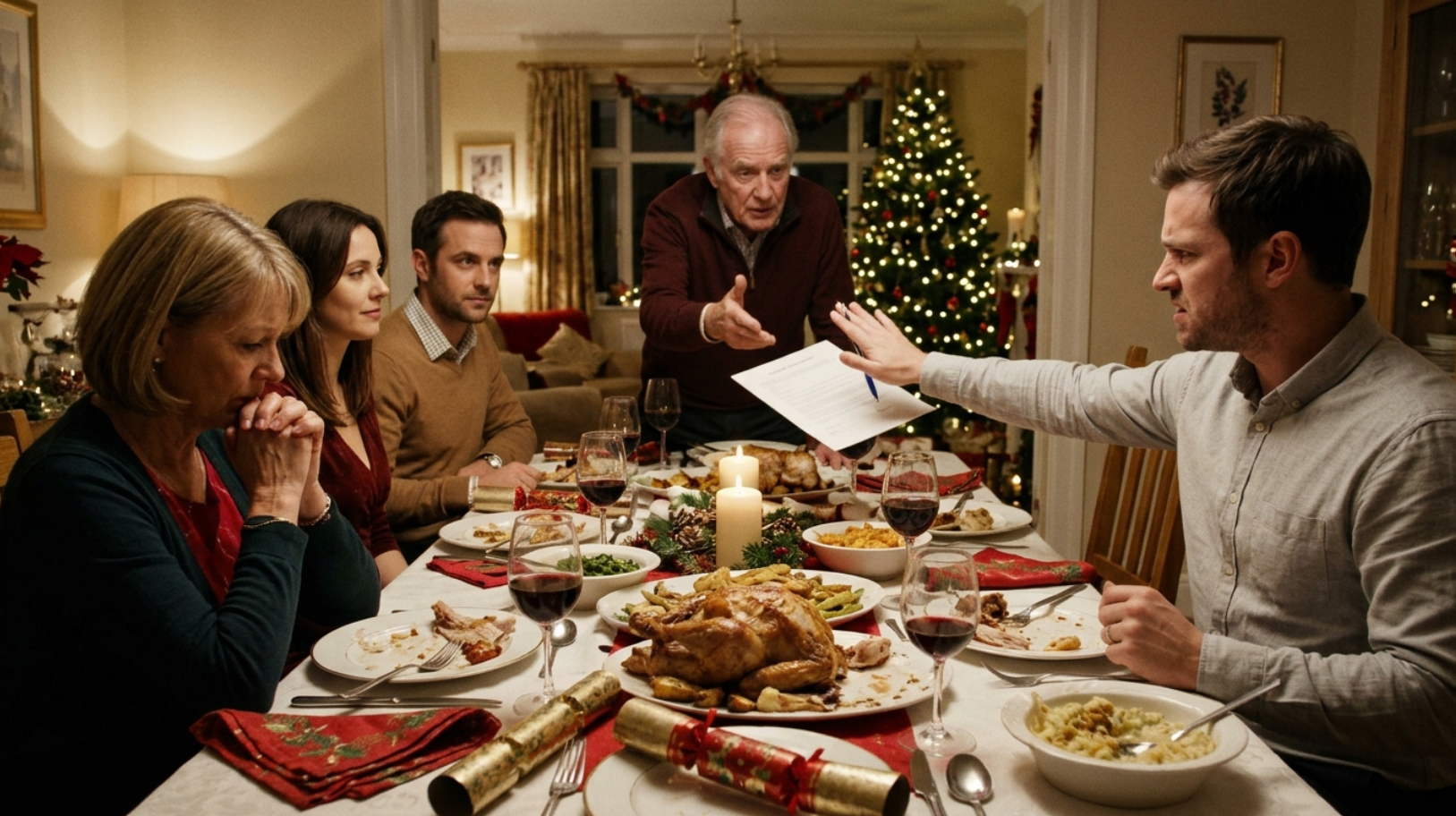
PART 3
Now, apparently, I was the complication.
Mara came into the kitchen carrying two cups of coffee.
“Anything new?”
I turned my laptop toward her.
She read the email without saying anything.
Then she put her cup down.
“They’ve locked you out?”
“Yes.”
“Even though your transition period hasn’t ended?”
“Apparently.”
She pulled out the chair beside me.
“Evan, I want you to answer one question honestly. Are you upset because they took the company away from you, or because they’re treating you like you never mattered?”
I didn’t answer immediately.
Both were true.
But the second one hurt more.
“I don’t think Dad understands what he’s done,” I finally said.
Mara shook her head.
“I think he understands exactly what he did. He just expected you to accept it.”
I looked at her.
She continued.
“He’s spent years teaching you that being loyal means sacrificing something. Your time. Your money. Your weekends. Your opportunities. And every time you complained, he reminded you that one day the company would be yours.”
I rubbed my forehead.
“Maybe I should have asked for something in writing years ago.”
“Maybe. But you trusted your father. That doesn’t make you foolish.”
I looked toward the living room.
Willa was sitting on the carpet, arranging her Christmas presents.
She had been unusually quiet since dinner.
I didn’t want her growing up believing that family loyalty meant accepting unfair treatment.
“I just don’t want this to affect her,” I said.
Mara reached across the table and took my hand.
“Then don’t let it.”
On Monday morning, I received a call from Doris Webb.
Doris had worked at Rourke Home Protection since its third year.
She wasn’t technically my supervisor, but she had taught me almost everything I knew about the business.
She had been the first person to show me how to recognize moisture damage beneath a wooden floor.
She taught me how to distinguish old termite damage from active infestation and why a technician should never sign an inspection report simply because a customer was waiting.
More importantly, she had taught me that a professional’s signature was not decoration.
It was a promise.
“Evan, are you somewhere you can talk?” she asked.
“I’m home. What’s going on?”
There was a pause.
“Things aren’t good here.”
I sat straighter.
“What happened?”
“Brent held a staff meeting this morning.”
“What did he say?”
“He told everyone that the company was entering a new phase. He said technical decisions would now go through him and Paige.”
I closed my eyes.
“That’s not what my certification allows.”
“I know.”
“Did he say anything about appointing another qualified operator?”
Another pause.
“No.”
I stood up.
“Doris, listen. I submitted my withdrawal notice. I cannot approve reports or authorize regulated work after the effective date. The company needs to arrange qualified coverage.”
“I understand that.”
“Then what happened?”
She lowered her voice.
“Brent told the technicians that nothing would change. He said your certification would remain attached to the company until the transition was complete.”
My stomach tightened.
“Did he say that in writing?”
“He sent a message to the staff group.”
“Can you forward it to me?”
“I already saved a copy.”
I exhaled slowly.
“Thank you.”
Then Doris said something that made me stop.
“Evan, there’s something else.”
“What?”
“Yesterday, Brent asked me to change the completion dates on three inspection reports.”
I felt my jaw tighten.
“Which reports?”
“Two commercial properties and one residential property.”
“Why?”
“He said the work had already been completed and the paperwork just needed to catch up.”
“Had the inspections actually been completed?”
“Not all of them.”
I walked to the window.
“Did you change them?”
“No.”
“Good.”
“He wasn’t happy.”
I waited.
Then she added, “He told me that if I couldn’t adapt to the new management, perhaps I should consider retirement.”
I looked down at the floor.
Doris was sixty-two.
She had spent almost twenty years helping build the company.
She knew customers by name. She knew which properties had recurring moisture problems, which technicians needed additional training, and which commercial accounts required extra documentation.
And now Brent was threatening her because she refused to change inspection records.
“Doris, don’t argue with him,” I said. “Don’t change anything you’re not comfortable certifying. Keep your own lawful employment records, and document any instructions that concern your responsibilities.”
“I know.”
“And please don’t put yourself in a difficult position because of me.”
She laughed softly.
“That’s exactly what your father used to say about you.”
I didn’t know what to say.
Before ending the call, she told me something else.
“Your father came into the office this morning. He looked exhausted.”
“Did he say anything?”
“He asked me whether you had called.”
I looked outside.
“No. He hasn’t heard from me.”
Doris was quiet for a moment.
Then she said, “Evan, I don’t think Calvin expected you to actually leave.”
Neither did I.
That afternoon, my attorney called.
His name was Michael Grant.
He had helped me review my original professional registration documents and the company’s operating procedures.
“Evan, I reviewed the email from Paige,” he said.
“What do you think?”
“First, I want you to understand something. Your withdrawal notice is a professional matter. Your father’s ownership decisions are a separate business matter. Don’t allow them to mix the two.”
“I understand.”
“Second, do not access any company systems without authorization. Do not take company records. Preserve your own correspondence and copies of documents you’re legally entitled to retain.”
“That’s what I’ve been doing.”
“Good. Third, we need to clarify the status of any work that still lists you as the responsible professional.”
I opened my notebook.
“Tell me what you need.”
He explained that we should establish a written record of every outstanding inspection, report, and project connected to my professional responsibilities.
If anything remained incomplete, the company would need to address it through an appropriately qualified person.
I agreed.
Then he asked a question.
“Has your father ever provided you with a written ownership promise?”
I looked at the bookshelf in front of me.
“No formal agreement. Just years of conversations.”
“Any emails? Messages? Draft succession plans?”
“I have some.”
“Send them to me. We need to understand what was actually documented.”
I opened my old email account.
There were messages from Dad going back more than a decade.
Some were simple.
Good work today, son.
Others were more specific.
One message from the year I received my certification said:
Keep building your experience. One day, all this will be yours to run.
Another, sent after I rejected the Chattanooga job offer, read:
I’m proud that you’re staying. We’re building something together, and I won’t forget what you’ve sacrificed.
I forwarded everything to Michael.
I wasn’t sure any of it would establish a legal ownership right.
But it documented something important.
I hadn’t invented the promise.
On January 2, Paige called me.
I almost didn’t answer.
But something told me I should.
“Evan.”
“Paige.”
She sounded irritated.
“Can you stop making this more difficult than it needs to be?”
I leaned back in my chair.
“What exactly am I making difficult?”
“You know what I mean.”
“No, I don’t.”
She sighed.
“Brent is trying to get everything organized, but your withdrawal has created a lot of unnecessary pressure.”
“Then appoint a qualified replacement.”
“We’re working on that.”
“Good.”
“But in the meantime, we need your cooperation.”
I waited.
She continued.
“We have a commercial customer who needs an inspection report completed. Brent says you know the property better than anyone.”
“Is the inspection complete?”
“That’s not the point.”
“Actually, it is.”
“Evan, please. Just help us get through this.”
“Paige, I cannot sign a report for work I haven’t performed or personally verified. And I cannot authorize anything outside the responsibilities I currently hold.”
She became defensive.
“Nobody is asking you to do anything illegal.”
“Then there shouldn’t be a problem appointing someone qualified.”
She was silent.
Then she said something I hadn’t expected.
“You’re enjoying this, aren’t you?”
I almost laughed.
“Enjoying what?”
“Watching Brent struggle. Watching Dad get stressed. You finally get to prove that the company needs you.”
I looked at the kitchen table.
There were Willa’s colored pencils scattered beside a half-finished drawing.
“No, Paige. I wanted to run the company with you. I wanted us to build something together. But you and Brent decided that I should carry the responsibility without having a voice.”
“That’s not what happened.”
“Then explain why my position has no final technical authority.”
“We’re not discussing this again.”
“Okay.”
She paused.
Then she said, “Dad wants you to come in tomorrow.”
“For what?”
“He wants to talk.”
“About the transition?”
“About the company. And the family.”
I considered it.
“Will Brent be there?”
“Yes.”
“Will Mom be there?”
“Probably.”
“And is Dad willing to discuss the professional responsibilities separately from the ownership arrangement?”
She sighed.
“You’re making everything complicated again.”
“Then I don’t think there’s anything to discuss.”
I ended the call.
The following morning, I received an unexpected visitor.
It was Doris.
She stood on my front porch holding a large envelope.
I opened the door.
“Doris? Is everything okay?”
She stepped inside.
“I wasn’t sure whether I should bring this to you.”
“What is it?”
She handed me the envelope.
“I found something in the old storage cabinet while looking for some historical service records.”
I opened it.
Inside were several documents.
The first was a printed organizational chart from three years earlier.
My name appeared at the top of the operations division.
Underneath it were the names of the technicians and supervisors.
That wasn’t particularly surprising.
The second document was more interesting.
It was a draft succession plan.
It listed me as the intended future president and majority operational decision-maker.
The document had no signatures.
But it included a date and notes from a planning meeting attended by Dad, Mom, and the company’s accountant.
I read it twice.
“Where did you find this?”
“In the cabinet behind the old licensing files.”
I turned the page.
There was a handwritten note at the bottom.
Evan to assume leadership upon Calvin’s retirement. Paige to oversee administration and customer development. Brent to remain responsible for commercial sales.
I stared at it.
“Why didn’t I know this existed?”
Doris pulled out a chair.
“Because your father told us it was only a working draft.”
“Did he ever discuss changing it?”
“Not with me.”
I continued reading.
The final page contained a list of transition requirements.
One of them caught my attention.
Any transfer of operational authority must preserve independent technical oversight and maintain the responsible professional’s ability to reject incomplete or noncompliant work.
I slowly lowered the document.
That was exactly what I had been asking for at Christmas.
“Doris, did Dad write this?”
“I don’t know. But I remember the meeting.”
“Who else was there?”
“Your mother. Your father. And Mr. Harrison, the accountant.”
I looked at the date.
Three years earlier.
Three years before Brent had even become involved in the company’s management discussions.
I felt something strange.
Not happiness.
Not anger.
Something closer to disappointment.
My father had once understood exactly what I was asking for.
He had even written it down.
So what had changed?
Doris looked at me.
“Evan, there’s something you should know.”
I raised my eyes.
“What?”
“Your father didn’t start talking about Brent taking over until after that meeting.”
I waited.
She continued.
“About six months later, Brent brought in a new financial consultant. He said the company needed to restructure before retirement.”
“Who was the consultant?”
Doris shook her head.
“I don’t remember his full name. But I remember the last name.”
She looked toward the envelope.
“Whitaker.”
I wrote it down.
“Did he work for the company?”
“No. He came in for several meetings, then disappeared.”
“Did Dad hire him?”
“I believe Brent introduced him.”
I looked at the draft succession plan again.
For the first time, I wondered whether Christmas dinner had been the final step in a decision that had been developing for years.
That evening, I called the company’s accountant, Mr. Harrison.
I had known him since I was a teenager.
He had prepared our annual financial statements and tax records for more than fifteen years.
When he answered, I explained that I had found an old succession plan and wanted to confirm its status.
He was quiet.
Then he said, “Evan, I was wondering when you would find that.”
My heart started beating faster.
“You remember it?”
“Of course.”
“Was it ever approved?”
“It was discussed. Your father was serious about it at the time.”
“Then why was it abandoned?”
He hesitated.
“That’s something you should ask your father.”
“Mr. Harrison, I’m not asking you to take sides. I just want to understand what happened.”
He sighed.
“Three years ago, your father asked me to prepare financial projections for a gradual leadership transfer. The plan included you taking over operations and eventually acquiring a controlling interest.”
“Yes. I found the draft.”
“Then Brent started proposing a different structure.”
“What structure?”
“One that would give him and Paige greater control of the company while keeping your technical qualifications available.”
I felt my stomach tighten.
“Did Dad approve it?”
“Eventually, he asked me to prepare a revised organizational model.”
“Was there a reason?”
“Brent argued that your father’s business would be more valuable if it became less dependent on one individual.”
I nodded slowly.
That argument sounded familiar.
“But why would I be responsible for the technical work without authority?”
Mr. Harrison didn’t answer immediately.
Then he said, “Evan, there was another concern.”
“What concern?”
“The company’s financial position.”
I sat down.
“What about it?”
“I cannot discuss confidential financial information without proper authorization. But I can tell you that the restructuring was not simply about succession.”
I gripped my phone.
“What does that mean?”
He lowered his voice.
“There were financial obligations that your father wanted resolved before retirement.”
“Loans?”
“Some obligations were related to expansion. Others were connected to equipment financing and commercial contracts.”
“How much?”
“I don’t have the complete figure in front of me.”
I closed my eyes.
“Mr. Harrison, is the company in trouble?”
“I didn’t say that.”
“But you’re saying the succession decision had something to do with the financial position.”
“Yes.”
He paused.
Then he added:
“One more thing, Evan. If you’re going to make any decisions about your future, make sure you understand what you are being asked to take responsibility for.”
The call ended.
I sat in silence for several minutes.
Mara found me in the living room.
“What happened?”
I told her about the draft succession plan and the accountant’s warning.
She listened carefully.
When I finished, she asked:
“Do you think your father is hiding something?”
“I don’t know.”
“Then find out before you let anyone convince you that you’re the problem.”
On January 5, an email arrived from Dad.
The subject line read:
URGENT — COMPANY TRANSITION MEETING
He wanted me at the office at nine the following morning.
The message was only three sentences long.
Evan, we need to resolve this situation immediately. The company has obligations that cannot wait. I expect you to attend and cooperate in good faith.
I forwarded it to Michael.
He replied twenty minutes later.
You may attend if you wish, but do not sign anything without review. Ask for the outstanding financial and operational responsibilities to be documented.
I agreed.
The next morning, I drove to the office.
It felt strange pulling into the parking lot.
The same trucks were lined up outside.
The same warehouse doors were open.
The same company sign stood above the entrance.
But for the first time in eighteen years, I was entering as a visitor.
Doris met me near the reception desk.
She gave me a small nod.
“He’s in the conference room.”
I walked down the hallway.
Dad was seated at the head of the table.
Mom sat beside him.
Paige and Brent were on the opposite side.
A thick folder lay in front of Dad.
He didn’t stand when I entered.
“Sit down.”
I took the chair nearest the door.
Dad looked older than he had at Christmas.
His face was tired, and there were dark circles beneath his eyes.
“We need to settle this,” he said.
“Then let’s settle it properly.”
Brent leaned forward.
“We’ve already spent too much time on this.”
I looked at him.
“Then let’s not waste any more.”
Dad opened the folder.
“We have a serious problem with the commercial accounts.”
“What kind of problem?”
“Several customers are asking for updated inspection documentation.”
“Then the inspections need to be completed and documented.”
Brent shook his head.
“That’s not the issue. They want continuity. They want assurance that nothing has changed.”
I looked at Dad.
“Have you appointed another qualified operator?”
Dad rubbed his forehead.
“We’re working on that.”
“Who?”
“That’s being handled.”
“Then why am I here?”
Mom intervened.
“Because you’re still part of this family.”
I looked at her.
“I haven’t stopped being part of the family. But that’s not the question.”
Dad pushed a document across the table.
It was a transition agreement.
I began reading.
The first page stated that I would provide technical consultation for up to ninety days.
The second page listed several outstanding projects.
The third page included a section authorizing the company to continue using my professional credentials for administrative purposes during the transition.
I stopped reading.
“Who prepared this?”
Brent answered.
“Our consultant.”
“Which consultant?”
“Someone who understands business restructuring.”
I turned to Dad.
“Does this person understand the professional regulations governing my certification?”
Dad’s expression hardened.
“Don’t start.”
“I’m asking a simple question.”
Brent leaned back.
“Look, Evan. We aren’t asking you to run the company. We’re asking you to help us maintain continuity.”
“By allowing the company to use my credentials after I’ve withdrawn?”
“That’s not how it works.”
“Then explain it.”
He looked at Dad.
Dad remained silent.
I closed the folder.
“I won’t sign this.”
Brent slapped his hand against the table.
“Unbelievable.”
Dad finally spoke.
“Evan, you need to understand something. We have customers depending on us. We have employees depending on us. We cannot simply stop operating because you are angry about a management decision.”
“I’m not asking you to stop operating. I’m asking you to operate correctly.”
“We’re trying!”
“Then appoint someone qualified.”
Dad stood.
“You think this is easy? You think I can find someone tomorrow?”
“No. That’s why I gave you advance notice.”
His face turned red.
“You’ve made your point.”
I stood too.
“No, Dad. I don’t think you understand my point.”
I placed my copy of the agreement on the table.
“You can give Paige and Brent every management position in this company. You can change the organizational chart, the office furniture, the vehicles, and the company name. That’s your decision as the owner.”
I looked directly at him.
“But you cannot transfer my professional responsibility to people who don’t hold it.”
Nobody spoke.
Then I added:
“If you want me to help with a transition, put together a lawful agreement that defines exactly what I’m responsible for, what I can access, and what authority I have. Otherwise, the withdrawal will proceed as formally submitted.”
Dad stared at me.
For a moment, I thought he might finally understand.
Instead, he said:
“You’re choosing strangers over your own family.”
I picked up my coat.
“No. I’m choosing not to put my family at risk for a business decision I didn’t make.”
I walked toward the door.
But before I reached it, Paige spoke.
“Evan, wait.”
I turned.
She looked uncomfortable.
“There’s something you should know.”
Brent immediately interrupted.
“Paige, don’t.”
She ignored him.
Then she looked at me.
“The company has a meeting with the bank next week.”
I frowned.
“What meeting?”
Dad’s face changed.
“That’s enough.”
Paige swallowed.
“They’re reviewing the company’s credit facility. The bank wants updated financial information and confirmation of the company’s management transition.”
I looked at Dad.
“What does that have to do with me?”
Nobody answered.
Then Paige said quietly:
“They’re asking about your involvement because the original business expansion loan was approved partly on the basis of your professional qualification and operational role.”
My blood ran cold.
I turned back toward Dad.
“Why wasn’t I told about this?”
He looked down at the table.
Brent stood.
“That’s not relevant to today’s meeting.”
I ignored him.
“How much does the company owe?”
Dad’s jaw tightened.
“That is a private financial matter.”
“Then why did you bring me into this meeting and ask me to sign a transition agreement?”
No answer.
I looked at Paige again.
“How much?”
She hesitated.
Then she opened her folder and pulled out a bank letter.
She slid it across the table.
I read the first paragraph.
Then the second.
My eyes stopped at the outstanding balance.
$486,000.I read it again.
The company had nearly half a million dollars in outstanding financing obligations.
But that wasn’t the part that frightened me.
At the bottom of the letter was a reference to a personal guarantee and a supporting schedule of key personnel.
I turned the page.
My name appeared there.
I looked up slowly.
“Dad.”
He didn’t move.
“Why is my name on this document?”
Brent stepped forward.
“That’s an old banking arrangement. It doesn’t mean what you think.”
I looked at the signature section.
There was a signature beside my name.
It looked familiar.
Too familiar.
But I knew I hadn’t signed that document.
I turned the page toward Dad.
“Who signed this?”
His face had gone pale.
And for the first time since Christmas dinner, he looked genuinely afraid.
“Where did you get that?” he whispered.
I stared at him.
“It was in the bank’s correspondence. Paige just handed it to me.”
Dad reached for the document.
I pulled it back.
“Did you sign my name?”
Nobody moved.
Then my phone vibrated.
It was a message from Michael, my attorney.
Evan, I have reviewed the documents you sent. Do not sign anything today. I need to speak with you immediately. There is a serious issue involving your name and the company’s financial records.
I looked at Dad.
Then at Brent.
Then at the signature on the bank document.
Whatever had happened to the succession plan, whatever had motivated my father’s decision to hand the company to my sister and her husband, I suddenly understood that the Christmas announcement might have been only the beginning.
And the next discovery could be far worse than losing the company I had spent eighteen years helping build.
PART 4
For several seconds, nobody in the conference room moved.
I was still holding the bank document.
My name appeared beneath a paragraph describing a personal guarantee connected to Rourke Home Protection’s $486,000 credit facility.
I read the signature again.
It looked like mine.
But I knew I hadn’t signed it.
“Dad, I’m asking you one more time. Who signed my name?”
Calvin Rourke slowly sat back in his chair.
“Put the document down, Evan.”
“No.”
“You’re making a serious accusation.”
“I’m asking a serious question.”
Brent stood up.
“This is getting ridiculous. That document is from an old financing arrangement. Your father handled the banking. You were involved in the business at the time.”
“I was involved in the business. I wasn’t involved in this loan.”
Brent shook his head.
“Maybe you just don’t remember.”
I looked at him.
“I remember every document I’ve signed in connection with this company.”
Paige looked uncomfortable.
“Dad, did Evan know about this?”
Calvin didn’t answer.
Mom finally spoke.
“Perhaps we should all calm down before saying something we can’t take back.”
I turned toward her.
“Mom, my name is on a personal guarantee for almost half a million dollars. I think we’re already past the point of pretending this is an ordinary family disagreement.”
Dad stood and reached for the document.
“Give it to me. I’ll explain everything privately.”
“No. My attorney is reviewing it.”
His expression changed.
“You’re bringing lawyers into a family matter?”
I took a slow breath.
“Someone used my signature on a financial document. That’s not a family disagreement.”
I placed the document back on the table.
“I need a complete copy of the loan agreement, every supporting schedule, and every document that contains my name or signature.”
Brent laughed.
“You don’t have authority to demand company financial records anymore.”
“Then the bank can provide the documents relating to my identity and alleged obligations through the proper channels.”
I picked up my coat.
Before leaving, I looked at Dad.
“I came here because you said we needed to resolve the situation. But now I have a much bigger problem to resolve.”
He looked away.
I walked out.
Michael called me less than ten minutes after I left the office.
“Where are you?”
“In my truck.”
“Good. Don’t go back into the office. I want you to send me a photograph of the document, including every page.”
I pulled into a parking space.
“Have you seen something?”
“I reviewed the older financial correspondence you sent me. There are references to a guarantee signed in your name. I wasn’t able to confirm the complete circumstances from those records alone.”
“What does that mean?”
“It means we need the original loan file and the bank’s verification records. Don’t accuse anyone publicly. Don’t contact the bank pretending to represent the company. We’ll make a formal request concerning your identity and the alleged signature.”
I sent him the photographs.
A few minutes later, he called again.
“Evan, one more question. Did you ever sign a personal guarantee for Rourke Home Protection?”
“No.”
“Did you ever authorize your father to sign one on your behalf?”
“Never.”
“Did you give anyone a power of attorney?”
“No.”
“All right. That’s important.”
I sat quietly.
Then I asked the question that had been bothering me since I saw the document.
“Michael, if someone used my signature without permission, could I actually be responsible for this debt?”
“That depends on the documents, the circumstances, and the applicable law. But don’t assume the bank can enforce an obligation simply because your name appears on a page. We need to investigate the authenticity and legal basis of the guarantee.”
For the first time that morning, I felt a little relief.
Not because the problem was solved.
But because somebody was finally treating it seriously.
Two days later, Michael arranged a meeting with the bank’s legal department.
I attended with him.
A representative named Daniel Foster welcomed us into a small conference room.
He had already received our written request.
“Evan, thank you for coming. I understand your concern.”
I placed the photograph of the guarantee on the table.
“I need to know why my name appears here.”
Daniel opened a file.
“This credit facility was originally approved several years ago. The company later requested an increase. Your name appears in the supporting documentation as a key operational professional and as a guarantor.”
“I never guaranteed this debt.”
Daniel looked at Michael.
“That’s what we’ve been informed.”
“Can I see the original documents?”
Daniel nodded.
He provided copies of the relevant records that could be disclosed through the bank’s review process.
Michael began examining them.
I watched his expression change as he reached the signature page.
“Daniel, can you confirm whether the bank has a separate record of the identity verification completed for this signature?”
“We’re checking that.”
“And the person who submitted the documents?”
Daniel turned another page.
“The application was submitted through the company’s authorized representative.”
“Who?”
He looked down.
“Calvin Rourke.”
My stomach tightened.
Michael continued reading.
Then he stopped at another page.
“There’s something else here.”
He turned the document toward me.
It was a schedule describing the company’s technical and operational structure.
My certification was listed as a key qualification supporting the company’s commercial services.
But the date was important.
It was several months after I had received my certification.
The company had used my professional qualification as part of its banking presentation.
That wasn’t necessarily improper by itself.
But the document also stated that I had agreed to continue overseeing technical operations during the financing period.
I had never signed that agreement.
“Daniel,” Michael said, “we need the bank to preserve all records relating to the alleged guarantee and the submission of this application.”
“Of course.”
“That includes electronic records, correspondence, identity verification, and any original documents.”
Daniel nodded.
“We’ll place a preservation hold while the matter is reviewed.”
I looked at the bank representative.
“Was this loan approved because of my guarantee?”
“The credit decision considered several factors, including the company’s assets, financial performance, and the information supplied about its management and operations.”
“So my professional qualification was part of the application.”
“Yes.”
I looked at Michael.
He closed the folder.
“We’ll follow up formally.”
Outside the bank, I stood beside the car for a moment.
I had spent eighteen years helping my father build that company.
Now I was discovering that my name might have been used to support financial arrangements I had never approved.
Michael put a hand on my shoulder.
“Don’t jump to conclusions. We have to let the review establish what happened.”
“I know.”
“But one thing is certain. You were right not to sign that transition agreement.”
I looked toward the road.
For once, I was grateful I had said no.
Meanwhile, things at Rourke Home Protection were deteriorating.
Doris called me on Friday afternoon.
“Have you heard anything from your father?”
“No. Why?”
“Because we have a problem.”
“What happened?”
“Two technicians refused to complete a job without the proper inspection documentation.”
“Good. They should follow the procedures.”
“Brent called them into the office. He said they were making the company look incompetent.”
I closed my eyes.
“What did they do?”
“They asked who would be responsible for approving the work.”
I understood immediately.
“Did Brent answer?”
“He told them that management would make the decisions.”
“That doesn’t answer the question.”
“Exactly.”
Doris sounded exhausted.
Then she told me that one of the company’s larger commercial customers had requested an explanation for the change in technical oversight.
The customer had several buildings under service agreement and wanted written confirmation that qualified personnel would continue conducting and reviewing the required inspections.
Brent had sent a general statement about improved management efficiency.
The customer wasn’t satisfied.
They wanted specific names, qualifications, and responsibilities.
“Are they threatening to cancel?”
“Not yet. But they have suspended two new service orders until they receive clarification.”
I sighed.
“Doris, don’t get involved in decisions that aren’t yours. Keep your work accurate.”
“I know.”
Then she said something unexpected.
“Your father asked me yesterday whether you were planning to come back.”
I remained silent.
“What did you tell him?”
“I told him that he should have thought about that before Christmas.”
I smiled faintly.
It was the first time I had smiled about the situation in days.
On January 9, my withdrawal became effective.
I had completed the transition steps within the limits of my authority.
The company had received formal notice.
The relevant professional notification had been submitted.
I had documented the work I had personally supervised and identified outstanding matters that required attention by an appropriately qualified person.
I had not abandoned my responsibilities.
I had simply refused to continue accepting responsibilities I could no longer properly control.
That morning, I received a final message from Paige.
Your withdrawal is now effective. Please do not contact company personnel regarding operational matters. We will handle everything from here.
I replied with one sentence.
Understood. Please direct any future correspondence concerning my professional credentials or alleged financial obligations to my attorney.
Then I put my phone away.
For the first time in eighteen years, I didn’t have to wake up wondering whether a technician had forgotten to upload an inspection report.
I didn’t have to answer the office phone during dinner.
I didn’t have to defend a professional decision to someone who had never performed the work.
I should have felt free.
Instead, I felt strangely empty.
Mara noticed.
“You miss it,” she said.
I nodded.
“I miss the work. I miss the people. I miss feeling like I was building something.”
She sat beside me.
“Then build something else.”
I looked at her.
She smiled.
“You’ve spent eighteen years helping other people protect their homes. Maybe it’s time you protect your own future.”
Three weeks later, the bank contacted Michael.
The initial review had identified several irregularities.
The bank wanted a meeting with the company and the individuals connected to the loan documents.
Michael told me not to attend any meeting unless it directly concerned my alleged obligations.
He also advised me that the bank had not yet reached a final conclusion about the signature.
I asked him whether the company was in danger.
He answered carefully.
“That’s a question for the bank and the company. Your immediate concern is protecting yourself from an obligation you say you never accepted.”
Then he paused.
“There’s another development.”
“What?”
“The bank’s records show that the company submitted a later management restructuring document. It was prepared by the consultant you mentioned.”
“Whitaker?”
“Yes.”
“What does it say?”
“It identifies Brent as the intended successor and Paige as the new operations executive. But the supporting documents also suggest that your professional qualification would remain available to the company.”
I shook my head.
“Even after my withdrawal?”
“That’s what we’re investigating.”
Michael continued.
“Your father also signed a declaration stating that all individuals named in the supporting schedules had consented to their listed responsibilities.”
I stared at the wall.
“Did he include my name?”
“Yes.”
I felt sick.
“Did he sign that declaration?”
“His signature is on it.”
I didn’t speak for several seconds.
Then I asked:
“Was Brent involved?”
“His name appears on the submission correspondence. We cannot establish from that alone what he knew about the signature issue.”
I understood.
There were still unanswered questions.
And I wasn’t going to invent answers just because I was angry.
But I was beginning to realize that the Christmas announcement had not simply been about who would inherit the company.
It had also been about who would carry the risk.
In February, Dad finally called me.
I almost let it go to voicemail.
But I answered.
“Evan.”
“Hello, Dad.”
There was a long silence.
Then he said:
“We need to talk.”
“About what?”
“The company.”
I leaned back.
“What about it?”
“Things are difficult.”
I waited.
He continued.
“Brent is having trouble with some of the technical matters. Paige is overwhelmed with the administrative work. The bank keeps asking questions.”
I closed my eyes.
“What do you want from me?”
“I want you to come in and help.”
“Have you appointed a qualified replacement?”
“Not yet.”
“Then you need to do that.”
He sighed.
“Evan, I don’t want to lose everything I’ve built.”
I felt something tighten in my chest.
“Neither did I.”
“You’re my son.”
“And I was your son when you told everyone at Christmas that I could leave.”
He was quiet.
Then he said:
“I was angry.”
“So was I.”
“I never thought you’d actually walk away.”
I looked at Mara, who was sitting across the room.
“That’s the problem, Dad. You thought I would always stay, regardless of how you treated me.”
He didn’t answer.
Then his voice softened.
“I made mistakes.”
I wanted to believe him.
I really did.
But an apology without honesty was only another way of asking someone to forget.
“Dad, have you told the bank that I never signed that guarantee?”
He went silent.
“Have you corrected the records?”
“Evan, that’s being handled.”
“That’s not an answer.”
He sighed.
“Your attorney has made things very difficult.”
I sat forward.
“My attorney didn’t put my name on that document.”
“I didn’t say he did.”
“Then tell me the truth.”
Another silence.
Finally, Dad said:
“I’ll explain everything when you come home.”
I felt my heart sink.
“Home?”
“You know what I mean. Come to the house. Your mother wants to see you.”
I looked toward Willa’s bedroom.
She was doing her homework.
“Not until the financial matter is resolved.”
“Evan—”
“I love you, Dad. But I won’t pretend nothing happened.”
I ended the call.
Mara came over.
“Was that him?”
I nodded.
“What did he say?”
“He wants me to come back.”
“And?”
I looked at her.
“I think he finally understands that I won’t.”
The most unexpected development came from Paige.
One evening, she sent me a text.
Can we meet somewhere? Just the two of us.
I didn’t respond immediately.
Then another message arrived.
Please. I need to tell you something.
I agreed to meet at a coffee shop the following afternoon.
Paige arrived fifteen minutes early.
She looked tired.
Her usual confidence was gone.
She ordered a coffee and sat across from me.
For a while, neither of us spoke.
Finally, she said:
“I owe you an apology.”
I looked at her.
“For what?”
“For Christmas. For the way Brent and I treated you.”
I didn’t answer.
She looked down at her cup.
“I knew you were expecting to take over the company. I knew Dad had promised you that for years.”
“Then why did you agree to the arrangement?”
She swallowed.
“Because I wanted something of my own.”
I waited.
She continued.
“Brent kept telling me that you were going to inherit everything and that I would always be working under you. He said Dad had already decided your future and that I needed to secure mine before it was too late.”
I looked at her.
“Did you believe him?”
“At the time, yes.”
“And now?”
She shook her head.
“Now I think I let myself believe what I wanted to hear.”
I took a sip of coffee.
“What happened?”
She opened her handbag and removed a printed email.
“I found this in Brent’s old laptop.”
I looked at the page.
It was a conversation between Brent and the consultant, Whitaker.
The email was dated several months before Christmas.
The subject line read:
RHP SUCCESSION STRUCTURE — FINAL RECOMMENDATIONS
I began reading.
The consultant had outlined a proposal to transfer management control to Brent and Paige while keeping the company’s existing technical qualifications in place.
One paragraph stood out.
The transition should be structured to minimize disruption to the company’s lending position. Existing technical personnel should remain listed in the operational documentation until replacement coverage has been secured.
I read it twice.
Then I looked at Paige.
“Did Brent know I was going to withdraw?”
She nodded.
“He knew you were unhappy about the arrangement.”
“That’s not what I asked.”
She looked away.
“He thought you would complain, but eventually accept the position.”
I continued reading.
Another email appeared below it.
Brent had written:
Evan won’t walk away. He has too much invested in the company, and Dad knows he won’t let the technicians suffer.
I slowly lowered the paper.
For years, I had believed that my loyalty was something my family valued.
Apparently, some people had treated it as a guarantee.
I continued reading.
Then I saw another message.
It was from Brent to the consultant.
We need to make sure the bank sees the leadership transition as stable. Calvin is concerned about the technical side. We can deal with Evan once the new structure is in place.
I looked at Paige.
“Did you know about the guarantee?”
She shook her head.
“No. I swear I didn’t.”
“Did you know my name was being used in the bank documents?”
“No.”
I studied her face.
She looked genuinely frightened.
“Why are you showing me this?”
“Because I found another email.”
She reached into her handbag.
“This one was sent directly to Dad.”
I unfolded the second page.
It was from the consultant.
The subject line was:
PERSONAL GUARANTEE — CONFIRMATION REQUIRED
The message asked Calvin to confirm that the documents submitted to the bank accurately reflected the individuals who had agreed to provide support for the financing arrangement.
At the bottom, Dad had replied:
Proceed with the existing file. We cannot delay the financing process.
I stared at the sentence.
It didn’t prove who had written my signature.
It didn’t establish every legal detail.
But it showed that Dad knew the bank file was being used to move the financing forward.
“Does Dad know you have these emails?” I asked.
“No.”
“Does Brent?”
“I don’t think so.”
I folded the pages.
“Paige, you need to preserve the original emails and the device. Don’t alter anything, don’t forward confidential company information beyond what you’re legally allowed to disclose, and let your attorney advise you.”
She nodded.
Then she started crying.
“I’m sorry, Evan.”
I looked at my younger sister.
For a moment, I remembered when we were children.
She used to follow me around the yard, asking me to build things with her.
When I got my first job at the company, she would come to the office after school and ask whether she could use the old computer.
We had once been close.
Somewhere along the way, we had become competitors in a race neither of us should have been running.
“I don’t know if I can trust you yet,” I told her.
She wiped her eyes.
“I understand.”
“But I don’t want you to keep protecting someone else’s decisions at the expense of the truth.”
She nodded.
Then she said something that surprised me.
“I think Brent has been hiding things from Dad too.”
“What things?”
She looked at the table.
“Some of the new commercial contracts. The equipment purchases. The money spent on the website and marketing.”
“What’s wrong with them?”
“I don’t know everything. But there were payments to the consultant that didn’t match the original proposal.”
I felt my stomach tighten.
“Did you tell Dad?”
“I tried. He said I was worrying too much.”
I looked at her.
“Then you need to get proper legal and accounting advice.”
She nodded.
For the first time in months, Paige and I had a conversation that wasn’t an argument.
But forgiveness was still a long way away.
The bank’s formal investigation continued through March.
Michael submitted my written denial of the alleged guarantee and provided examples of my authentic signatures from documents I had legitimately signed.
The bank reviewed the original records, electronic submissions, and correspondence.
Meanwhile, Rourke Home Protection was struggling to maintain its commercial operations.
Two customers reduced their service contracts.
Another postponed a renewal.
The company had to pay for outside technical support while searching for a qualified replacement.
Doris eventually resigned.
She called me on her final day.
“I’m finished, Evan.”
“I’m sorry.”
“Don’t be. I’ve given that company enough years.”
“Where will you go?”
“I’ve been offered a position with another inspection firm.”
“That’s good.”
She laughed.
“Better than good. They actually want me to train people instead of arguing about paperwork.”
I smiled.
“Then congratulations.”
Before hanging up, she said:
“Your father asked me to give you a message.”
“What?”
“He said he hopes you’ll come back someday.”
I looked down.
“Tell him I hope he gets the company through this.”
Doris paused.
“Is that all?”
“For now.”
In late March, Michael received the bank’s preliminary findings.
He called me immediately.
“Evan, we have an important update.”
I sat down.
“What happened?”
“The bank has concluded that the signature on the guarantee requires further formal investigation. It has not accepted your confirmation as a valid authorization, and it is reviewing the company’s representations.”
“So I’m not responsible for the loan?”
“The bank has agreed not to pursue you personally while the review is ongoing. But we need the final written resolution.”
I exhaled.
“What about the company?”
“The company still has its debt. That’s separate from the question of whether you guaranteed it.”
“Who will be responsible?”
“The company and whoever has legally assumed the relevant obligations. We are not going to speculate before the bank completes its process.”
I nodded.
Then Michael added:
“There’s another development. Your father has requested a meeting.”
I closed my eyes.
“What does he want?”
“He wants to discuss a settlement and a formal clarification of your position.”
“Does it involve the guarantee?”
“Yes. He also wants to discuss the company’s use of your professional qualification.”
I thought for a moment.
“Tell him I’ll attend, but only with you present.”
“That’s what I expected.”
The meeting took place in April.
This time, Dad arrived alone.
No Brent.
No Paige.
No dramatic presentation.
Just Calvin Rourke, sitting across from me with a folder in front of him.
He looked older than I remembered.
His hair had become almost completely gray.
For a few moments, we simply stared at each other.
Then he spoke.
“I’ve lost a lot of sleep over this.”
I nodded.
“So have I.”
He opened the folder.
“The bank has completed its initial review. The company has agreed to cooperate with the remaining procedures.”
Michael placed a document on the table.
“Before we discuss anything else, we need written confirmation that Evan’s professional credentials will not be represented as supporting company operations after his withdrawal.”
Dad nodded.
“I understand.”
He signed the clarification.
Michael reviewed it.
Then Dad looked at me.
“I also want to talk about the guarantee.”
I waited.
He took a breath.
“I didn’t think it would become a problem.”
I stared at him.
“That’s not an explanation.”
He lowered his eyes.
“The company needed the financing. Brent said the bank would be more comfortable if the operational structure showed continuity.”
“Did you know my name was included?”
He nodded slowly.
“Yes.”
My chest tightened.
“Did you know I hadn’t agreed to guarantee the debt?”
Dad was silent.
Then he said:
“I knew you hadn’t signed the documents yourself.”
I felt the room become very quiet.
Michael leaned forward.
“Calvin, are you saying you knew the signature had not been personally provided by Evan?”
Dad looked at him.
“I was told the paperwork had been prepared through the company.”
“That wasn’t my question.”
Dad rubbed his forehead.
“I knew Evan hadn’t personally signed that page.”
I looked at my father.
For eighteen years, I had believed he trusted me.
Now I was learning that he had allowed my name to be used in a financial arrangement without my permission.
“Why?” I asked.
He looked at me.
“Because I thought I was protecting the company.”
I shook my head.
“You were protecting the company by putting my future at risk?”
“I never intended for that to happen.”
“Intent doesn’t change what happened.”
He began crying.
It was the first time I had seen him cry since my grandfather died.
“I thought you would understand one day.”
I looked down at the table.
“Dad, I spent my entire adult life understanding you.”
He covered his face.
“I know.”
“No, I don’t think you do. I turned down another job because you told me this company was going to be mine. I worked weekends. I accepted less money. I trained people. I protected the company’s reputation. I believed we were building something together.”
I paused.
“And when it came time to decide who would lead the business, you chose someone else. That was your decision. I could have accepted that.”
He looked up.
“But you still expected me to carry the responsibility. And when I refused, you treated me like an enemy.”
Dad wiped his eyes.
“I was afraid.”
“Of what?”
“Of retiring. Of losing control. Of leaving the company in a position where everyone would depend on you.”
I stared at him.
“You could have told me.”
He nodded.
“Yes.”
“You could have asked for help.”
“Yes.”
“You could have changed the succession plan honestly.”
He lowered his head.
“Yes.”
I leaned back.
“Then why didn’t you?”
He looked at me for a long time.
Finally, he said:
“Because I thought you would always stay. Paige wanted the opportunity. Brent promised he could grow the business faster. And I thought I could keep everyone happy.”
I let out a slow breath.
“You can’t keep everyone happy by asking one person to carry all the risk.”
He nodded.
For a moment, neither of us spoke.
Then he said:
“I want to offer you something.”
I looked at Michael.
He nodded for me to listen.
Dad opened another folder.
Inside was a proposal.
It offered me a substantial ownership percentage in the company, a position on the board, and technical oversight responsibilities.
I read it carefully.
Then I closed it.
“No.”
Dad looked shocked.
“You’re not even going to consider it?”
“I am considering it.”
“Then why?”
“Because I don’t want to return to the same situation with a different title.”
He looked down.
I continued.
“I don’t want ownership as an apology. I don’t want authority that can be taken away whenever someone disagrees with me. And I don’t want to be responsible for decisions made by people who refuse to listen.”
He stared at me.
“What do you want?”
I took a breath.
“I want the truth about what happened. I want the bank matter resolved properly. I want the company to stop using my name and qualifications without authorization. And I want you to understand that I am not coming back simply because things became difficult.”
Dad nodded slowly.
Then he said:
“I understand.”
For the first time, I believed he might.
By June, the bank had completed its review of the disputed guarantee.
The bank formally confirmed that it would not treat me as a personal guarantor based on the disputed signature.
My attorney also received written confirmation that my professional withdrawal had been properly recorded.
The company’s debt remained the company’s responsibility.
There were consequences.
The bank tightened its lending conditions and required a revised repayment arrangement.
Rourke Home Protection had to sell two unused vehicles and reduce several unnecessary expenses.
The company also had to appoint appropriately qualified technical personnel before resuming certain regulated services.
Brent’s position became increasingly difficult.
The consultant, Whitaker, stopped attending meetings after the bank requested additional documentation about the restructuring process.
Paige eventually resigned from her operations position.
She told me she wanted to rebuild her career somewhere else.
I didn’t try to stop her.
She had made her own decisions, just as I had made mine.
Brent remained involved for a short time, but his commercial contracts and management proposals were reviewed by the company’s advisers.
Eventually, Dad removed him from the executive role.
I never celebrated that.
It wasn’t what I had wanted.
I had wanted my father to make a fair decision before everything fell apart.
But life doesn’t always give people the consequences they need at the moment they need them.
Sometimes those consequences arrive after the damage has already been done.
In July, I received a call from an old colleague.
His name was Daniel Brooks.
We had met years earlier at a professional training seminar.
He now worked for a regional property-inspection and building-protection company that operated across Georgia and Tennessee.
“Evan, I’ve been meaning to call you.”
“How are you?”
“Good. I heard you’re no longer with Rourke Home Protection.”
“That’s right.”
“Would you be interested in discussing an opportunity?”
I listened as he explained the position.
The company was expanding its technical compliance division.
They needed someone with practical field experience, professional certification, and the ability to train technicians.
The role included a proper salary, clear reporting responsibilities, and authority over technical compliance matters.
I asked him several questions.
He answered every one.
Then he said:
“We don’t want someone who simply signs paperwork. We want someone who understands that technical oversight has to mean something.”
I smiled.
“When would you like me to come in?”
“Whenever you’re ready.”
I met with the company the following week.
They offered me the position.
I accepted.
For the first time in years, I had a job where my responsibilities and authority were clearly defined.
I also had evenings with my wife and daughter.
I started attending Willa’s school events without checking my phone every ten minutes.
We went camping on weekends.
Mara and I began planning a vacation we had postponed for years.
And slowly, I stopped measuring my worth by how much of myself I could sacrifice for a company.
One Sunday afternoon in September, Dad called.
“Are you busy?”
“I’m at home.”
“Could I come over?”
I looked toward Mara.
She was in the kitchen preparing lunch.
I thought about it for a moment.
“Sure. Come by.”
Dad arrived around two o’clock.
He brought a small box of chocolates for Willa.
She ran to the door.
“Grandpa!”
He smiled and hugged her.
“How’s my favorite girl?”
“I’m not your only granddaughter,” she reminded him.
He laughed.
“You’re the one I have right now.”
Willa took his hand and showed him her new drawings.
I watched them from the living room.
For a moment, I remembered Christmas.
The dark-blue binder.
The argument.
The way Dad had pointed toward the hallway and told me to leave.
I wondered whether he remembered it the same way.
After lunch, Mara took Willa outside to play.
Dad and I remained at the kitchen table.
He looked around.
“You’ve made some changes.”
“Just a few.”
“Looks nice.”
“Thank you.”
He turned his coffee cup slowly.
“I’ve been thinking about something.”
I waited.
“When you were seventeen, I used to tell people you were the future of the company.”
I looked at him.
“I remember.”
“I meant it.”
I didn’t answer.
He continued.
“I think I became so worried about what would happen after I retired that I stopped thinking about what was fair.”
I looked down at my coffee.
“I know you were worried.”
“I should have spoken to you honestly. I should have told you about the financial problems. I should have discussed the succession plan instead of making an announcement at Christmas.”
He swallowed.
“And I should never have allowed your name to appear on that guarantee.”
The words hung in the air.
I looked directly at him.
“Why did you do it?”
He didn’t try to avoid the question this time.
“Because I was afraid the bank would refuse the financing. I thought the company could repay everything before it became an issue. I told myself that because you were involved in the business, you would eventually understand.”
I shook my head.
“That wasn’t your decision to make.”
“I know.”
“Do you understand why I left?”
He nodded.
“I do now.”
I leaned back.
“Do you understand why I couldn’t just come back?”
“Yes.”
He looked toward the garden.
“I thought being your father meant you would always give me another chance.”
I considered that.
“Being your son doesn’t mean I have to accept everything you do.”
He nodded.
“I know.”
Then he reached into his jacket pocket.
He placed a small envelope on the table.
I opened it.
Inside was a handwritten letter.
It wasn’t a business document.
It wasn’t a contract.
It was an apology.
He had written about the years I worked at the company, the opportunities I had given up, the times I had defended him, and the mistakes he had made.
At the end, he wrote:
I cannot give you back the years you spent waiting for a promise I never properly protected. I cannot undo what happened at Christmas. But I want you to know that I am proud of the man you became, even if I failed to treat you like the man you already were.
I read the final sentence twice.
My eyes became wet.
Dad looked at me.
“I don’t expect you to forgive me today.”
I folded the letter.
“Thank you.”
He nodded.
Then he asked:
“Do you think we can start again?”
I looked toward the garden.
Willa was running around with a ball.
Mara was laughing.
I thought about the company.
The trucks.
The warehouse.
The employees.
The years.
Then I looked back at my father.
“We can start by being honest with each other.”
He nodded.
“That’s fair.”
A few months later, something happened that I never expected.
Dad called to tell me that Rourke Home Protection had stabilized.
The company was smaller.
It had fewer employees and fewer commercial contracts.
But it had survived.
He had hired a qualified technical manager and brought in an independent accountant to oversee the restructuring.
Paige was working in a different company.
Brent was no longer involved in daily operations.
Dad had also changed his retirement plans.
Instead of stepping away completely, he would remain a part-time adviser while the new management team handled the business.
I was happy to hear the company was recovering.
But I didn’t feel the urge to return.
That surprised me.
For so many years, I had imagined taking over that office.
I had pictured my name on the door.
I had imagined sitting at Dad’s desk, looking at the old photographs, and knowing that everything we had built was finally mine to protect.
But when the opportunity to return came, I realized something.
I didn’t miss the office.
I missed the dream I had attached to it.
And those were two different things.
The following Christmas, we invited Dad and Mom to our house.
Paige came too.
It was the first time all of us had sat together since the previous Christmas.
There was no dark-blue binder.
No organizational chart.
No discussion about ownership.
Just food, decorations, and Willa running around the living room.
At dinner, Dad raised his glass.
“I want to say something.”
Everyone became quiet.
He looked at me.
“Last Christmas, I made a decision that hurt my son and damaged our family. I thought I was protecting the company, but I forgot that the people who help build something deserve to be treated with honesty and respect.”
He paused.
“I cannot change what happened. But I can take responsibility for it.”
He looked toward Paige.
Then toward Mara.
Finally, he looked at Willa.
“And I want my granddaughter to grow up knowing that family should never be an excuse to treat people unfairly.”
Willa smiled.
Then she raised her glass of orange juice.
“To Grandpa learning his lesson!”
Everyone laughed.
Even Dad.
After dinner, I stepped outside for a few minutes.
The air was cold.
Snow wasn’t falling in Georgia, but the evening was peaceful.
Dad joined me.
He stood beside me without speaking.
Then he said:
“I know you’ll never come back to the company.”
I looked at him.
“I don’t know what the future holds. But I’m happy where I am.”
He nodded.
“I understand.”
He put his hands in his pockets.
“Your new company is lucky to have you.”
I smiled faintly.
“Thank you.”
Then he said something I will never forget.
“I spent so many years thinking I was building a company for my children. Somewhere along the way, I started treating my children like they were part of the company.”
I looked at him.
He continued.
“I forgot they were people first.”
I didn’t know what to say.
So I simply stood beside him.
Sometimes an apology doesn’t repair everything.
Sometimes trust takes years to rebuild.
And sometimes the healthiest thing two people can do is accept that the relationship will never look exactly the same again.
But it can still become something better.
One year after that Christmas dinner, I received a message from Doris.
She had recently retired from her new position.
She sent me a photograph of herself standing outside the training center where she had spent her final working years.
Her message read:
You know what I learned, Evan? A good professional doesn’t need to own a company to be valuable. And a good company doesn’t need to own its employees to succeed.
I smiled.
Then I looked at my desk.
There was a photograph of Mara and Willa beside my computer.
I had a good job.
I had a family that felt safe.
I had time to attend school events, take vacations, and enjoy ordinary evenings.
I was no longer waiting for my father to recognize my value.
And that was perhaps the greatest change of all.
I had spent eighteen years believing that the company was my future.
But it wasn’t.
My future was the life I was building beyond it.
I never received the company my father promised me.
I never became president of Rourke Home Protection.
I never sat behind his desk or inherited the business he started with one truck and a notebook.
But I gained something I had almost lost while trying to earn it.
My independence.
My professional integrity.
My family’s peace.
And the understanding that a promise made by someone else should never become the foundation of your entire life.
My father once told me I was holding his company hostage because I had a certificate.
He was wrong.
I wasn’t holding anything hostage.
I was simply refusing to let someone else use my name, my work, and my future without my permission.
And when I finally walked away, I discovered that I hadn’t lost everything.
I had finally stopped losing myself.