
PART 3
Patricia looked at her calmly.
“That’s a reasonable question. Perhaps you should ask Margaret.”
Every eye turned toward me.
I placed my coffee cup on the table.
“Six months ago, I started reviewing my finances. I discovered some things that concerned me, and Patricia has been helping me understand them.”
David shifted in his chair.
“Mom, what things?”
“Money, David.”
He frowned.
“What money?”
I looked directly at my son.
“The money I’ve been giving you and Ashley.”
His wife folded her arms.
“Oh, here we go.”
I ignored the remark.
“Over the past eighteen months, I’ve transferred more than seventy thousand dollars to the two of you. I helped with your down payment, paid for repairs when the roof leaked, covered your unexpected medical expenses, and helped when David said his company was having problems.”
David looked uncomfortable.
“You offered to help.”
“Yes,” I agreed. “I did. And I don’t regret helping my son when he needs me. But six months ago, I decided I needed to understand where my money was going.”
Ashley shook her head.
“Are you seriously accusing us of stealing from you?”
“I haven’t accused anyone of anything.”
“Then why is your lawyer here?”
“Because I wanted professional advice before making decisions about my finances.”
Patricia placed a folder on the table.
“Margaret has every right to review her assets, revoke any financial permissions she previously granted, and establish whatever estate arrangements she considers appropriate. My presence today is not an accusation. It’s an opportunity for clarity.”
Ashley stared at the folder as if it were something dangerous.
Then she turned toward David.
“Say something!”
He rubbed his forehead.
“Mom, I don’t understand why you’re doing this now. It’s your birthday. We came here to celebrate you.”
I almost laughed.
Celebrate me.
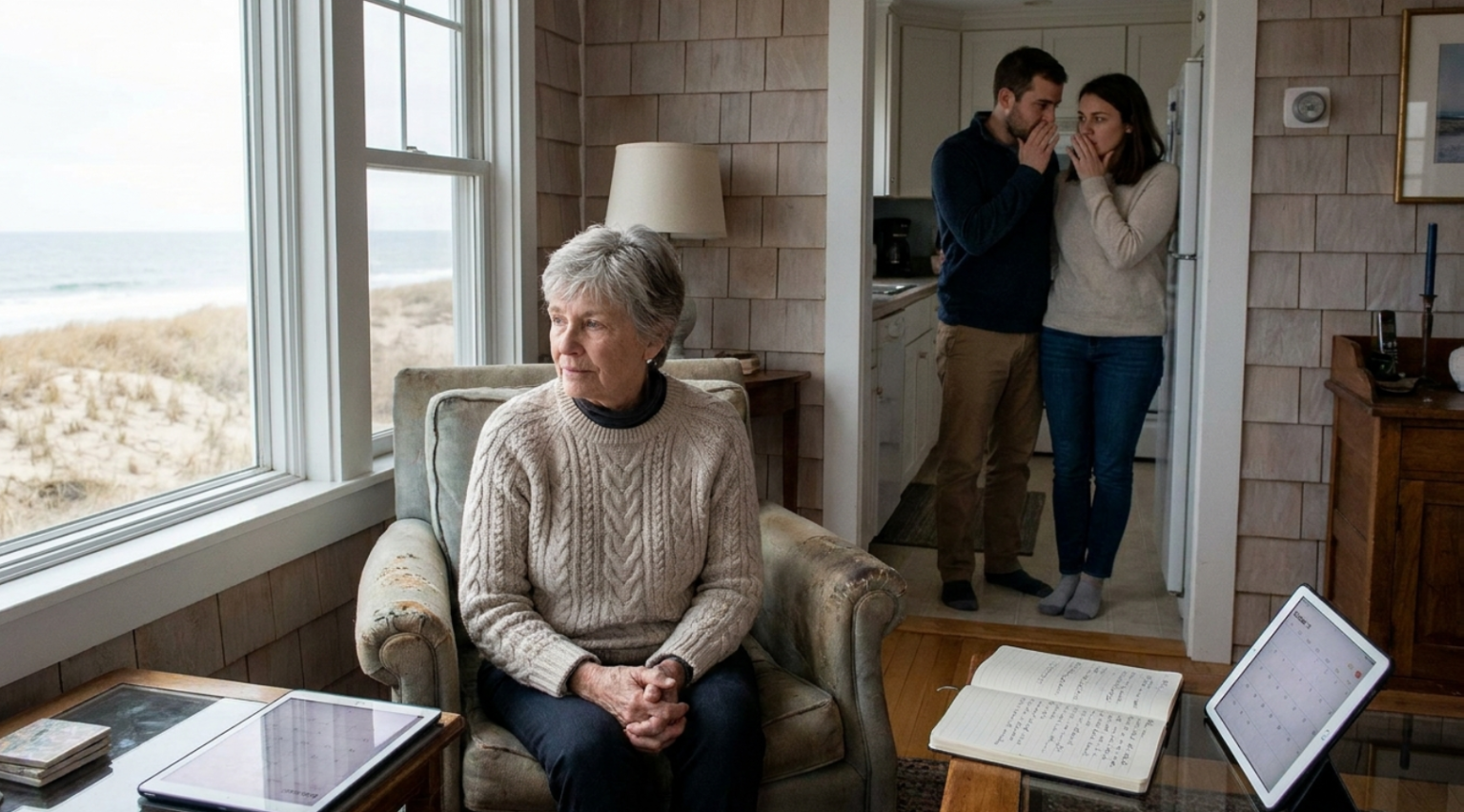
The same man who had agreed that I could sleep on the floor was now reminding me that the weekend was supposed to be about my happiness.
I looked at him for a long moment.
“David, do you remember what you told me when I called you last month?”
He shook his head.
“You said your car needed an emergency repair, and you couldn’t afford the payment. You sounded desperate. So I transferred you four thousand dollars.”
“Yes, Mom. I remember.”
“And two weeks later, Ashley posted photographs from a luxury spa weekend.”
Ashley stiffened.
“That was a gift!”
“From whom?”
She opened her mouth, then closed it.
I continued quietly.
“I didn’t say anything because I wanted to believe you. But the same thing happened with the new furniture, the designer handbags, and the expensive dinners. Every time I asked whether things were getting better, you told me you were struggling.”
David stared at the table.
Ashley responded before he could speak.
“You don’t understand our lifestyle, Margaret. Things are expensive these days.”
“I understand that very well. That’s why I have a budget, and that’s why I don’t spend money I don’t have.”
Her expression hardened.
“So now you’re judging us for having nicer things than you?”
“No. I’m judging the way you treat the person you keep asking to pay for them.”
Silence filled the room.
For the first time since I had arrived at the house, Ashley had no immediate answer.
Then Patricia opened another folder.
“Margaret asked me to review the financial records she provided. There are several matters we still need to verify, but one issue deserves attention immediately.”
David raised his head.
“What issue?”
Patricia removed a printed document.
“An application submitted to a financial institution requesting information about Margaret’s assets and the possibility of using those assets to support a loan.”
I felt the room grow still.
David stared at the paper.
Ashley stopped moving altogether.
Patricia continued.
“The application lists Margaret as a potential guarantor. However, Margaret tells me she never agreed to guarantee this loan.”
David looked confused.
“What loan?”
Patricia turned the document toward him.
“That’s what we need to establish.”
Ashley suddenly stood.
“This is private financial information! You can’t just put it on the table in front of everyone.”
“Then perhaps you can explain why Margaret’s information appears on it,” Patricia replied.
Ashley’s cheeks flushed.
“I didn’t do anything wrong.”
“Then you should have no difficulty explaining the circumstances.”
Ashley looked at David.
He was no longer looking at me.
He was looking at her.
And I saw something change in his expression.
It wasn’t guilt, exactly.
It was uncertainty.
For the first time, he seemed to understand that there might be things happening in his own marriage that he hadn’t fully understood.
“Where did that application come from?” he asked his wife.
Ashley shook her head.
“I don’t know. There are probably mistakes in their paperwork.”
“Your name is on the accompanying correspondence,” Patricia said.
“I handle most of our finances!”
“That may be true,” Patricia replied. “But it doesn’t establish authorization from Margaret.”
I watched Ashley carefully.
She had always been good at making other people feel unreasonable for asking reasonable questions.
She would sigh, roll her eyes, and speak as if the person questioning her had committed some terrible social offense.
Usually, people backed down.
This time, nobody did.
Richard slowly pushed his chair away from the table.
“Ashley, what is going on?”
“Dad, please don’t start.”
“I’m asking you a question.”
“And I’m telling you it’s a misunderstanding!”
Linda’s face had gone pale.
“Is that why you kept asking me whether Margaret owned her house outright?”
Ashley spun toward her.
“What?”
“Three months ago, you asked whether your mother-in-law had a mortgage. Then you asked whether she had investments and whether Harold had left her a substantial estate.”
Ashley laughed nervously.
“I was making conversation!”
“You asked me whether Margaret was planning to leave everything to David.”
The room went silent again.
I looked down at my hands.
Harold had left me financially secure. We had spent forty-eight years building our life together, saving carefully, investing modestly, and paying off our home.
He had always believed that financial security was not merely about money.
It was about freedom.
He used to say, “Margaret, if you ever find yourself afraid to say no because someone might take away your comfort, then you aren’t as secure as you think.”
I had understood those words when he said them.
I hadn’t understood how much I would need them after he died.
Ashley turned toward her mother.
“You’re making this sound sinister.”
“No,” Linda said softly. “I’m repeating what you asked me.”
David stood.
“Mom, did Ashley try to get a loan using your house?”
“I don’t know the full circumstances,” I answered honestly. “That’s why Patricia is helping me investigate.”
“That’s not an answer!”
“It’s the only honest answer I have right now.”
He looked devastated.
For one brief moment, I wanted to reach for him, just as I had when he was a little boy and someone had hurt his feelings.
But he was no longer a child.
And I was no longer responsible for rescuing him from every uncomfortable consequence of his choices.
Patricia closed the folder.
“We don’t need to resolve everything this morning. Margaret has instructed me to review her financial protections, update her estate documents, and make sure no one can use her assets without her explicit authorization.”
Ashley gave a bitter laugh.
“So you’re cutting David out of the inheritance?”
I looked at her.
“I haven’t made that decision.”
“Then why all this drama?”
“Because my birthday is not the only thing I have left to celebrate, Ashley. I have a life, a home, savings, and the right to decide what happens to them.”
Her eyes narrowed.
“And what about family?”
I felt the familiar ache in my chest.
Family.
Such a beautiful word when spoken by someone who loved you.
Such a convenient word when spoken by someone who wanted something from you.
“Family,” I said, “is not a permission slip to treat someone badly.”
Nobody spoke.
Then the doorbell rang.
Patricia glanced at her watch.
“That should be the final delivery.”
I walked toward the front door.
Ashley called after me.
“Where are you going?”
“To open it.”
I pulled the door wide.
Outside stood a woman in her late thirties holding a large framed photograph wrapped in cream-colored paper. Behind her, two staff members were unloading a long table arrangement of white roses and pale blue hydrangeas.
“Mrs. Bennett?” the woman asked.
“Yes.”
“Happy seventieth birthday. Your son helped us confirm the delivery address, but the order and payment came directly from you.”
She smiled and handed me the photograph.
I carefully removed the wrapping.
It was a photograph of Harold and me taken on our fortieth wedding anniversary.
We were standing on a beach, laughing into the wind. Harold had one arm around my shoulders, and I was holding his hand against my cheek.
I hadn’t seen that photograph in years.
My eyes filled with tears.
For a moment, I could almost hear Harold’s laugh.
Behind me, the room had fallen quiet.
I carried the photograph inside and placed it on the mantel above the fireplace.
Then I turned toward my family.
“This,” I said, touching the frame, “is why I wanted to celebrate my birthday here.”
David looked up.
“What do you mean?”
“Your father and I spent our honeymoon on Cape Cod. We were twenty-two and twenty-four. We had very little money, and we stayed in a tiny room above a seafood restaurant. The wallpaper was peeling, the bed creaked whenever either of us moved, and the window wouldn’t close properly.”
I smiled at the memory.
“But every morning, Harold bought me a cup of coffee, and we walked along the beach before breakfast. We promised each other that no matter how old we grew, we would never forget how lucky we were to have found someone who wanted to walk beside us.”
My voice trembled.
“After he died, I thought I would never enjoy this place again. But eventually, I realized that being seventy didn’t mean my life was over. It meant I had survived enough to know what mattered.”
I looked around the room.
“I rented this house because I wanted to make another beautiful memory with my family. I wanted to look at the ocean, eat good food, laugh with my son, and feel that the people I loved were happy to be there with me.”
I paused.
“Instead, I heard someone say I could sleep on the floor.”
David closed his eyes.
Ashley looked away.
“And I realized something. I had spent so much time making life comfortable for everyone else that I had forgotten to ask whether anyone was making room for me.”
I took a breath.
“So I made a decision.”
Ashley looked up sharply.
“What decision?”
I smiled, though my eyes were still wet.
“I decided that this birthday would be the beginning of a different life.”
I reached for Patricia’s hand.
She squeezed mine.
“Tomorrow morning,” I continued, “I am going to meet with my financial adviser. I am going to review every account, every recurring payment, and every financial arrangement involving my money. I will help people when I choose to help them, not because I feel frightened of disappointing them.”
Then I looked at David.
“And I am going to give you the chance to decide what kind of son you want to be when there is nothing left for you to gain.”
He looked as though I had struck him.
“Mom, please.”
I held up my hand gently.
“Not another argument today. It’s my birthday.”
For several seconds, nobody moved.
Then Linda began to cry.
She came over and hugged me.
“I’m so sorry, Margaret,” she whispered. “You deserved better from all of us.”
I hugged her back.
“Thank you.”
Richard approached next.
He looked ashamed.
“I should have insisted you take the master bedroom last night.”
“You didn’t know the whole story.”
“I knew enough to ask questions.”
I appreciated his honesty more than a dozen excuses.
Then David approached me.
His eyes were red.
“Mom, I don’t know what to say.”
“Then don’t say anything yet.”
He nodded, but before he stepped away, I took his hand.
“I love you, David. That has never changed. But loving you doesn’t mean I have to keep pretending everything is fine.”
He swallowed hard.
“I understand.”
I wasn’t sure whether he did.
But for the first time in years, I didn’t feel responsible for making him understand everything immediately.
I had spent enough of my life doing that.
The afternoon party began at four.
The caterers served fresh seafood, roasted vegetables, and the chocolate cake I had ordered weeks earlier. The musicians played softly near the windows, and the ocean glimmered beyond the deck.
I sat in the chair overlooking the water.
The chair I had originally intended to enjoy from the master bedroom.
And for the first time that weekend, I felt completely at peace.
But just as the guests began raising their glasses for the birthday toast, David’s phone rang.
He glanced at the screen.
His expression changed.
Then he looked at Ashley.
“Who is Michael?” he asked.
Ashley went completely still.
“What?”
“Michael. Why has he called you six times today?”
She reached for the phone.
“Give it to me.”
David pulled it away.
“No. Who is he?”
Richard stood up.
“David, what’s happening?”
David looked at his wife as if he were seeing a stranger.
Then he read the message that had appeared on the screen.
His face drained of color.
“Mom,” he whispered.
I stood slowly.
“What is it?”
He looked at me, his voice barely audible.
“Michael says the lender needs your signature by Monday. He says Ashley promised them you’d agree to put your house up as collateral.”
A silence fell over the birthday table so complete that I could hear the waves breaking against the shore.
Ashley lunged for the phone.
“David, stop! You don’t understand!”
He stepped back.
“Then explain it to me!”
She looked around the table, searching for someone willing to rescue her from the truth.
Nobody moved.
And I realized that the weekend I had planned to celebrate my seventieth birthday had become something else entirely.
It had become the moment my family could no longer pretend that love meant allowing one person to carry everyone else’s burdens.
Patricia stood beside me.
“Margaret,” she said quietly, “we need to discuss this message with your attorney and the lender. Do not sign anything or authorize any transfer until everything has been independently verified.”
I nodded.
Then I looked at Ashley.
“I think it’s time,” I said softly, “for you to tell us exactly what you promised Michael.”
Her lips parted.
For the first time since I had known her, she looked genuinely afraid.
And when she finally spoke, the words that came out of her mouth were not the ones any of us expected.
“Because if I don’t pay him by Monday,” she whispered, “David is going to lose everything.”
PART 4
“Because if I don’t pay him by Monday,” Ashley whispered, “David is going to lose everything.”
For several seconds, nobody spoke.
David stared at his wife.
“Lose what, Ashley?”
She looked down at the floor.
“Our house.”
His mouth fell open.
“What are you talking about? We have a mortgage, but we’ve been making the payments.”
Ashley began crying.
“I used the money for something else.”
Richard stepped forward. “What money?”
She wiped her face.
“The business investment. Michael promised me we could double our money in six months. I thought I could repay everything before David found out.”
David looked as though the ground had disappeared beneath him.
“How much?”
Ashley didn’t answer.
“How much, Ashley?”
“Eighty-five thousand dollars.”
David staggered backward and grabbed the back of a chair.
Eighty-five thousand dollars.
It was more than they had saved together in years. It was more than the money I had given them during the previous eighteen months.
And suddenly, the strange financial requests, the expensive purchases, and the constant emergencies began to form a disturbing picture.
“Did you use my mother’s money?” David asked.
Ashley shook her head quickly.
“Not directly.”
Patricia spoke calmly.
“Then we need to distinguish between what you borrowed, what you invested, and what you may have represented to the lender. No one should make assumptions before the records are reviewed.”
Ashley looked at her with desperate eyes.
“Please. You don’t understand. I thought I could fix everything.”
I looked at her.
“Did you ever intend to tell us?”
She began sobbing harder.
“I was going to.”
“When?”
She had no answer.
I felt no satisfaction watching her cry. I had wanted answers, not another person falling apart.
But compassion could not erase consequences.
“Did you tell Michael that I would guarantee the loan?”
Ashley stared at me.
“Yes.”
“Did you have my permission?”
“No.”
“Did you tell him you could obtain my signature?”
She covered her face.
“Yes.”
Patricia immediately explained that we would need to establish what documents had actually been submitted, whether anything had been signed on my behalf, and whether the lender had relied on any inaccurate representations.
She also advised me not to transfer money or promise financial assistance while the facts remained unclear.
Then she turned to David.
“Your mother is not responsible for solving this problem simply because she has the means to help. Any claim involving her property or finances must be handled through the proper legal channels.”
David nodded slowly.
He looked at Ashley, and I saw the heartbreak of a man discovering that the person he trusted had kept a devastating secret from him.
“Why didn’t you tell me?” he asked.
Ashley reached for his hand.
“Because I was ashamed.”
He pulled away.
“You let me believe we were doing fine. You let me keep telling Mom we needed money for emergencies. You watched her pay our bills while you knew we were in trouble.”
“I thought I could make it right!”
“You let my mother believe she was helping us build a better life. All this time, you were trying to hide what was happening.”
Ashley started crying again.
David walked toward the windows.
For a long moment, he stared at the ocean.
Then he turned back to me.
“Mom, I’m sorry.”
I nodded.
“I know you’re hurting, David.”
“No, you don’t understand.” His voice cracked. “I heard her say you could sleep on the floor, and I laughed. I agreed with her. You paid for this whole weekend, and I treated you like you were an inconvenience.”
Tears filled his eyes.
“You lost Dad, and instead of making sure you felt loved, I made you feel unwanted.”
Those words hurt more than anything Ashley had said.
Because they came from my son.
The little boy whose hand I had held crossing busy streets. The teenager I had stayed awake worrying about. The man whose wedding I had cried through because I was so proud of him.
I had never expected him to be perfect.
I had only hoped he would remember that I was a person, too.
“I forgive you for what you said,” I told him. “But forgiveness doesn’t mean we pretend it never happened.”
He nodded.
“I understand.”
“Do you?”
He looked at me through his tears.
“I think I’m finally beginning to.”
That evening, the party continued, although quietly. Some guests left early. Others stayed to help the caterers clear the tables.
I ate a small piece of chocolate cake on the deck, wrapped in a cardigan as the evening breeze moved across the water.
For the first time all weekend, nobody asked me for money.
Nobody asked me to solve a problem.
Nobody expected me to make the uncomfortable situation disappear.
I watched the sun sink into the Atlantic and thought about Harold.
If he had been there, he would probably have taken my hand and told me I had done enough for one day.
And for once, I listened to the advice I imagined him giving me.
I went to bed in the master bedroom.
My bedroom.
The next morning, Ashley’s luggage was no longer beside the door.
She and David had spent the night in separate rooms. After breakfast, David told me he intended to stay at a nearby hotel while he worked out what to do next.
Ashley remained at the house long enough to speak with Patricia.
She apologized for misrepresenting my wishes about the sleeping arrangements and admitted that she had no right to make financial promises involving my home.
Patricia documented the conversation and instructed her to direct all further financial communications through the appropriate professionals.
I didn’t offer Ashley money.
I didn’t threaten her.
I simply told her the truth.
“I hope you find a way to put your life back together. But I will not put my home or my retirement at risk to protect you from the consequences of your decisions.”
She nodded, crying silently.
For once, she didn’t argue.
And then she left.
Six Months Later
The following six months were not easy.
David and Ashley’s marriage struggled under the weight of the financial deception. David learned that rebuilding trust required more than apologies, and Ashley had to confront the decisions she had spent months trying to hide.
The lender investigated the disputed application. Patricia helped me secure my accounts, review my credit information, and ensure that no unauthorized transaction or claim against my property went unanswered.
I did not guarantee their loan.
I did not hand over my savings.
And I did not lose my home.
With professional advice, David developed a repayment plan for the debts he was legally responsible for, while Ashley dealt with the financial consequences of her own actions. They sold several expensive possessions, cut their spending, and began living within their means.
Their future was uncertain, but for the first time, they were facing reality instead of asking me to pay to keep it hidden.
During that period, David visited me every Sunday.
At first, our conversations were awkward.
He brought groceries I hadn’t requested and offered to repair things around the house. Sometimes he apologized repeatedly, as if he believed the right combination of words could erase that weekend.
Eventually, I told him something important.
“David, I don’t need you to spend the rest of your life punishing yourself for what happened. I need you to become someone who would never do it again.”
He sat quietly for a moment.
Then he said, “Dad would have been disappointed in me.”
I reached across the table and took his hand.
“Your father loved you too much to want you to spend your life hiding from your mistakes. He would have expected you to face them.”
David cried that afternoon.
I let him.
And slowly, we began rebuilding our relationship—not as a mother who paid for everything and a son who expected her to, but as two adults learning how to love each other honestly.
Ashley sent me a letter several weeks later.
It wasn’t filled with excuses. She admitted that she had been embarrassed by her financial situation and had allowed her desire to appear successful to become more important than honesty.
She also acknowledged the cruelty of telling me I could sleep on the floor in a house I had paid for.
I read the letter twice.
I didn’t immediately invite her back into my life as though nothing had happened.
But I accepted her apology.
Forgiveness, I learned, did not require me to restore the same level of trust.
It simply allowed me to stop carrying the anger.
And that was enough for me.
My Seventy-First Birthday
One year after the Cape Cod weekend, I returned to the coast.
This time, I rented a small cottage with a beautiful ocean view.
It cost far less than the previous house.
I invited David, and he asked whether he could bring Ashley.
I thought carefully before answering.
“She’s welcome to join us for dinner,” I told him. “But I want us to keep things simple.”
He agreed without arguing.
When they arrived, David carried a bouquet of white roses.
Ashley brought a homemade cake.
Neither of them made a grand speech. Neither tried to pretend that the previous year had never happened.
They simply sat with me, watched the waves, and listened as I told stories about Harold.
After dinner, David walked with me along the beach.
The wind tugged at our jackets, and the sand shifted beneath our shoes.
“Mom,” he said, “I’ve been thinking about that weekend.”
“So have I.”
“I used to think you would always be there to fix things. I never stopped to think about what it cost you.”
I looked at him.
“And what do you think now?”
He took a breath.
“I think I was given a mother who loved me enough to help me, and I confused that love with an obligation. I thought you would always say yes.”
I squeezed his arm.
“Love should never make someone feel they aren’t allowed to say no.”
He nodded.
Then he smiled sadly.
“I wish I’d understood that before I let you sleep on that sofa.”
“So do I.”
We continued walking.
After a while, he stopped and faced me.
“I’m proud of you, Mom.”
The words surprised me.
“Why?”
“Because you finally stood up for yourself. And because you gave me the chance to become better without pretending what I did was acceptable.”
My eyes filled with tears.
For a long time, I had believed that being a good mother meant protecting my son from pain.
Now I understood that sometimes the most loving thing a parent can do is allow an adult child to face the consequences of his choices.
I hugged him.
And when we returned to the cottage, Ashley was waiting on the porch.
She approached me carefully.
“Margaret, I know I can’t undo what I said last year. But I want you to know that I understand something now. You weren’t lonely because Harold died. You were grieving, and I treated your grief as if it made you less important.”
She swallowed.
“I’m sorry.”
I studied her face.
There was no guarantee that we would ever have the relationship I once hoped for. Trust would take time, and some things would never be exactly the same.
But I could see that she was finally taking responsibility for her behavior.
“Thank you for saying that,” I replied.
Then I opened the door and invited her inside.
Not because I had forgotten.
Not because I owed her another chance.
But because I had decided that I wanted peace more than I wanted revenge.
That night, we ate cake at the kitchen table. David washed the dishes without being asked. Ashley helped me wrap the leftovers.
And when it was time for bed, David looked at me and said, “Mom, you take the best bedroom. We can manage the rest.”
I laughed.
“That’s very generous of you, David. But I think I’ll let you have the room with the better view.”
He looked surprised.
“Are you sure?”
“Of course. I know how to stand up for myself now. I don’t need to win every little thing to prove it.”
He hugged me tightly.
And for the first time in a long while, the embrace felt uncomplicated.
Later, I sat alone on the porch and watched the moonlight shimmer across the ocean.
I thought about the seventy thousand dollars I had given away, the cruel words I had overheard, and the birthday that had nearly broken my heart.
I couldn’t change any of it.
But I could decide what happened next.
I updated my will according to my own wishes. I established clear boundaries around financial help. I made sure my home and retirement were protected. And I began spending more time doing things that brought me joy instead of constantly worrying about everyone else’s happiness.
I joined a local book club. I traveled with two friends I had known for decades. I started taking painting classes, even though my first attempts looked more like colorful accidents than landscapes.
And I discovered something wonderful.
At seventy-one, my life was not shrinking.
It was opening.
I still loved my son. I still hoped Ashley would continue changing for the better. I still missed Harold every day.
But I no longer confused being needed with being loved.
And I no longer believed that keeping the peace required me to surrender my dignity.
Sometimes, when people ask me what changed my life, I tell them about the Cape Cod house.
I tell them about the master bedroom, the overheard conversation, and the morning my attorney arrived with a briefcase full of documents.
But the most important part of the story was never the money.
It was the moment I realized I could love my family without allowing them to take me for granted.
My seventieth birthday was supposed to be a celebration of the life I had lived.
Instead, it became the beginning of the life I chose for myself.
And if Harold could have seen me standing on that beach, watching the waves and laughing beneath the stars, I believe he would have smiled.
Because the woman he married forty-eight years earlier was still there.
She had simply needed a little time to remember her own worth.
The lesson I learned was simple: You can love your family with your whole heart without giving them unlimited access to your money, your peace, or your dignity. The people who truly love you will learn to respect your boundaries. And if they don’t, you can still choose yourself.